




English Regency Couch
An english regency couch brings architectural line and grand scale into a room, offering a long seat designed for reclining in comfort.
English Regency Couch
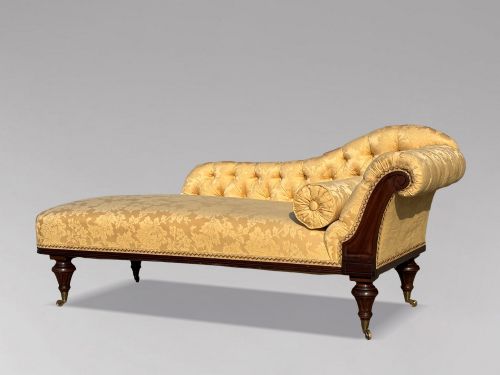
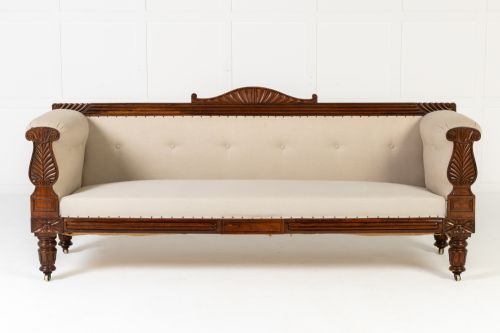
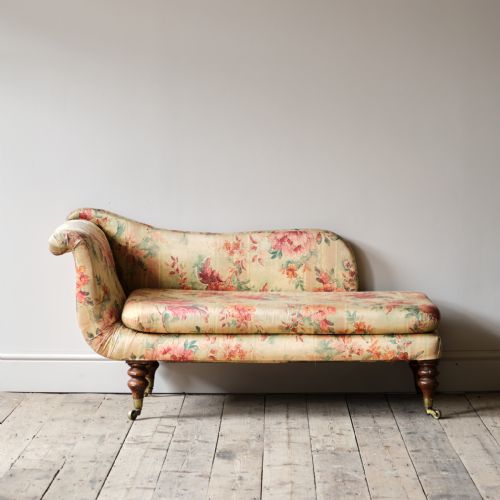
Buyers seeking an english regency couch encounter large seating pieces from the nineteenth century, spanning the Regency period and the early decades of the eighteen hundreds. The selection ranges from expansive sofas and settees to single-ended chaise longues and daybeds.
Most examples originate from English workshops and country houses, displaying the characteristic proportions of the era. The forms include double-ended couches, scroll end sofas, and show frame settees suited to formal drawing rooms.
Makers of the period drew inspiration from classical forms, producing pieces that function both as daybeds and generous two-seat settees. The inventory also includes pieces influenced by subsequent William IV tastes while retaining core Regency design principles.
Materials and construction methods
Construction relies heavily on timbers such as mahogany, rosewood, and walnut to form the structural frames and exposed show wood. Giltwood also appears on more ornate seating, providing a bright decorative surface.
Upholstery materials recorded in the evidence include leather, satin, damask fabric, hessian, and general fabric coverings. Brass accents frequently complement the woodwork, while carved herms and statue frames adorn the most elaborate frames.
English Regency Couch Retail Price Guide 2026
Typical asking prices for english regency couch among the pieces listed under this phrase on Sellingantiques today, from the lower quarter to the upper quarter. They describe what is for sale here now, not the wider market.
Listings feature nineteenth-century pieces incorporating mahogany, rosewood, walnut, and giltwood, paired with leather, damask, and satin upholstery.
Distinctions in construction and finish
Quality reveals itself in the handling of timber and the complexity of the frame carving, from simple mahogany rails to elaborate giltwood and carved herms. The presence of superior scroll ends and robust double-ended couch frames indicates higher craftsmanship.
The choice of upholstery material, whether traditional leather, damask, or satin, alters the character and finish of the piece. Fully restored examples demonstrate a commitment to preserving the integrity of the original 19th century frame.
Gillows
The English Regency Couch Glossary
- Chaise Longue
- An upholstered long chair designed for reclining, combining the seat of a chair with the length of a daybed. These pieces frequently feature a single raised end for the head.
- Daybed
- A form of long seating intended for daytime resting rather than sleeping through the night. The frame often incorporates one or two raised ends.
- Giltwood
- Timber treated with a thin layer of gold leaf or gilt finish. This decorative treatment appears on formal frames designed for grand interiors.
- Scroll End
- A curved terminal on the arm or back of a sofa that sweeps outward like a scroll. It defines the profile of many Regency seating forms.
- Show Frame
- A wooden structural frame left exposed around the upholstered elements of a settee or sofa. This highlights the grain and carving of the timber.
English Regency Couch: Frequently Asked Questions
What is an english regency couch?
An english regency couch is a nineteenth-century seating piece designed for reclining or formal sitting, typically constructed from mahogany, rosewood, or walnut. These pieces include daybeds, chaise longues, and large settees.
They reflect the classical design influences of the early 1800s, often featuring scroll ends, exposed show wood frames, and elaborate carved details.
How do I tell a Regency sofa from a William IV piece?
Regency sofas generally display lighter, more restrained classical proportions inspired by ancient Greek and Roman forms. Timber choices lean toward finely figured mahogany and rosewood.
William IV pieces, emerging slightly later in the nineteenth century, often present heavier, more robust framing and bolder architectural carving while retaining similar scroll end forms.
Where were these couches used originally?
These seating pieces originated in formal drawing rooms and large country houses across England. They provided both functional seating and a strong decorative statement for entertaining guests.
Large double-ended couches and settees occupied central positions in spacious reception rooms, while chaise longues suited private parlours and dressing rooms.
What upholstery materials are common?
Traditional upholstery materials for these couches include brown leather, damask fabric, satin, and hessian support layers. Many pieces feature button back detailing on the upholstery.
Restorers often renew these coverings to match historical precedents while maintaining the comfort and structural support of the original daybed or sofa.