


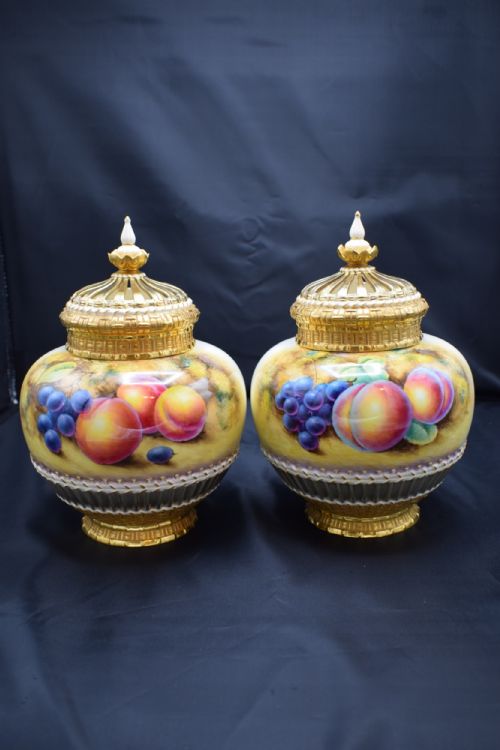


English Porcelain Fruit Vase
An english porcelain fruit vase brings meticulous hand-painted botanical studies into domestic spaces, capturing the vibrant permanence of summer harvests through generations of skilled brushwork.
English Porcelain Fruit Vase
An english porcelain fruit vase represents a specialised decorative tradition spanning the twentieth century, encompassing forms such as pot pourri jars, ewers, and ginger jars. These vessels function primarily as ornamental display pieces rather than utility items, often featuring rounded bodies or slender necks designed to showcase detailed botanical artwork.
The pieces encountered most frequently on this page originate from the Edwardian era through the mid-twentieth century, heavily anchored by twentieth century English output. Collectors seek out these specific forms for their intricate depictions of natural specimens rendered against shaded or ivory grounds.
Makers focused intensely on volumetric porcelain and bone china bodies, shaping them into handled urns, spill vases, and covered pots. Each iteration demonstrates a distinct approach to surface decoration, marrying classical vessel shapes with vivid naturalistic painting.
Quality factors in hand-painted ceramics
Quality rests primarily on the dexterity of the brushwork and the complexity of the fruit arrangement across the porcelain surface. Pieces decorated by documented artists exhibit finer shading, greater anatomical accuracy in the rendered fruit, and more sophisticated integration of background tones.
The application of gilding and the weight of the porcelain body also distinguish higher tiers of output. Heavier potting, crisp handle modeling, and lavish use of gold leaf elevate certain pot pourri jars and ewers above standard production pieces.
Listings feature porcelain and fine bone china bodies decorated with enamel paints, gilding, gold leaf, and gilt accents.
Royal Worcester·Coalport
The English Porcelain Fruit Vase Glossary
- Pot pourri vase
- A ceramic vessel featuring a pierced cover designed to diffuse scented dried botanicals into a room.
- Ewer
- A decorative pitcher with a flared spout and an arched handle, historically derived from water-carrying vessels but produced here as an ornament.
- Bone china
- A type of soft-paste porcelain incorporating animal bone ash, resulting in a high degree of whiteness and translucency.
- Gilt
- A thin layer of gold applied to the porcelain surface, frequently highlighting rims, feet, and handles.
- Spill vase
- A tall, narrow cylinder intended originally to hold thin wooden spills for lighting fires or candles.
English Porcelain Fruit Vase: Frequently Asked Questions
How do I clean an english porcelain fruit vase?
Dust the surface gently with a soft, dry brush to prevent accumulation in recessed areas or around gilt rims.
Avoid using water, chemical cleaners, or abrasive cloths, as these substances can damage delicate hand-painted enamel and wear away gold leaf accents.
Were these vases used for fresh flowers?
Most variants, particularly pot pourri jars and heavily gilded display pieces, were intended strictly as ornamental items rather than functional water holders.
Spill vases and certain standard vase forms accommodated contents, but the presence of interior wear or staining often affects the condition grading of older ceramics.
How do I identify the artist?
Painters frequently signed their work directly on the lower portion of the painted scene using initials or full surnames.
Examining the surface under magnification reveals the characteristic brushstroke patterns and signature placements associated with specific ceramic artists from the period.
What is a pot pourri vase?
A pot pourri vase incorporates a perforated lid designed to hold aromatic dried plant material while containing the botanical mixture safely within the ceramic body.
These pieces often feature inner containers and decorative covers that allow scent to diffuse evenly while maintaining a polished exterior appearance.