




English Porcelain Basket
An english porcelain basket brings tactile warmth and refined floral painting to a cabinet or sideboard, built for serious collectors of early ceramic art.
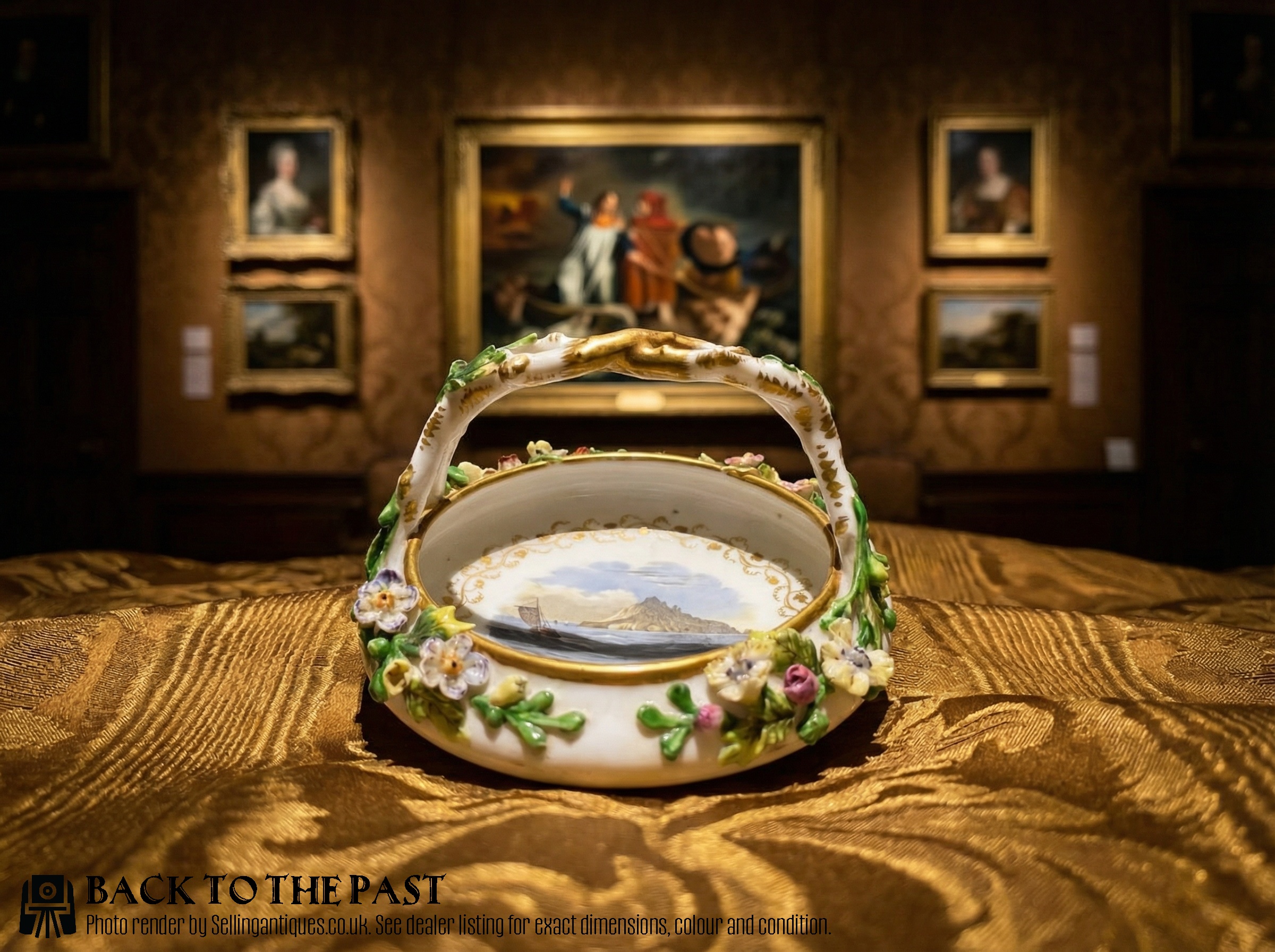
English Porcelain Basket
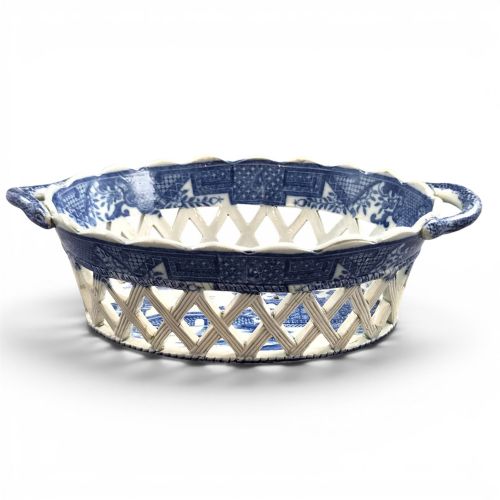
The english porcelain basket emerges across the eighteenth and nineteenth centuries, spanning Georgian, Regency, and Victorian periods in various decorative forms. Buyers primarily encounter specialised chestnut baskets with matching covers, dessert service pieces, and smaller ornamental miniatures.
Makers fashioned these pieces in distinct regional styles, from Dr Wall Worcester and First Period Worcester productions to later Rockingham and Flight Barr & Barr works. These objects functioned as both ornamental display items and practical table vessels for fruit or sweetmeats during formal dining.
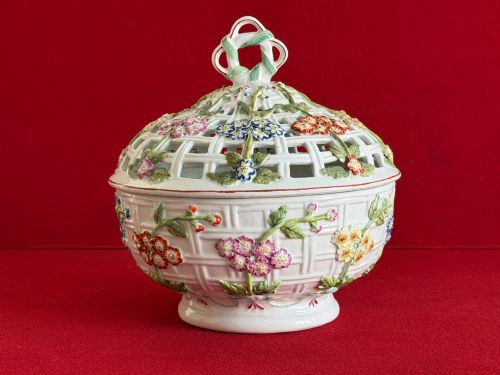
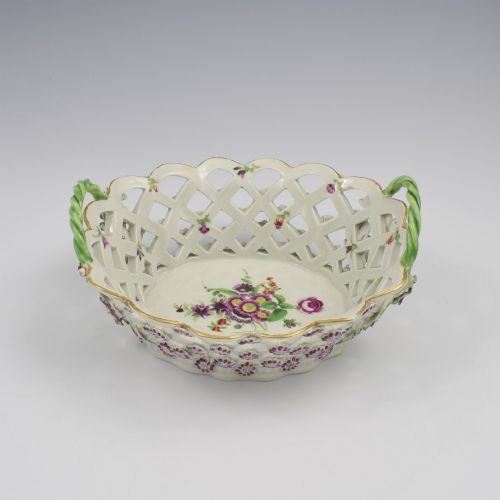
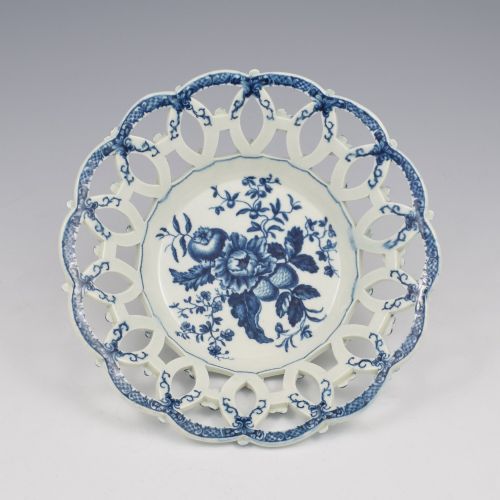
The material record shows a progression from soft-paste porcelain and pearlware to later bone china bodies. Forms range from reticulated openwork structures to circular pierced vessels embellished with applied floral elements and painted landscapes.
Manufacturing and Materials
Potters utilised soft-paste porcelain and refined earthenware bodies, shaping intricate openwork structures through piercing and reticulation techniques while the clay remained damp. Artisans then applied liquid glaze and handpainted polychrome floral motifs or topographical views before high-temperature kiln firing.
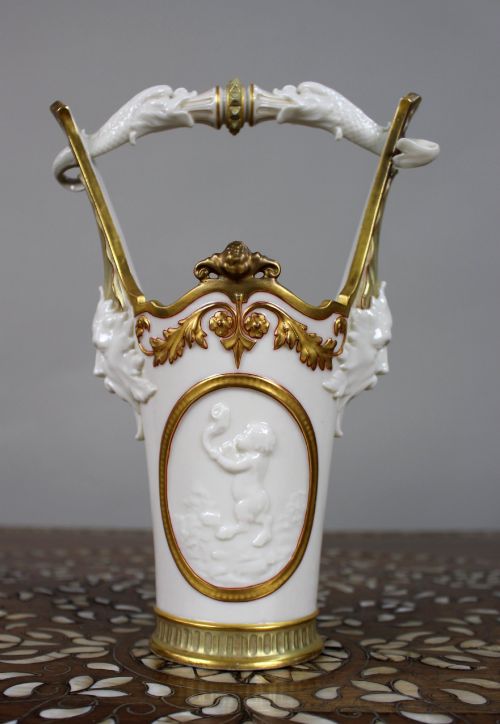
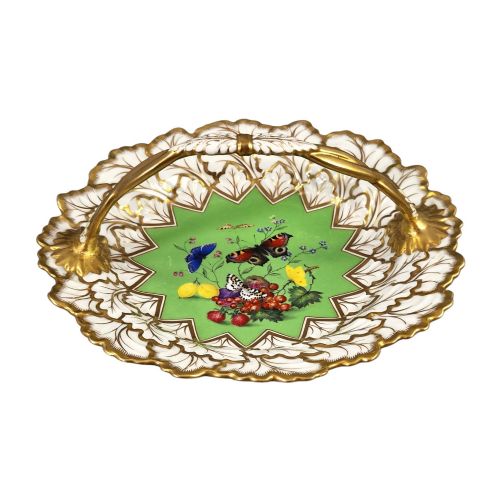
Gilding and gold leaf highlights were carefully brushed onto handles and rims, often requiring a secondary lower-temperature firing to bond the metallic decoration to the glazed surface. Applied flowers and leaves required individual hand-modelling by skilled ceramic workers before being attached to the basket exterior.
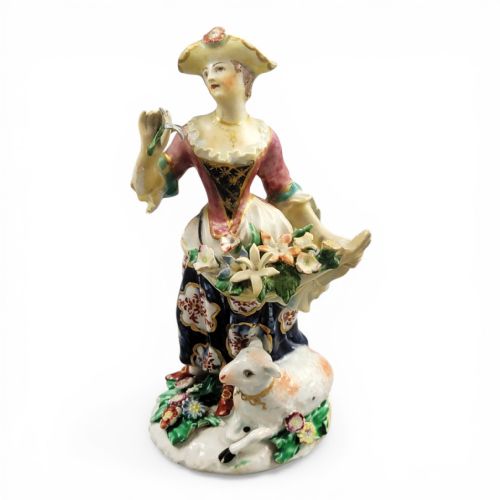
The inventory records distinct regional forms, including miniature figures, chestnut baskets with covers, and topographical landscape views.
Evaluating Quality
Quality rests upon the crispness of the reticulation and the delicacy of any hand-modelled applied flowers. Sharp piercing and well-defined basketweave or wicker impressions indicate superior craftsmanship from leading kilns.
The precision and artistic merit of handpainted scenes, such as named landscape views or botanical studies, distinguish finer productions from standard factory output. Intact gilding and well-preserved enamel colours without excessive rubbing elevate the desirability of a piece.
Flight Barr And Barr·Royal Worcester·Spode·Dr Wall Worcester·Rockingham·Bow·Mason·James Dudson
The English Porcelain Basket Glossary
- Reticulated
- Pierced or openwork patterning cut into the clay body to mimic woven basketry. This technique requires considerable skill to prevent warping during kiln firing.
- Chestnut Basket
- A large covered vessel designed for serving chestnuts at the dining table. These typically feature matching underdishes or stands and pierced lids.
- Soft-paste Porcelain
- An early artificial porcelain composition containing glass frit and white clay. It produces a warm, creamy translucent body favoured by eighteenth-century factories.
- Pearlware
- A refined earthenware developed in the late eighteenth century featuring a subtle bluish glaze. It served as an affordable alternative to true porcelain.
- Transfer Printed
- A decoration method where a design is engraved on a copper plate, inked, and transferred to paper then onto the ceramic body. This allowed for uniform reproduction of complex patterns like the willow pattern.
English Porcelain Basket: Frequently Asked Questions
What were chestnut baskets used for?
Chestnut baskets held roasted chestnuts served warm at the conclusion of formal Georgian and Regency dinners. The pierced walls allowed steam to escape while keeping the contents contained.
Their substantial covers helped retain heat until the footman presented the dish to diners at the table.
How do I date an eighteenth century basket?
Dating relies upon identifying the ceramic paste, glaze characteristics, and factory marks beneath the base. Soft-paste bodies and cobalt blue crescent marks typically point to early periods.
Stylistic cues like Rococo scrollwork or neoclassical swags help narrow the decade of production when factory marks are absent.
Are miniature baskets rare?
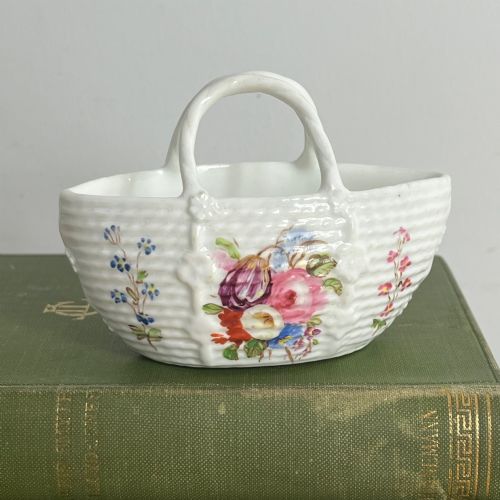
Miniature porcelain baskets appear less frequently in survival records than large dessert services because their delicate handles and tiny applied flowers sustained damage easily. Makers produced them primarily as cabinet ornaments or novelty trinket dishes rather than functional tableware.
Collectors prize undamaged examples for their intricate detail and cabinet-friendly scale.