
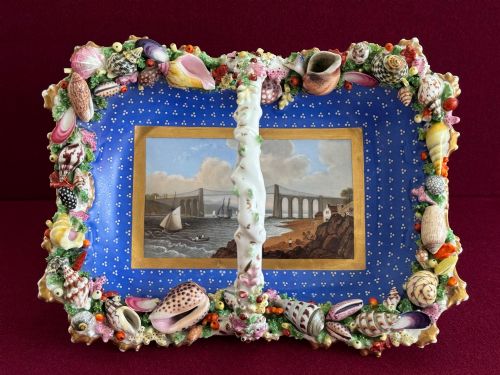


Encrusted Porcelain Basket
These encrusted porcelain basket examples are elaborate floral centerpieces and decorative bowls shaped by skilled hands to hold flowers or fruit.
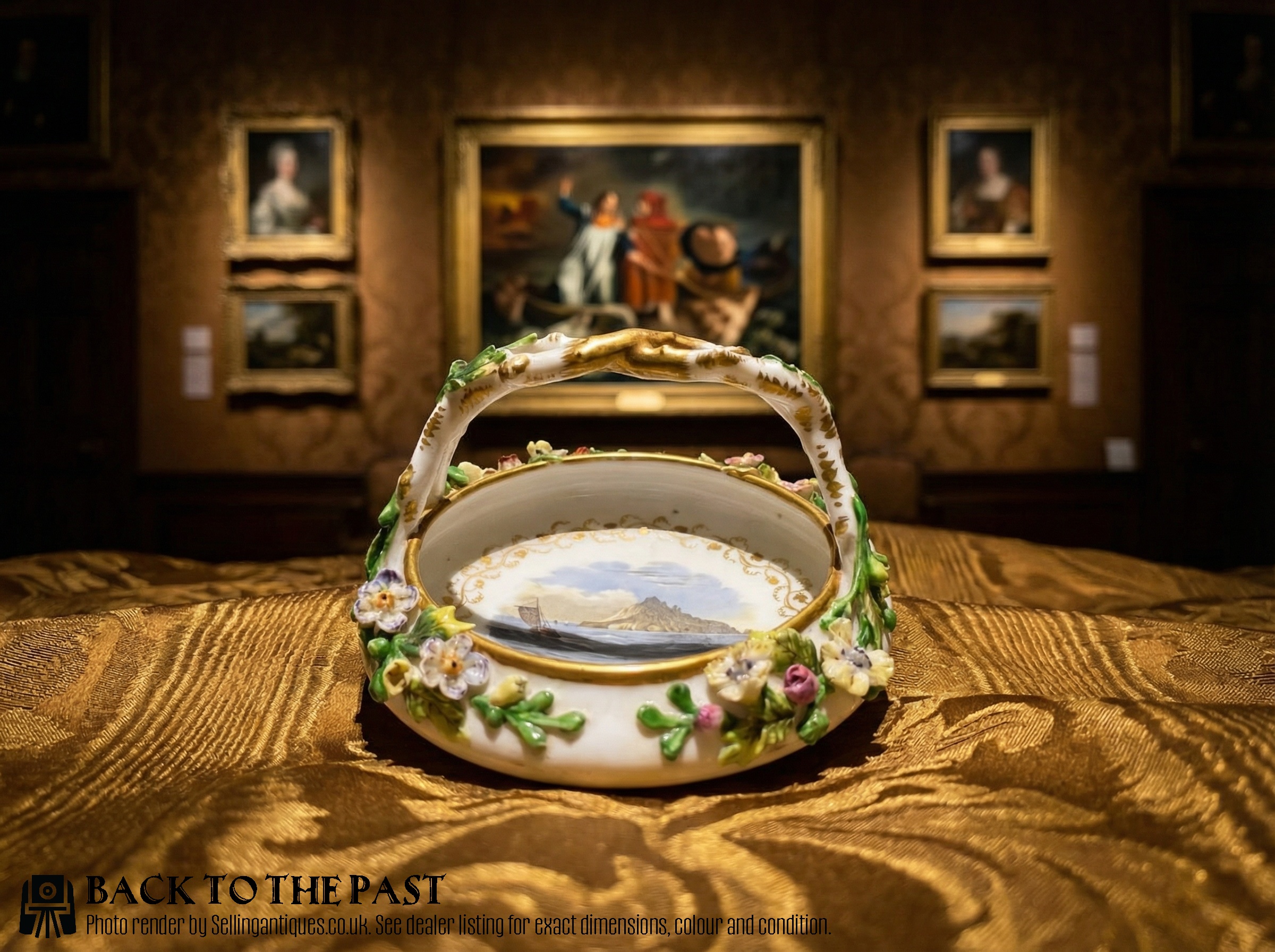
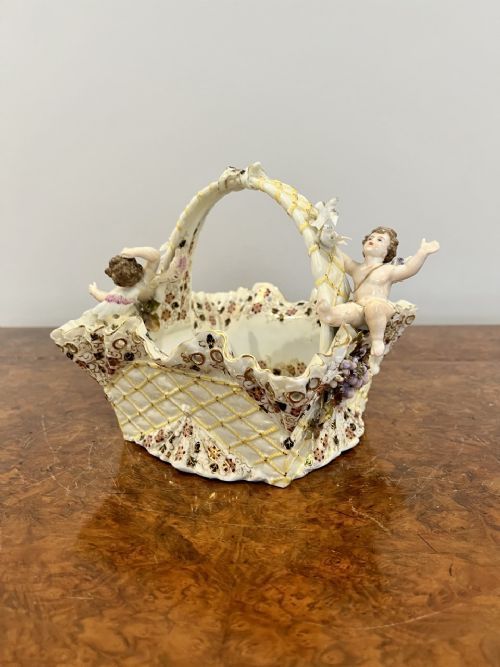
Encrusted Porcelain Basket
An encrusted porcelain basket is a decorative vessel covered in applied ceramic flowers and foliage, often serving as a lavish table centrepiece. These pieces range from eighteenth-century Georgian and Dr Wall Worcester designs to nineteenth-century Victorian and Edwardian German productions.
The form encompasses large centrepieces with cherubs, handled work basket dishes, and lidded chestnut vessels. Buyers on this page frequently encounter Victorian Rococo Revival interpretations alongside earlier Georgian and William IV examples.
Origins span English factories such as Worcester, Rockingham, and Chamberlain Worcester, alongside continental German makers including Meissen style pieces, Schierholz, and Saxony porcelain. Each region brings distinct painting styles and floral modelling traditions to the basket form.
How they were made
Potters shaped soft-paste porcelain and standard ceramic bodies into openwork woven or reticulated basket structures, applying intricate three-dimensional flowers and leaves by hand. Artisans then enriched these applied elements with detailed enamel painting and glaze finishes.
Gilding, gold leaf, and gilded enamel accents highlight handles, rims, and structural details across the pieces. Landscape views are frequently hand-painted onto central panels within the porcelain body, depicting specific locations such as the Isle of Wight or the Menai Bridge.
What varies in quality
The refinement of the applied floral encrustation dictates the standard of the piece, separating dense, individually modelled petals from simpler moulded applications. Hand-painted landscape fidelity and the crispness of the openwork porcelain weave further distinguish finer examples.
The presence of supplementary figural elements, such as cherubs or matched lids, elevates the complexity of the work. Maker attribution, particularly to established English factories or recognised German houses, defines the upper tier of the range.
C.G. Schierholz and Sohn·Chamberlain Worcester·Rockingham Porcelain
The Encrusted Porcelain Basket Glossary
- Encrusted
- Covered with applied three-dimensional ceramic flowers and foliage modelled separately before firing. This technique creates a heavily textured surface across the basket exterior.
- Soft-paste porcelain
- An artificial porcelain paste fired at lower temperatures than hard-paste, common in eighteenth-century English factories. It yields a distinctive warm glaze texture.
- Rococo Revival
- A nineteenth-century design movement resurrecting eighteenth-century asymmetrical scrolls, C-scrolls, and naturalistic motifs. It heavily influences Victorian basket forms.
- Gilding
- The application of gold leaf or gold paint to ceramic surfaces for decorative accent. This highlights rims, handles, and structural mouldings.
- Reticulated
- Having a network or openwork lattice pattern resembling a woven basket. This structural feature defines the sides of many decorative porcelain bowls.
Encrusted Porcelain Basket: Frequently Asked Questions
What were encrusted porcelain baskets used for?
These pieces served primarily as ornamental centrepieces for dining tables and reception rooms during the eighteenth and nineteenth centuries. They were often filled with fresh fruit or seasonal flowers to display wealth and taste.
Larger versions with lids, such as chestnut baskets, functioned as serving vessels for specific courses during formal meals.
How do I identify English versus German pieces?
English examples from factories like Rockingham or Worcester typically feature hand-painted topographical landscape views on the central well. They often reflect Georgian and early Victorian aesthetic sensibilities.
German productions from makers such as Schierholz frequently incorporate figural elements like cherubs and dense overall floral encrustations in a distinct Rococo Revival style.
How do I care for antique porcelain baskets?
Dust these delicate ceramic items gently with a soft, dry brush to protect the intricate applied floral petals. Avoid using water or liquid cleaners, which can damage exposed paste, enamel, and gold leaf.
Display the baskets on stable, flat surfaces away from direct sunlight and high traffic areas to prevent accidental impact to the fragile openwork lattice.
How do I distinguish eighteenth from nineteenth-century pieces?
Eighteenth-century examples often employ soft-paste porcelain bodies with refined Dr Wall period painting and restrained floral applications. They tend to exhibit the lighter proportions typical of the Georgian era.
Nineteenth-century Victorian and Edwardian items generally feature heavier ceramic bodies, bolder gilding, and much denser, more flamboyant encrustations reflecting Rococo Revival tastes.