


English Pembroke Table
An english pembroke table offers a clever folding leaf design that adapts easily from a compact side piece to a dining surface.
English Pembroke Table
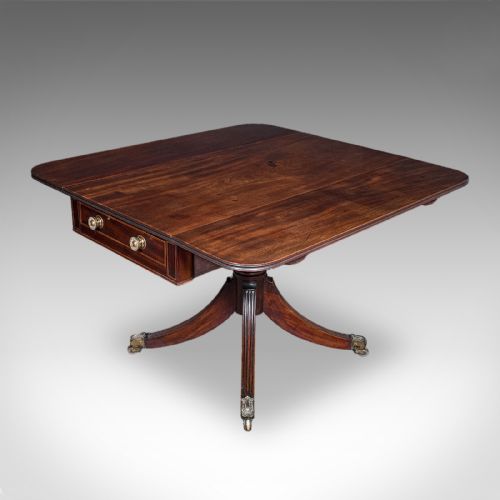
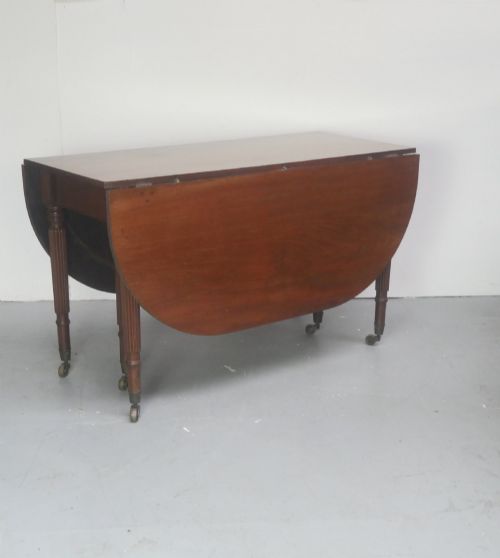
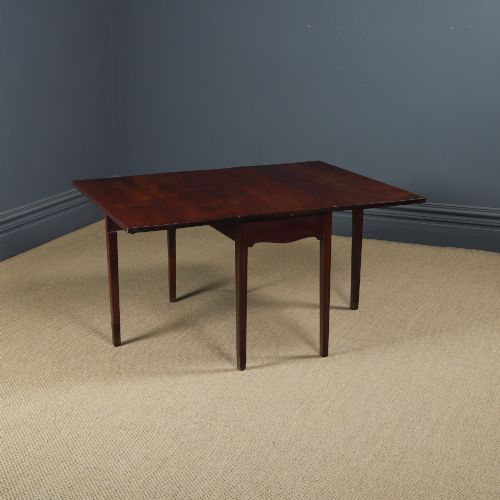
Surviving pieces take various forms, including occasional tea tables, occasional bedside tables, and larger variants intended for dining or supper use. Most pieces meet on this page originate from Georgian and Regency workshops.
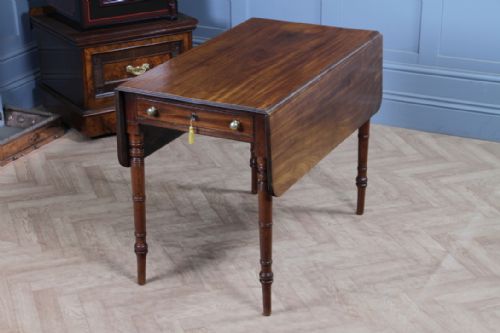
Makers often incorporated fitted drawers for silver or writing materials, standing upon legs that range from simple slender supports to spider leg configurations or central pedestals.
Distinctions in Standard
Quality separates through the choice of timber figure, such as flame mahogany or selected satinwood, against plain utility woods.
Fine craftsmanship shows in the crispness of boxwood and ebony inlay, the smooth operation of drop leaf hinges, and the precise fitting of drawers with original keys.
Listings feature mahogany, satinwood, brass, and iron across Georgian, Regency, and Victorian periods.
Williamson
The English Pembroke Table Glossary
- Pembroke table
- A small drop leaf table with hinged flaps on two opposing sides, typically fitted with a drawer.
- Drop leaf
- A hinged table leaf that folds down when not in use to reduce the overall footprint.
- Satinwood
- A lustrous, hard timber native to Ceylon and India, used extensively for decorative veneers and inlay.
- Spider leg
- A style of exceptionally slender turned table legs braced by delicate stretchers.
- Regency
- The period of British design spanning the early nineteenth century, characterised by classical restraint and rich mahogany veneers.
English Pembroke Table: Frequently Asked Questions
What is an english pembroke table?
An english pembroke table is a small, versatile table featuring two hinged drop leaves on opposing sides.
Such tables usually incorporate a single drawer and were designed to stand against a wall until needed for tea, writing, or dining.
How were these tables used?
These pieces served multiple domestic functions in period rooms, acting as occasional, tea, or writing surfaces.
Raising the leaves allowed owners to adapt the furniture for small meals or needlework before folding it flat to save space.
How do I identify a Regency period table?
Regency examples display classical proportions, often executed in dark mahogany with restrained brass mounts and robust turned legs.
Makers of this era frequently utilised boxwood stringing and brass castors to ease movement around the drawing room.
Can these tables be used for dining?
Certain larger variants equipped with four-seat capacities or extending mechanisms function well as compact dining tables.
Selecting a sturdy drop leaf model ensures reliable support when both flaps are raised during meals.