



English Pearlware Plate
An english pearlware plate carries the refined blue transfer-printed scenes of the Georgian era.
English Pearlware Plate
When searching for an english pearlware plate, collectors encounter earthenware items produced primarily during the Georgian period, including plates, dishes, and serving platters. These ceramics bridge the gap between early creamware and later ironstone, defined by a distinct body type and refined glaze formulation.
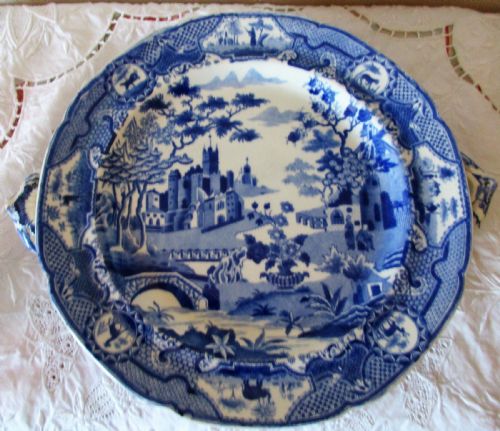
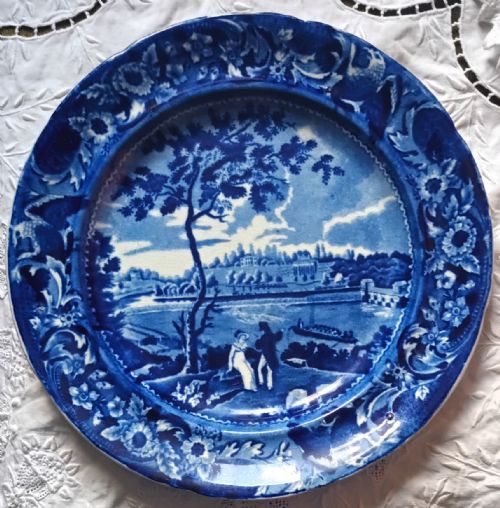
The versions most frequently met on this page showcase blue and white transfer-printed decoration depicting architectural ruins, pastoral views, and Chinoiserie landscapes. Examples span specific regional potteries from Staffordshire and Yorkshire, featuring named patterns such as Gothic Castle and Fair Mount near Philadelphia alongside unmarked archival pieces.
Materials and construction
Potters constructed these vessels using refined earthenware clay bodies to achieve a lighter, thinner fabric than traditional creamware. Artisans applied a subtle cobalt glaze that pooled slightly in recesses, giving the ceramic surface its characteristic bluish tinge.
Decoration relied on copper-plate transfer printing to apply intricate blue designs onto the biscuit earthenware before final glazing and firing. This technique allowed potteries to produce consistent pictorial scenes across large series of plates, dishes, and chargers.
Listings feature earthenware plates and platters from the Georgian period decorated with cobalt glaze and transfer-printed scenes.
Assessing quality and execution
Quality rests upon the clarity of the transfer print and the successful interaction between the cobalt pigment and the glaze. Finer pieces maintain crisp lines in complex architectural or figural scenes without blurring or smudging from the firing process.
The sophistication of the potter's palette and the depth of the blue glaze determine the visual weight of the object. Superior examples display an even, luminous glaze layer across the face of the plate, accentuating the underlying ceramic body.
Spode·Stubbs·William Adams·John Rogers and Son·Thomas and John Carey
The English Pearlware Plate Glossary
- Pearlware
- A refined earthenware developed in the late eighteenth century featuring a thin glaze with a slight bluish hue.
- Transfer printing
- A method of applying detailed designs to pottery by transferring engraved prints from copper plates via tissue paper.
- Chinoiserie
- A European decorative style reflecting Chinese artistic motifs, commonly seen on Georgian blue and white ceramics.
- Tazza
- A shallow saucer or bowl raised on a stem, used as a serving dish or stand in nineteenth-century dining.
English Pearlware Plate: Frequently Asked Questions
How do I date an english pearlware plate?
Dating relies on stylistic clues, pattern names, and the tint of the glaze, which tends to be deeper on earlier eighteenth-century items. Many pieces correlate with documented historical prints or specific pottery operating dates from the Georgian era.
Marked examples often point to active manufacturer years, while unmarked wares require careful comparison of the ceramic body, border motifs, and transfer printing style against known archives.
What is the difference between creamware and pearlware?
Creamware possesses a warm, buttery-yellow tone in its glaze, whereas pearlware incorporates a small amount of cobalt to create a whiter, slightly bluish appearance that mimics Chinese export porcelain.
Potters shifted toward pearlware around the turn of the nineteenth century to satisfy the growing demand for brighter, blue-and-white tableware.
Can I use these plates for daily dining?
These antique ceramics are best reserved for display or light decorative use rather than rigorous modern dining routines. The historic glaze and earthenware body are susceptible to staining and thermal shock from contemporary dishwashers.
Gentle hand washing in warm water preserves the integrity of the fragile ceramic fabric and the delicate transfer-printed surface.
Why do some plates have blue edges?
Feathered or shell-edged borders served as an economical yet elegant decorative finish popular on early tableware before complex central scenes became standard. Potters brushed cobalt pigment along the moulded rim to create a feathered effect during firing.
This technique provided a neat frame for simpler pearlware plates and soup dishes produced in large quantities across Staffordshire potteries.