

English Painted Bone China
English painted bone china brings together delicate ceramics and hand-rendered detail, offering functional table pieces and display items from past centuries.
English Painted Bone China
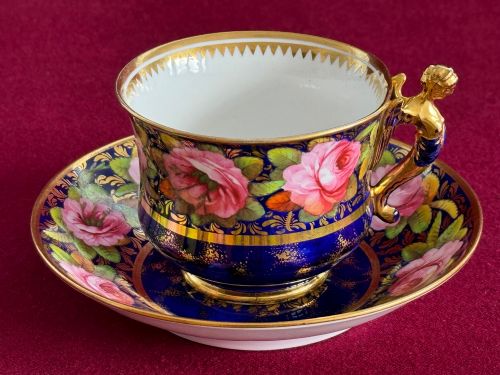
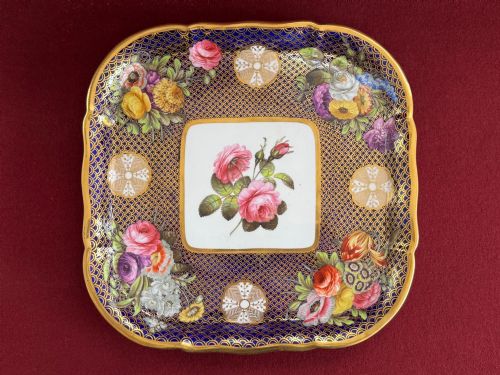
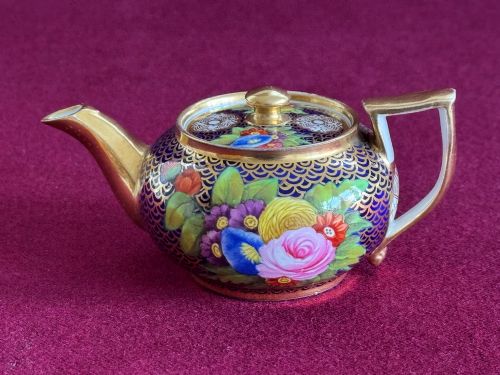
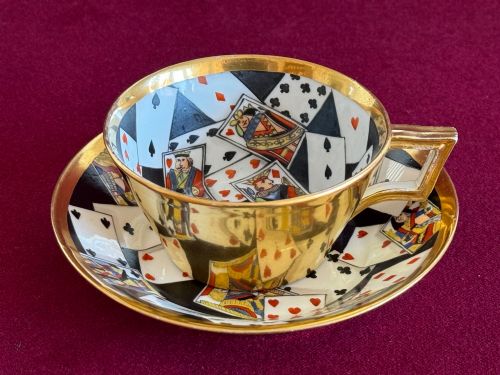
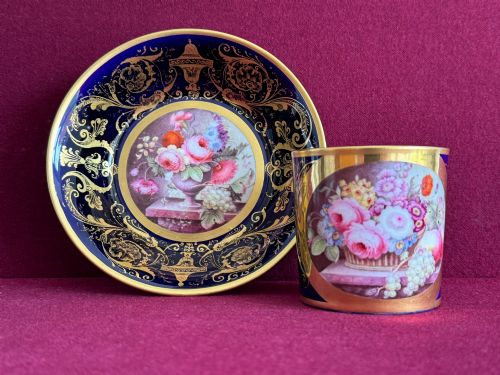
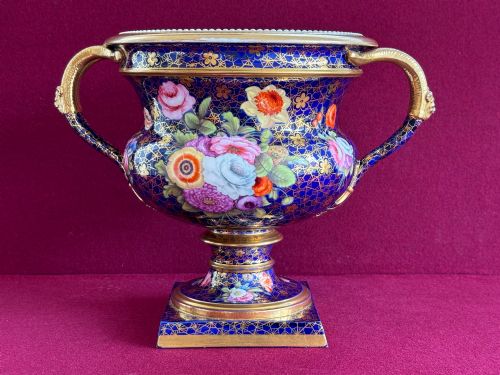
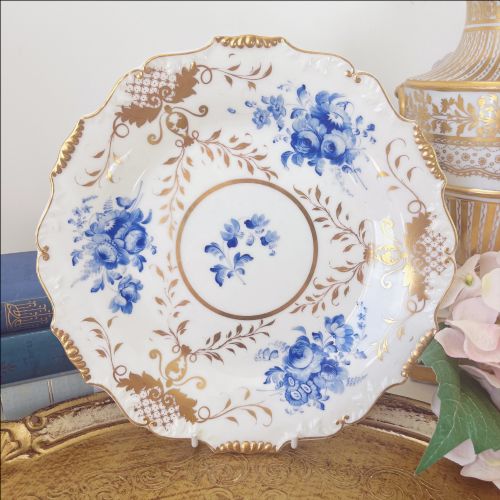
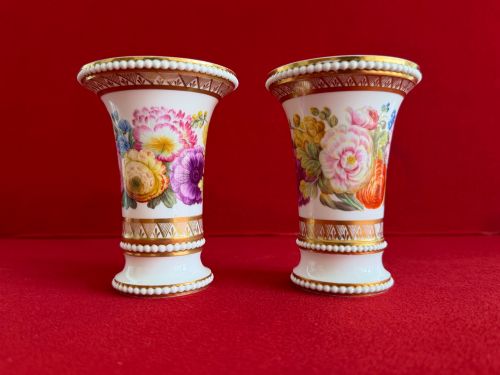
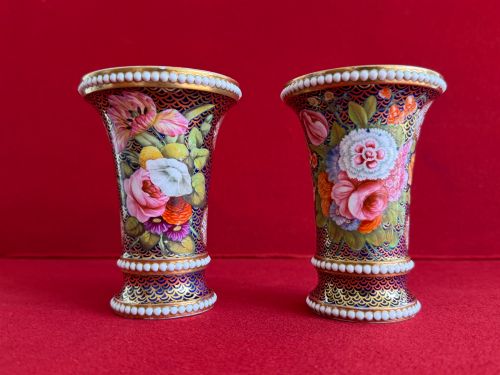
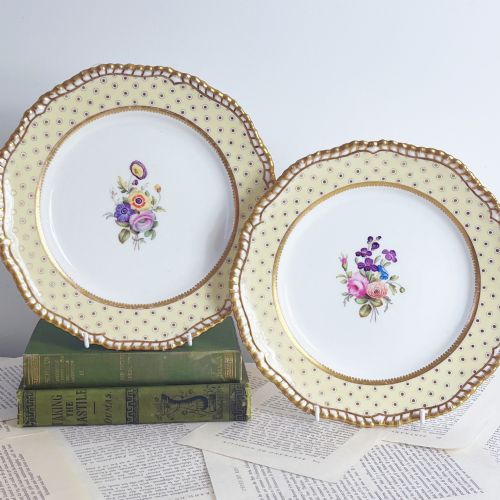
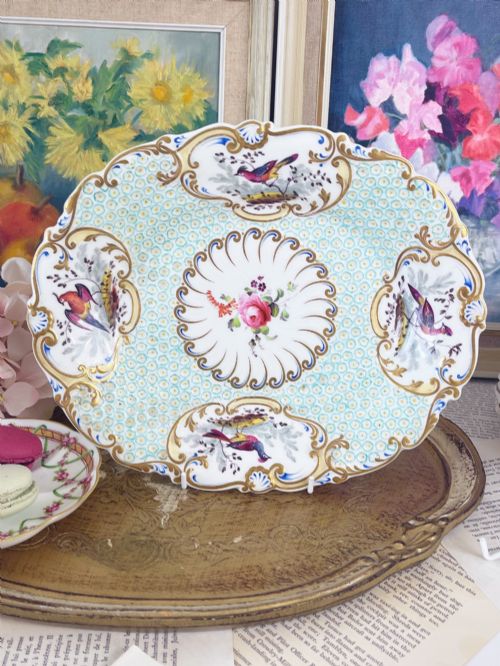
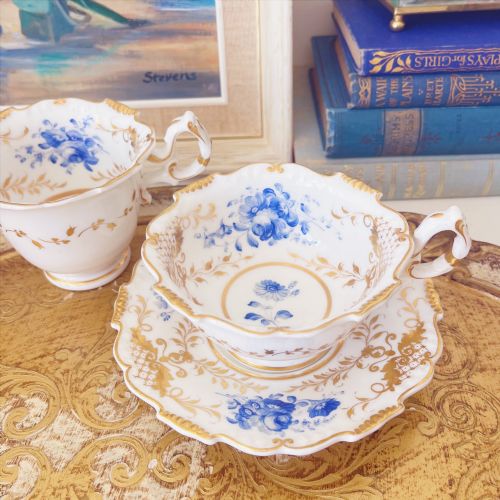
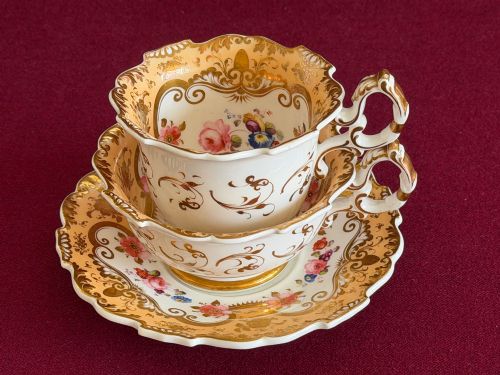
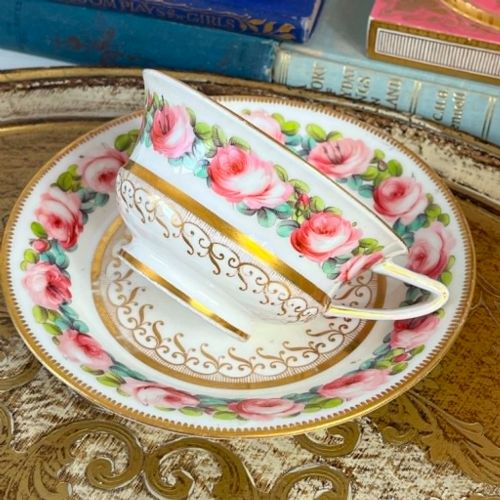
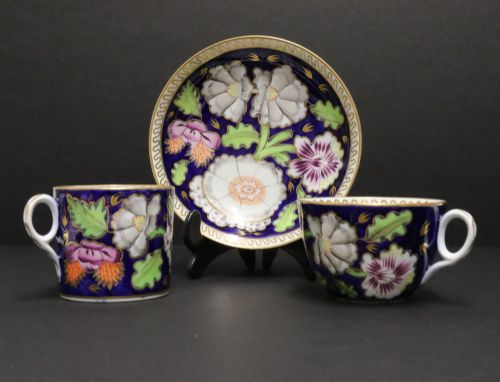
When you examine english painted bone china, you encounter items designed for both daily use and formal display, spanning eras from the Georgian period through the twentieth century. The selection contains cabinet plates, tea and coffee trios, decorative plates, figurines, teapots, vases, and sugar bowls.
You are most likely to meet nineteenth-century cabinet plates and tea wares on this page, alongside twentieth-century painted fruit plates and porcelain figurines. Makers such as Spode, H & R Daniel, and Royal Worcester appear frequently across these forms.
How they were made
Makers produced english painted bone china using refined ceramic bodies combined with hand-applied mineral pigments and metallic elements. Artisans brushed detailed botanical, avian, and landscape subjects directly onto the glazed surfaces before secondary firing.
Craftsmen applied gold leaf and gilt detailing to accentuate borders and handles on plates, cups, and vases. Potters shaped forms using traditional moulds and threw vessels on wheels, depending on whether the object was a figurine, teapot, or flatware.
Some nineteenth-century artists snuck tiny hidden ladybirds into the corners of their botanical plate paintings just to amuse observant buyers.
What varies in quality
Quality in english painted bone china rests upon the precision of the brushwork and the complexity of the painted composition. Pieces featuring named artists and detailed naturalistic subjects sit at the upper end of the range.
The refinement of the ceramic body and the crispness of the gilt work also determine the standing of an object. Earlier pieces with intricate patterns command attention through their technical execution and preserved surface condition.
Spode·H & R Daniel·Royal Doulton·Derby Porcelain·Wedgwood·Davenport·Coalport·Royal Worcester·Royal Crown Derby·Ridgway·Minton·Copeland
The English Painted Bone China Glossary
- Bone china
- A type of soft-paste porcelain incorporating animal bone ash, producing a durable ceramic body with a bright white colour. This material allows for thin-walled vessels that retain notable strength.
- Cabinet plate
- A decorative ceramic plate intended for display in a cabinet rather than for dining use. These items frequently feature elaborate handpainted scenes or botanical studies.
- Trio
- A matching set comprising a teacup, coffee cup, and saucer. This combination gained popularity in nineteenth-century tea service traditions.
- Gilt
- A thin layer of gold applied to the surface of porcelain for ornamentation. It appears on rims, handles, and painted borders.
- Sucrier
- A small vessel with a lid designed to hold lump or granulated sugar for tea service. They often match the pattern of contemporary teapots and cups.
English Painted Bone China: Frequently Asked Questions
How do I date english painted bone china?
Dating relies on identifying backstamps, pattern numbers, and stylistic markers associated with specific potteries. Examining the manufacturing techniques and the palette used in the handpainted decoration also helps narrow the production era.
Changes in ceramic bodies and factory names over the nineteenth and twentieth centuries provide further clues. Comparing piece shapes with documented factory catalogues offers precise chronological placement.
Were these painted items meant for daily use?
Many teacups, saucers, and teapots were manufactured for functional dining and social rituals of the period. Their survival in usable condition reflects the care successive owners took with fragile tableware.
Conversely, cabinet plates and ornamental vases were strictly intended for interior display. These items often feature delicate enamel work that would wear down under regular handling.
What distinguishes bone china from standard porcelain?
Bone china incorporates calcined bone ash into the paste mixture, which creates a lighter, translucent ceramic body. This composition allows pieces to be formed with thinner walls without sacrificing structural integrity.
Standard porcelain relies on kaolin and petuntse without bone ash content. Bone china also tends to display a warmer, softer white background colour compared to certain hard-paste porcelains.