


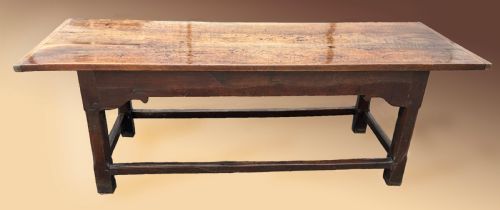


English Oak Monastery Table
These english oak monastery table examples are heavy timber dining boards built for communal gathering, prized for their sturdy construction and rich grain.
English Oak Monastery Table
An english oak monastery table is a robust dining surface typically associated with communal halls and rural houses. Buyers searching for this phrase seek sturdy timber boards designed to anchor a large dining space.
The versions most commonly met on this page span several eras from the seventeenth century onwards, including revival pieces from the nineteenth and early twentieth centuries. These tables often appear under descriptions such as refectory or trestle tables, reflecting their long and narrow proportions.
Makers utilised solid oak throughout their construction, resulting in substantial pieces built to withstand decades of heavy daily use. Regional variations lean towards rustic farmhouse and Jacobean styles, showing simple lines or carved structural supports.
How they were made
Joiners built these tables using solid oak planks joined together to form wide tabletops, sometimes resting on three distinct boards. Trestle bases and sturdy legs provide the structural support necessary for such heavy timber tops.
Traditional carpentry techniques relied on pegged mortise and tenon joints to secure the framework without modern fasteners. Surfaces were hand-planed and finished to highlight the natural figure of the oak.
English Oak Monastery Table Retail Price Guide 2026
Typical asking prices for english oak monastery table among the pieces listed under this phrase on Sellingantiques today, from the lower quarter to the upper quarter. They describe what is for sale here now, not the wider market.
Listings feature oak tables spanning the seventeenth century through to the Edwardian period and nineteen-thirty.
What varies in quality
The distinction between a standard example and a superior piece lies in the age of the timber and the integrity of the original construction. Earlier examples from the seventeenth century display the patination of genuine age and wear that later revivals attempt to replicate.
Proportions and timber selection also drive differences across the range, with wider planks and denser grain marking out the more substantial dining boards. The sophistication of the base construction, from simple trestles to carved stretchers, separates utilitarian tables from grander versions.
The English Oak Monastery Table Glossary
- Refectory table
- A long, narrow dining table traditionally used in monastic refectories and large households. This form dominates the selections seen in these listings.
- Trestle base
- A structural support system consisting of two or more upright supports connected by a horizontal beam or stretcher. It allows maximum legroom along the length of the table.
- Plank top
- A table surface constructed from multiple long boards joined edge to edge. Earlier tables often feature fewer, wider boards.
- Jacobean revival
- A decorative style popular in the nineteenth and early twentieth centuries that imitates the heavy, carved aesthetic of the early seventeenth century.
- Patina
- The surface sheen and colour developed by aged wood through decades of handling, polishing, and exposure to light.
English Oak Monastery Table: Frequently Asked Questions
What is an english oak monastery table?
An english oak monastery table is a long, heavy dining surface traditionally built for communal dining halls. These pieces are constructed entirely from solid oak timber and are designed to seat multiple diners.
The listings on this page show examples ranging from seventeenth-century originals to later revival pieces from the nineteenth and twentieth centuries.
How do I date an oak refectory table?
Dating these tables involves examining the construction methods, tool marks, and the natural wear on the timber. Seventeenth-century pieces display hand-cut joinery and deep patination, whereas nineteenth-century revivals often utilise machinery alongside traditional techniques.
Looking at the width of the planks and the style of any turned supports also provides clear clues to the period of manufacture.
How were these tables used originally?
These tables served primarily as communal dining boards in large domestic halls, monasteries, and country houses. Their long proportions allowed many people to sit together for meals.
Today, buyers repurpose them as large kitchen or dining room tables that serve as the focal point of a rustic or traditional interior.
How do I care for antique oak furniture?
Caring for solid oak involves keeping the timber away from direct heat sources and sudden humidity changes to prevent splitting. Regular dusting with a soft cloth helps maintain the surface.
Applying a traditional beeswax polish occasionally nourishes the wood and enhances the natural grain and patina.