



English Oak Flap Table
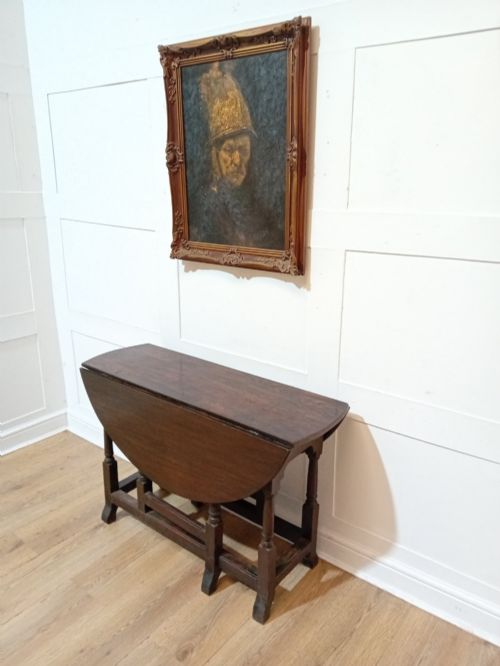
An english oak flap table is a sturdy domestic surface with folding leaves that saves space when closed, offering genuine antique character for any room.
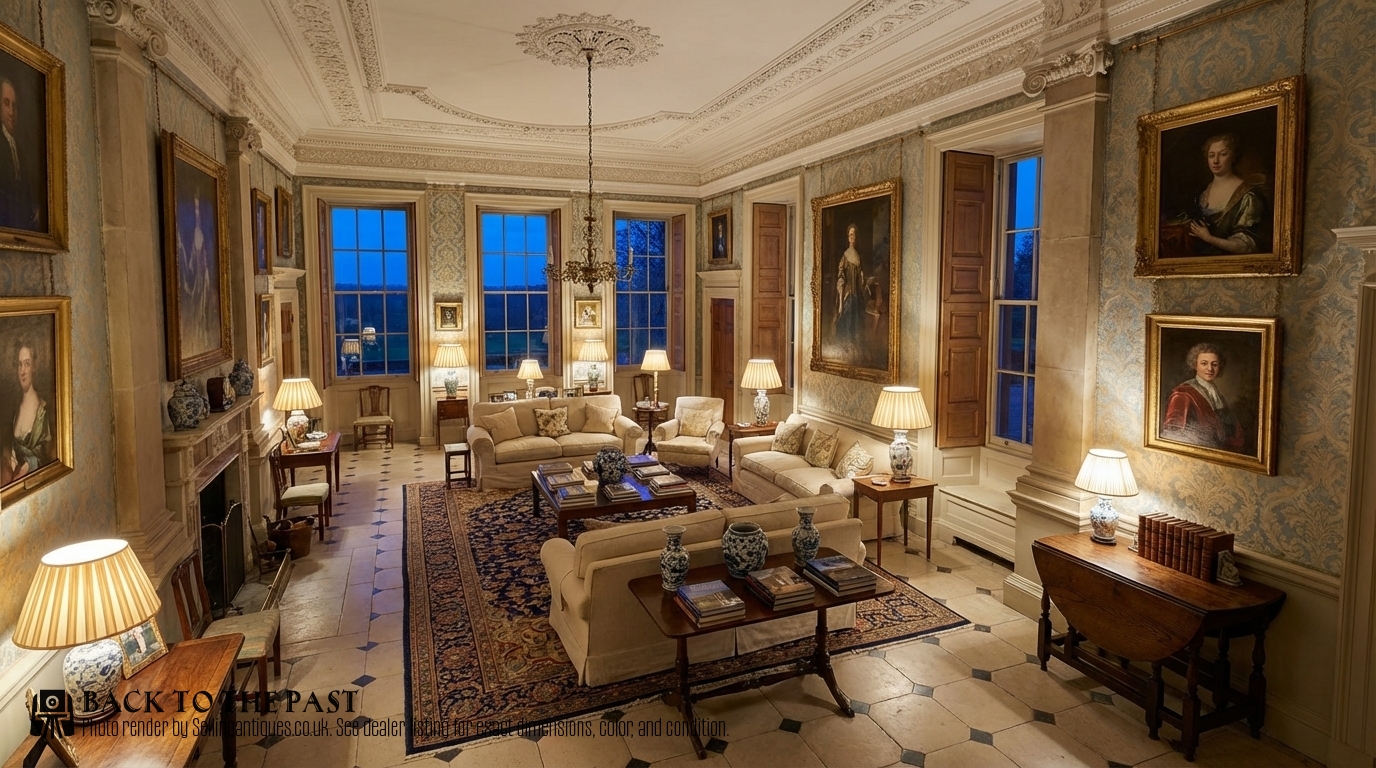
English Oak Flap Table
The english oak flap table encompasses versatile furniture designed to extend when needed and fold away compactly. Buyers searching for an english oak flap table frequently encounter functional gateleg designs alongside compact side tables and larger dining pieces.
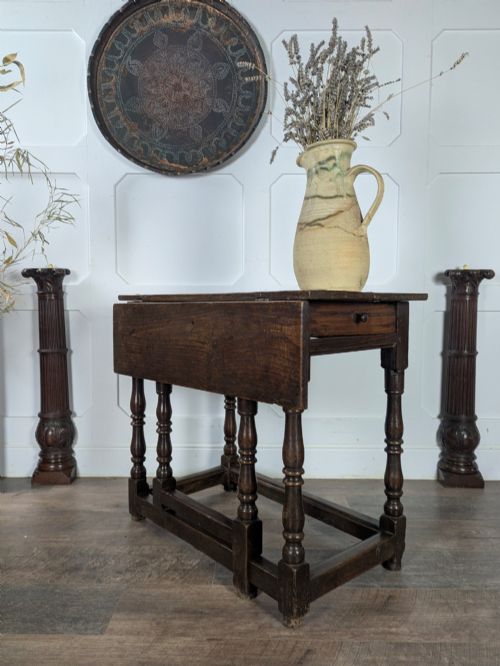
The selections span from authentic late seventeenth-century examples to later twentieth-century revival interpretations. Surviving forms range from small domestic side pieces to substantial six-seat kitchen and dining tables.
Originating in robust domestic traditions, these tables utilise hinged flaps supported by swing legs or gates. This mechanical ingenuity allows a modest surface to transform into a wide oval or rectangular table.
Construction and Materials
Makers built these pieces primarily from solid oak, relying on its dense grain for structural integrity. Iron hinges and fixings provide the necessary pivot points for the drop leaves and swinging gatelegs.
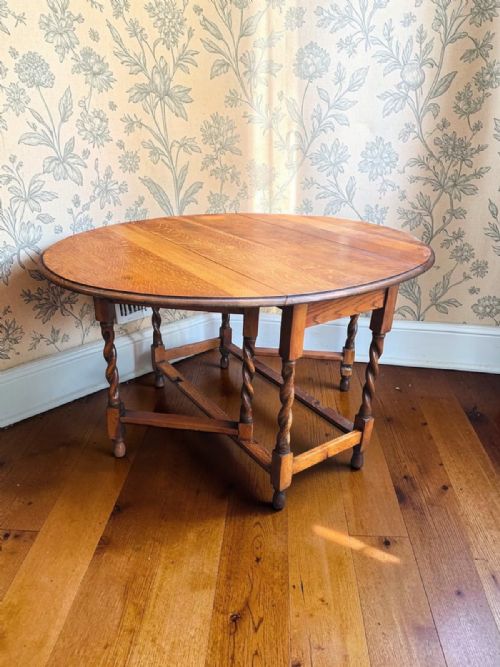
Carpenters shaped the timber using traditional jointing methods to support the weight of the folding leaves. Turning techniques produced characteristic supports such as barley twists and baluster posts.
English Oak Flap Table Retail Price Guide 2026
Typical asking prices for english oak flap table among the pieces listed under this phrase on Sellingantiques today, from the lower quarter to the upper quarter. They describe what is for sale here now, not the wider market.
The listings span seventeenth-century origins through to nineteen-twenties revivals, constructed predominantly in solid oak with iron hardware.
Assessing Quality
Quality rests upon the proportion and balance of the turned legs when the table stands fully extended. Superior examples display thoughtful integration between the fixed frame and the moving flap supports.
The depth of the surface finish and the condition of the timber grain dictate visual appeal. Original patination accumulated over centuries separates untouched early pieces from later restorations.
The English Oak Flap Table Glossary
- Gateleg table
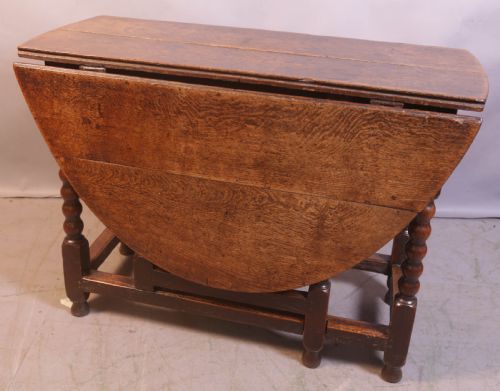
- A table with hinged leaves supported by legs that swing outward like a gate. This construction provides robust support for the drop-down sections.
- Barley twist
- A spiralling carved column resembling a twisted rope. This decorative turning style appears frequently on table legs from the seventeenth century and its later revivals.
- Baluster post
- A moulded vertical support shaped like a vase or pillar. These form the sturdy leg structures on early examples.
- Drop-leaf
- A hinged section of a tabletop that folds down when not in use. It allows the overall footprint of the furniture to shrink considerably.
- Patina
- The surface sheen and colour developed by timber over long periods of handling and age. It serves as an indicator of historical depth.
English Oak Flap Table: Frequently Asked Questions
How do I use a gateleg table daily?
Keep the flaps folded down against the sides to save floor space in smaller rooms. Swing the outer legs outward to lift and support the leaves whenever you need an expanded surface for dining or working.
Position the table so that the gateleg mechanisms operate smoothly without catching on rugs or uneven flooring. Regular use helps maintain the hinges and joints through gentle, balanced movement.
How can I tell a seventeenth-century table from a revival piece?
Examine the construction marks, tool traces, and the way the timber has aged and worn over time. Seventeenth-century originals show hand-carved details and traditional peg fixings that differ from twentieth-century manufacturing methods.
Look closely at the underside and the hinges for signs of historical replacement or modern intervention. Comparing the colour and wear patterns across the fixed frame and the folding flaps also clarifies the age of the piece.
Are these tables suitable for modern dining rooms?
Their adaptable footprint makes them practical for contemporary homes that require flexible furniture arrangements. You can seat extra guests by simply raising the leaves, then fold them down afterward.
Pair the warm tones of the timber with simple seating to let the historic character stand out. The sturdy oak construction easily handles daily meals and gatherings.