

English Oak Dining Set
An english oak dining set anchors the room with sturdy timber and honest joinery, offering both durability and timeless character for daily meals.
English Oak Dining Set
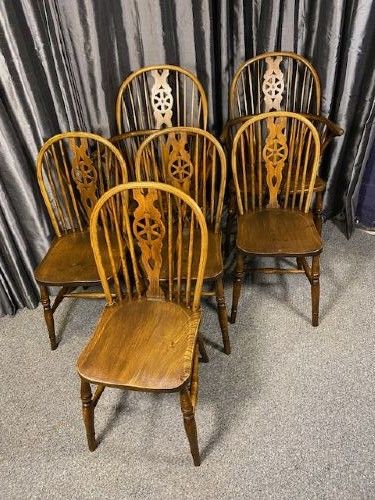
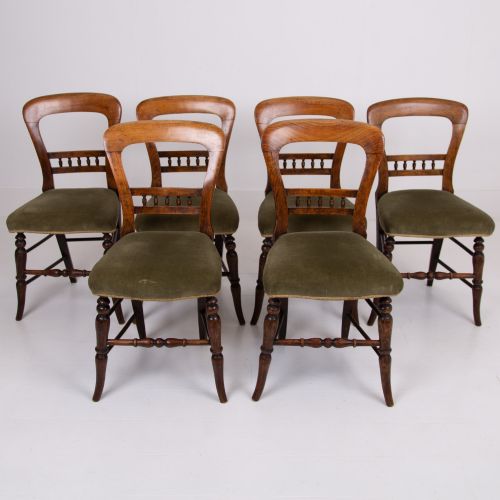
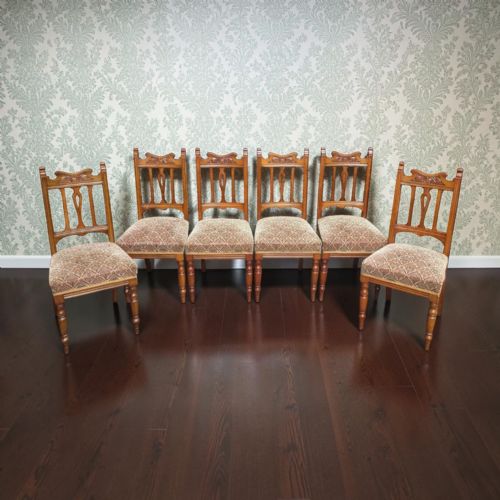
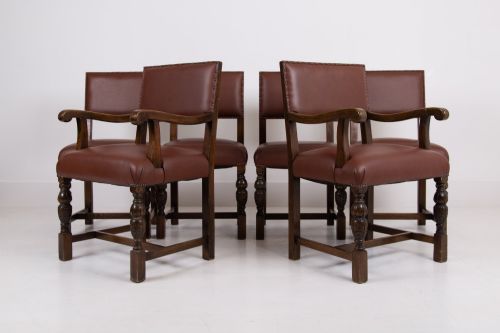
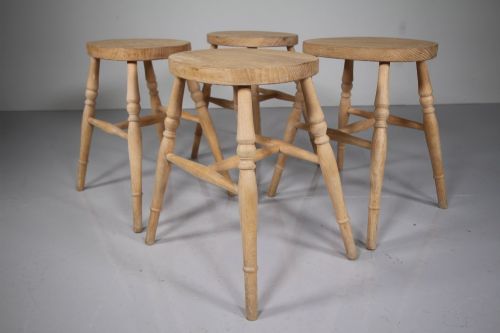
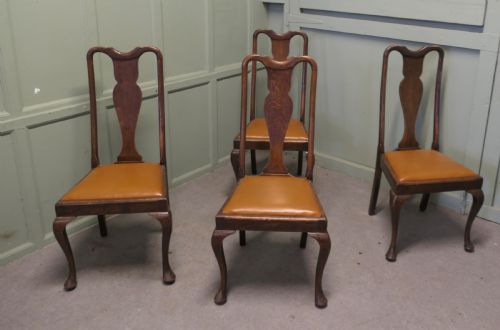
When you search for an english oak dining set, you encounter gatherings of seating and occasional tables drawn from English country houses, farmhouses, and provincial workshops. These groups span multiple periods, including 19th Century examples alongside pieces from the Edwardian era and the 1920s.
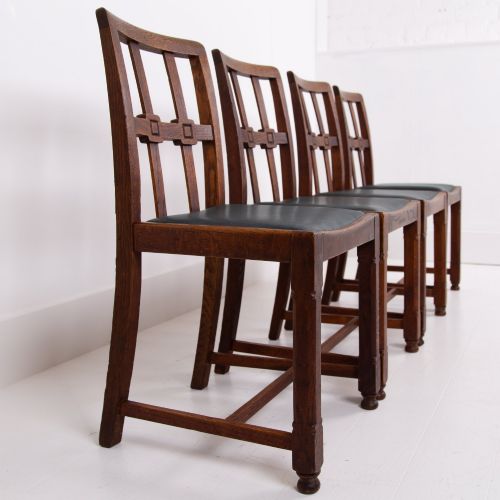
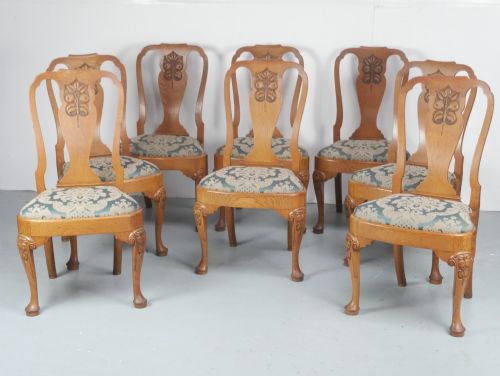
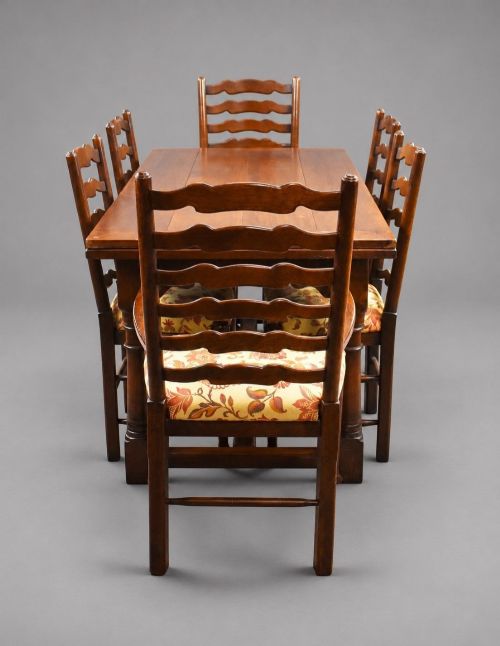
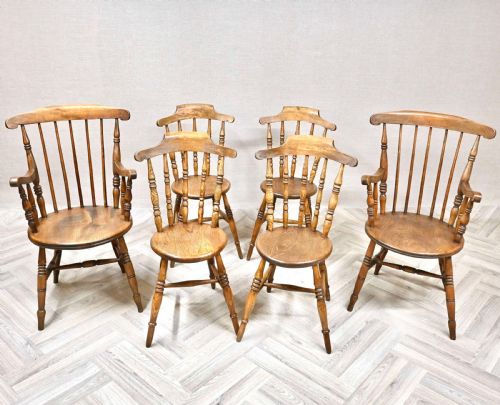
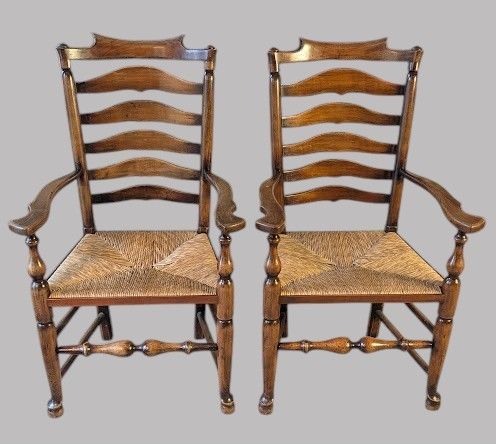
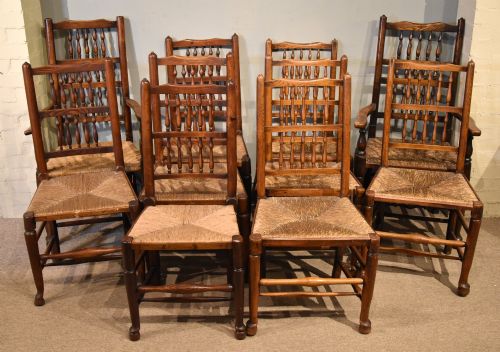
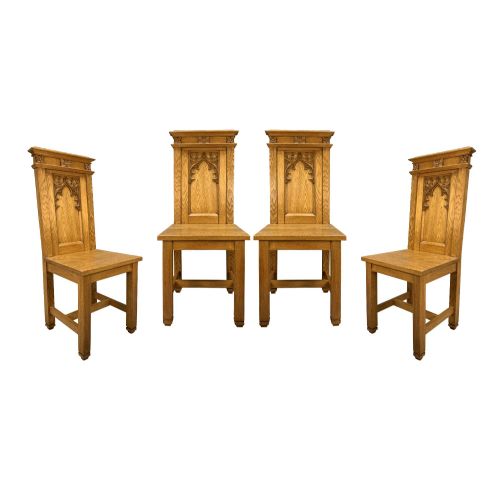
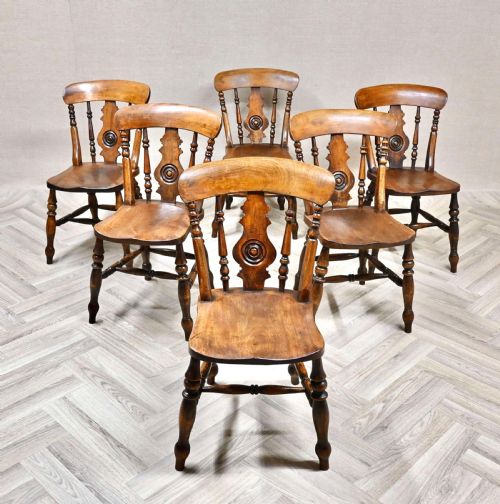
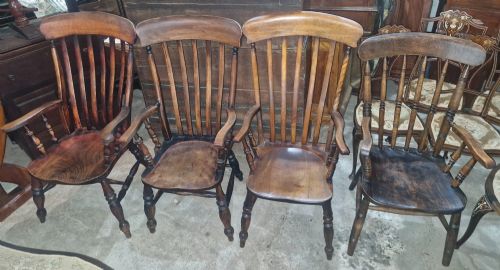
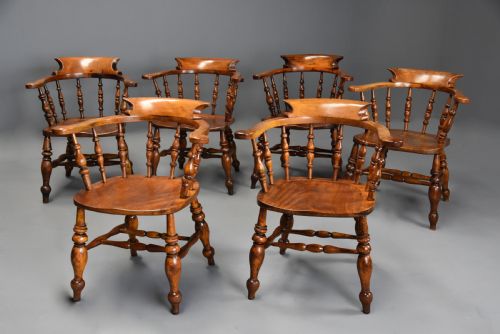
The most common forms on this page are matched sets of kitchen and dining chairs, particularly Windsor designs with lathbacks, wheelbacks, or bullseye splats. Alongside these sit ladder backs, spindlebacks, and occasional sets reflecting vernacular styles such as Derbyshire, Lancashire, and Gothic revivals.
Sets range from intimate pairs and quartets up to extensive groupings of ten or twelve chairs, frequently accompanied by elm, beech, or rush elements. Buyers select these assemblies to bring genuine domestic history and robust seating into modern dining spaces.
How they were made
Traditional English cabinetmakers and regional bodgers utilised solid native timbers, pairing sturdy oak frames with secondary woods such as elm, beech, and ash for seats and spindles. This combination provided structural strength where weight mattered most while allowing for shaped saddle seats and steam-bent components.
Construction relied on traditional joinery techniques, including mortise and tenon joints, turned legs secured by box stretchers, and pegged frames that accommodated the natural movement of timber over decades of use.
English Oak Dining Set Retail Price Guide 2026
Typical asking prices for english oak dining set among the pieces listed under this phrase on Sellingantiques today, from the lower quarter to the upper quarter. They describe what is for sale here now, not the wider market.
Materials across the selection extend beyond solid oak to incorporate elm seats, beech stretchers, ash spindles, and woven rush.
What varies in quality
The distinction between standard provincial output and finer workshop production lies in the selection of timber and the precision of the turning. Superior sets demonstrate careful matching of grain patterns across multiple chairs, balanced proportions in spindle and arm components, and comfortable saddle-moulded seats.
Integrity of the original construction separates well-preserved sets from those with heavily replaced members or compromised joints. Cohesiveness within a group, whether a true matched set or a harmonious harlequin assembly, dictates the overall character and visual balance of the collection.
M. D. Miller & Sons Nottingham·Worksop Allsop
The English Oak Dining Set Glossary
- Windsor
- A traditional chair style featuring a solid wood saddle-shaped seat into which the legs and back spindles are wedged directly. These chairs often incorporate steam-bent bow backs and carved splats.
- Spindleback
- A chair design characterised by a series of slender turned wooden uprights fitted between the seat and the top rail. This construction provides lightweight yet sturdy support.
- Rush seat
- A seating surface woven from dried marsh rushes twisted into cords and patterned tightly across the chair frame. This technique creates a resilient and flexible base.
- Harlequin set
- A collection of dining chairs that share similar periods, heights, or vernacular styles without forming a strict factory-matched set. They offer a collected rather than uniform aesthetic.
- Farthingale chair
- An upholstered, armless chair dating from the 17th century designed with a wide seat to accommodate the voluminous skirts worn during the period.
English Oak Dining Set: Frequently Asked Questions
What defines an english oak dining set?
An english oak dining set comprises grouped seating or dining furniture constructed primarily from native oak, often reflecting regional English vernacular styles from the eighteenth, nineteenth, and early twentieth centuries.
These collections bring together chairs with shared characteristics, such as Windsor lathbacks, spindlebacks, or ladder backs, offering a cohesive historical aesthetic for domestic dining spaces.
How do I care for antique oak?
Antique oak benefits from consistent indoor humidity levels and protection from direct heat sources and strong sunlight, which can dry out and split the timber over time.
Regular dusting with a soft cloth and occasional application of appropriate beeswax maintain the natural lustre of the wood without building up heavy chemical residues.
Are harlequin sets practical for daily use?
Harlequin sets combine chairs of similar height, period, and vernacular design, providing a flexible and visually interesting seating arrangement around a dining table.
Because individual chairs share comparable proportions and seat heights, they function comfortably for everyday dining while displaying a collected, organic character.
How do I distinguish regional chair styles?
Regional styles reveal themselves through distinct construction details, such as the distinctive turned profiles of High Wycombe Windsor chairs or the characteristic high backs of Lancashire and Derbyshire ladder backs.
Local timber choices also offer clues, with regional makers frequently combining oak frames with elm seats, ash bows, and beech stretchers depending on local woodland availability.