



English Marquetry Furniture
English marquetry furniture brings together richly figured timbers and delicate floral or geometric veneers, offering a commanding presence for a traditional interior.
English Marquetry Furniture
English marquetry furniture encompasses case pieces and tables decorated with patterned wood veneers arranged to form pictorial or geometric designs. When searching for english marquetry furniture, buyers encounter substantial storage pieces alongside occasional tables and display cabinets.
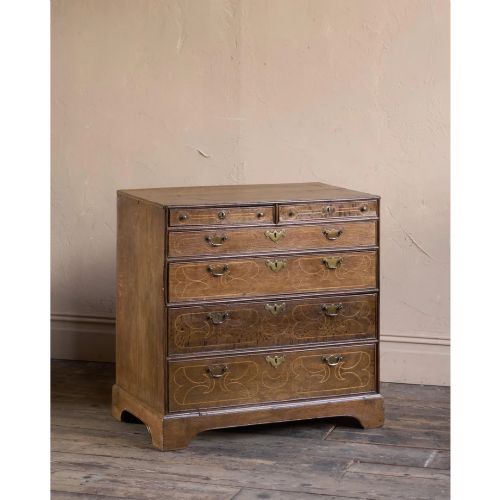
The selections span distinct historical eras, most notably the late seventeenth century under William and Mary, the eighteenth century through George III and Sheraton periods, and later revivals in the Victorian and Edwardian eras. Chests of drawers and cabinets dominate the early periods, while satinwood and mahogany commodes and tables appear more frequently in later decades.
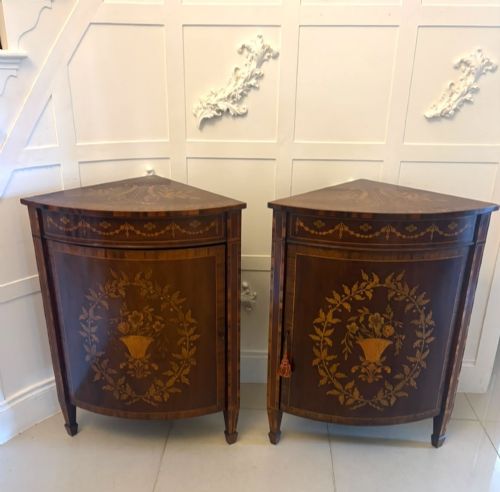
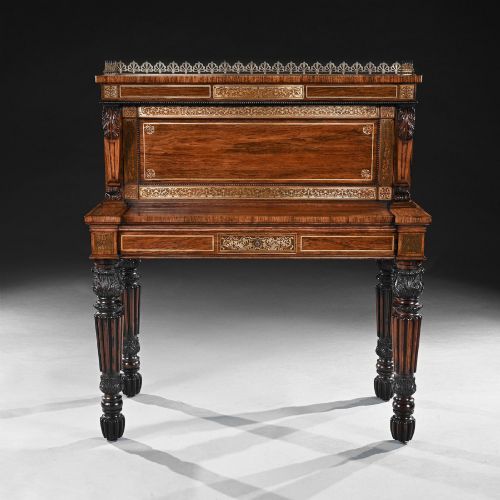
Makers utilised diverse forms ranging from bureau desks and side cabinets to corner cupboards and credenzas. Each piece demonstrates the prevailing aesthetic of its period, shifting from early floral panels to neoclassical urns and scrolling foliage.
Evaluating Quality and Execution
The distinction between tiers rests upon the precision of the veneer cutting and the complexity of the timber selection. Finer examples employ choice burrs and deeply figured woods that catch the light, whereas simpler items rely on basic geometric bandings.
Design integration separates superior items from standard production, as seen in how seamlessly the floral panels follow the contours of a serpentine commode or cabinet front. The crispness of the engraving within the veneer work further indicates the hand of a skilled workshop.
English Marquetry Furniture Retail Price Guide 2026
Typical asking prices for english marquetry furniture among the pieces listed under this phrase on Sellingantiques today, from the lower quarter to the upper quarter. They describe what is for sale here now, not the wider market.
The listings span from seventeenth-century oyster-veneered pieces to late nineteenth-century Victorian and Edwardian revival cabinets.
Gillows Oxford Street Workshop·Ince and Mayhew
The English Marquetry Furniture Glossary
- Marquetry
- A decorative technique where small pieces of tinted or natural wood veneer are assembled to form pictorial or geometric patterns on a carcase.
- Oyster Veneer
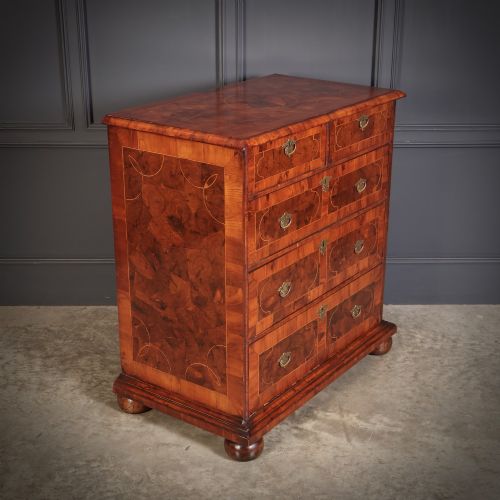
- Cross-sections of small branches cut to create circular or oval grain patterns, popular on late seventeenth-century case furniture.
- Satinwood
- A pale, lustrous timber native to the tropics, frequently utilised in eighteenth-century and revival pieces for its bright yellow ground.
- Stringing
- Thin, narrow strips of contrasting wood inlaid into channels on table tops or drawer fronts to create linear borders.
- Commode
- A low decorative cabinet or chest of drawers, often with serpentine or demi-lune fronts, originating in the eighteenth century.
English Marquetry Furniture: Frequently Asked Questions
How do I date an marquetry chest?
Early pieces from the seventeenth century often feature oyster veneers combined with walnut or olive woods, frequently constructed on oak carcases with hand-cut dovetails. Later revival items from the nineteenth century display machine-sawn timbers and brighter satinwood grounds.
Examining the secondary woods inside drawer linings and the style of the brass hardware helps confirm the correct period of manufacture.
Where should I place a cabinet?
These decorative cabinets and commodes suit principal reception rooms or hallways where their veneered surfaces remain visible and protected from direct sunlight. Placing them away from heat sources prevents the wood veneers from drying out and lifting.
Pairing a marquetry side cabinet with plain walls allows the intricate floral or geometric wood patterns to remain the focal point of the room.
How do I care for antique veneer?
Maintain stable humidity levels in the room to prevent the historic animal glues beneath the veneers from failing and causing blistering. Dust the surfaces regularly with a soft, dry cloth rather than applying modern silicone sprays.
Applying a traditional beeswax polish occasionally nourishes the timber and preserves the natural lustre of the various woods without sealing the surface permanently.
What is oyster veneering?
Oyster veneering is a decorative method where small branches are sliced across the grain to produce circular discs resembling oyster shells. Artisans fitted these rounds closely together to create intricate, repeating patterns across large drawer fronts and table tops.
This technique is a defining characteristic of late seventeenth-century cabinet making during the William and Mary period.