


English Mahogany Cellarette
These English mahogany cellarettes are period storage pieces designed to keep bottles cool or secure near the dining table.
English Mahogany Cellarette
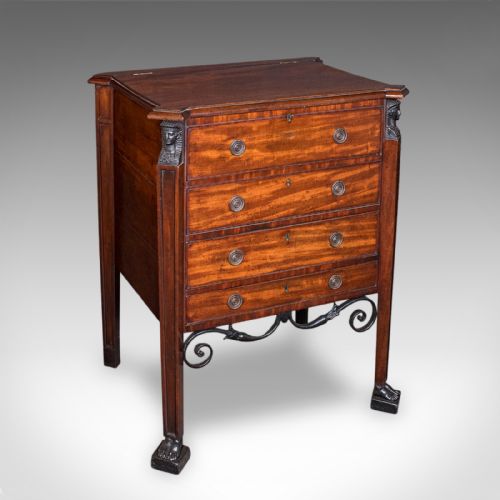
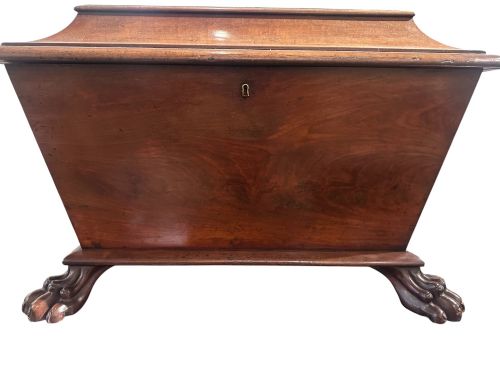
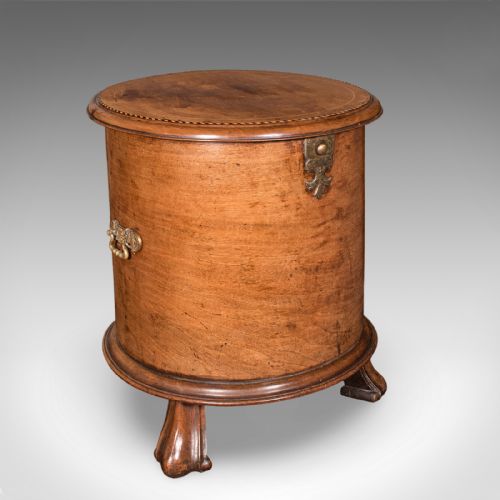
An english mahogany cellarette takes several distinct forms across the Georgian, Regency, and Victorian periods, including sarcophagus shapes, oval designs, and pedestal wine coolers. Buyers seeking an english mahogany cellarette will encounter items built for storing and chilling wine during grand dining occasions.
Many examples utilise rich flame mahogany veneer, often accented with brass banding or iron fittings, while some feature stands or interior zinc linings. These storage cases serve diverse functions across the centuries, appearing as fireside stores, blanket boxes, or cocktail cabinets.
Materials and construction
Makers utilised solid mahogany and figured flame mahogany veneer over structural timber frames, sometimes incorporating satinwood details or walnut stands. The application of brass banding reinforces the heavy timber construction while providing decorative contrast against the dark wood.
Internal components frequently include cast metal liners, zinc containers, or iron elements designed to hold ice and bottles safely. Joinery reflects the cabinet-making standards of the eighteenth and nineteenth centuries, from George III workshops through to the Victorian era.
English Mahogany Cellarette Retail Price Guide 2026
Typical asking prices for english mahogany cellarette among the pieces listed under this phrase on Sellingantiques today, from the lower quarter to the upper quarter. They describe what is for sale here now, not the wider market.
The selection includes mahogany, walnut, satinwood, and brass, spanning the Georgian, Regency, and Victorian periods.
Evaluating craftsmanship and proportion
The distinction between standard examples and finer works rests upon the selection of timber figures, such as highly figured flame mahogany veneer. Superior pieces display crisp carving, balanced proportions, and careful integration of brass mounts or bound staves.
Originality of internal hardware and stands heavily influences the standing of a piece, as does the retention of period linings like zinc. The complexity of the silhouette, whether a sarcophagus profile or a fluted top, demonstrates the skill of the original maker.
The English Mahogany Cellarette Glossary
- Cellarette
- A lockable container designed for holding bottles of wine near the dining table. They frequently feature internal compartments and robust timber construction.
- Sarcophagus
- A monumental container shape with a peaked lid and tapering sides, popular during the Regency period. This architectural form often rests on paw feet or platform bases.
- Flame mahogany
- A decorative wood veneer cut from the fork of the mahogany tree to create a distinctive flickering flame pattern. Cabinet-makers reserved this timber for the most prominent exterior surfaces.
- Brass bound
- The application of brass bands around the exterior of a wooden vessel to provide structural strength and decorative contrast. These mounts often secure the stave construction of oval wine coolers.
- Jardiniere stand
- A decorative vessel or stand intended for holding plants and botanical displays indoors. These pieces share period aesthetics and timber construction with traditional wine coolers.
English Mahogany Cellarette: Frequently Asked Questions
What is a cellarette used for?
A cellarette served as a dedicated storage chest for holding wine bottles near the dining table or sideboard. Households used them to keep bottles secure, organised, and chilled with ice.
Over later periods, many of these sturdy cases transitioned into general storage vessels, functioning as fireside stores, blanket boxes, or cocktail cabinets.
How do I date an english mahogany cellarette?
Dating relies upon stylistic markers, timber types, and construction methods associated with specific eras such as the Georgian or Regency periods. Pieces from the eighteenth century often display simpler oval forms with brass banding, while Regency examples lean towards architectural sarcophagus shapes.
Victorian interpretations and later revivals introduce different decorative vocabularies, including Egyptian Revival motifs and varied cabinet stands.
Were these pieces lined with metal?
Many wine coolers and cellarettes feature internal metal linings made of zinc or cast metal to hold ice and water safely. These waterproof inserts protected the timber structure from moisture while chilling the bottles.
Not every storage case or cabinet includes these linings, as some forms were intended purely for dry storage or general containment.
Where were cellarettes placed in a home?
These pieces sat prominently in the dining room, usually positioned beneath the sideboard or near the dining table for easy access during meals. Their substantial timber presence suited the formal entertaining spaces of large country houses and town residences.
As domestic habits changed, owners relocated them to libraries, drawing rooms, or firesides as decorative storage containers.