
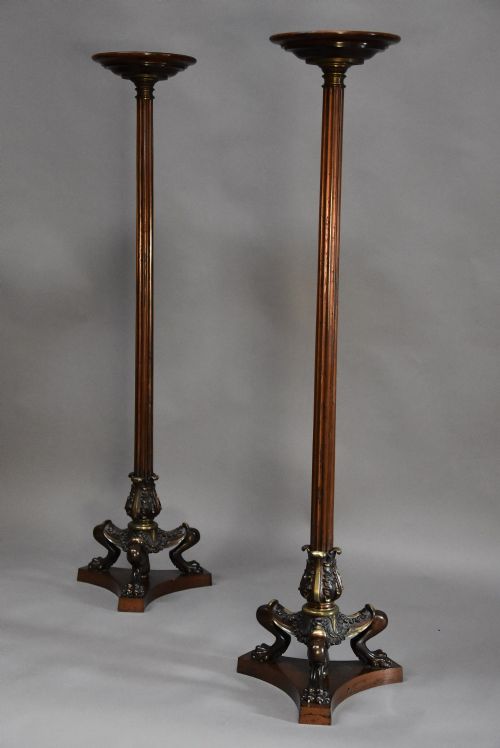
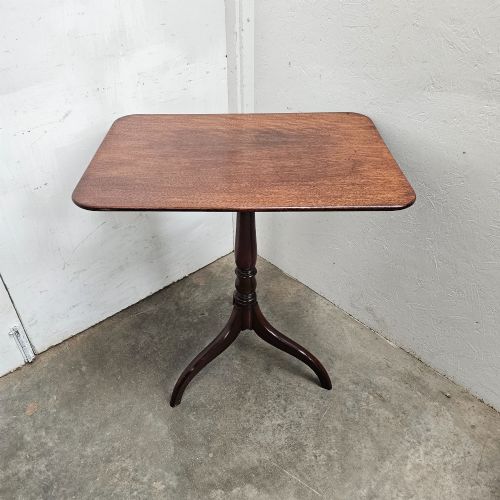


English Mahogany Candle Stand
An English mahogany candle stand holds lamps or small items securely on a slender stem supported by three legs.
English Mahogany Candle Stand
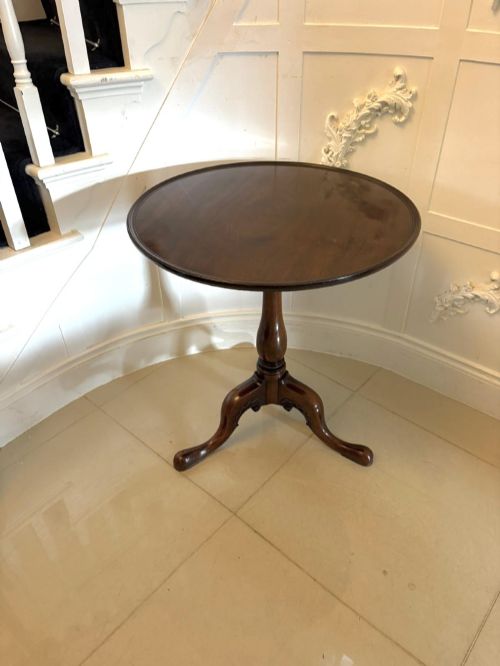
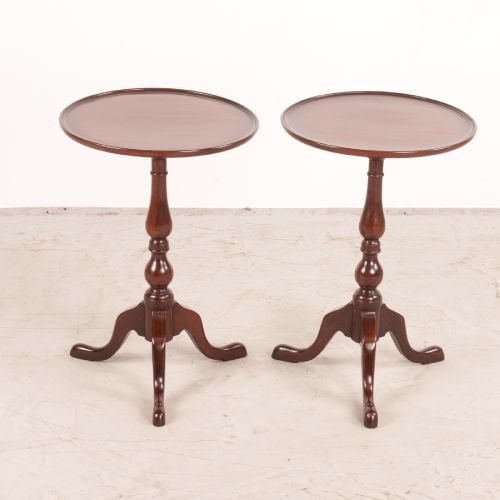
An English mahogany candle stand appears primarily in 18th century and Georgian forms, alongside later 19th century Regency and Victorian interpretations. These pieces function as occasional tables, wine tables, tripod tables, and torcheres designed to hold lamps or vessels.
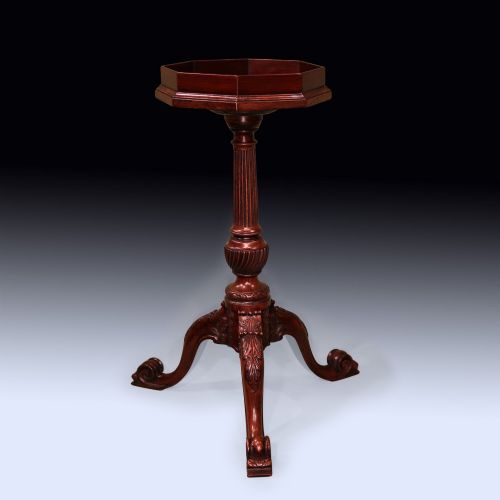
The inventory on this page includes George II, George III, and William IV examples, ranging from pie crust tripod tables to campaign torcheres and kettle stands. A buyer meets diverse top configurations, including round, octagonal, and tilt-top designs resting on pedestal bases.
Origins trace across Georgian, Chippendale, Regency, and Sheraton styles, demonstrating how makers adapted the form for parlours and drawing rooms. Mahogany dominates the material record, frequently paired with brass, satinwood, burr oak, and yew wood.
Distinctions in craftsmanship and design
The precision of the carved decoration on the stem and tripod legs separates simpler utility pieces from elaborate Chippendale or Regency works. Carved pie crust edges and detailed birdcage mechanisms demonstrate higher levels of joinery skill.
Timber selection dictates visual depth, where dense flame mahogany and contrasting satinwood inlay provide superior grain patterns. The integration of bronze mounts or brass hardware distinguishes standard production from high-status commissions.
Several stands feature birdcage mounts that let the tabletop tip sideways like a polite head tilt.
The English Mahogany Candle Stand Glossary
- Tripod table
- A small circular table supported by a central pillar resting on three legs. This construction keeps the top stable on uneven floors.
- Tilt top
- A table mechanism allowing the surface to pivot to a vertical position when not in use. This design saved floor space in period rooms.
- Torchere
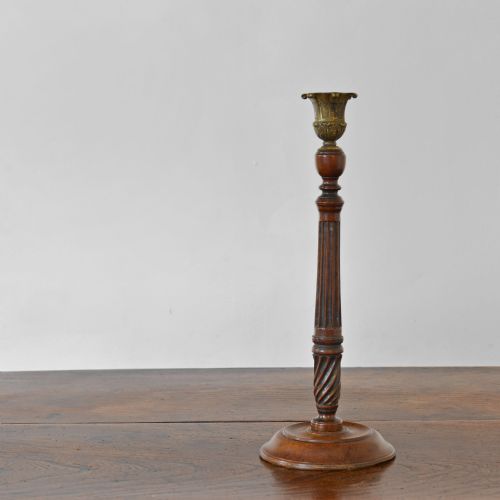
- A tall, slender stand designed to support a single candle or lamp. They frequently feature carved stems and elevated circular platforms.
- Birdcage mount
- A wooden framework beneath a tilt-top table that allows the top to both rotate and tip. It connects the surface to the central pillar.
- Pie crust edge
- A raised, carved moulding around the perimeter of a tabletop resembling pastry work. This decorative border prevents items from sliding off.
English Mahogany Candle Stand: Frequently Asked Questions
What is a candle stand used for?
These compact stands held wax candles, oil lamps, or small personal items beside seating areas in domestic rooms.
Their portable nature allowed owners to move them easily around the parlour or drawing room as daylight faded.
How do I identify a Georgian candle stand?
Georgian pieces display proportions typical of the 18th century, utilising solid mahogany with tripod bases and turned stems.
Details such as birdcage tilts and carved tripod feet help anchor the period of manufacture.
Where should I place a candle stand at home?
These stands fit beside armchairs, in narrow hallways, or as accent surfaces for displaying small lamps and objects.
Their small footprint suits spaces where a full-sized side table proves too bulky.
What is the difference between a torchere and a wine table?
A torchere stands taller and narrower, originally intended to elevate a light source above seated guests.
Wine tables feature wider, lower surfaces designed to hold glasses and bottles near seating.