




English Lustre Pottery
English lustre pottery catches the eye through metallic sheens and vibrant transfer prints that bring maritime scenes and vibrant patterns to life.
English Lustre Pottery
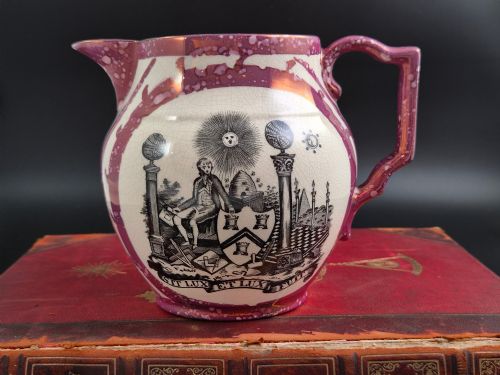
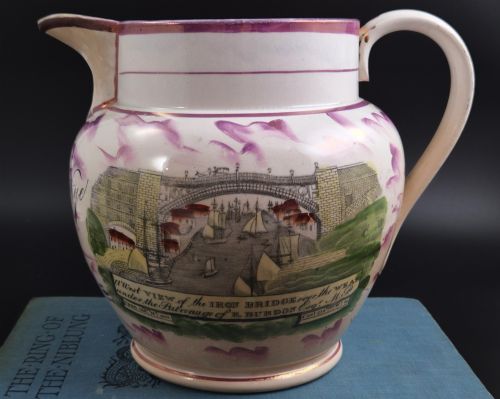
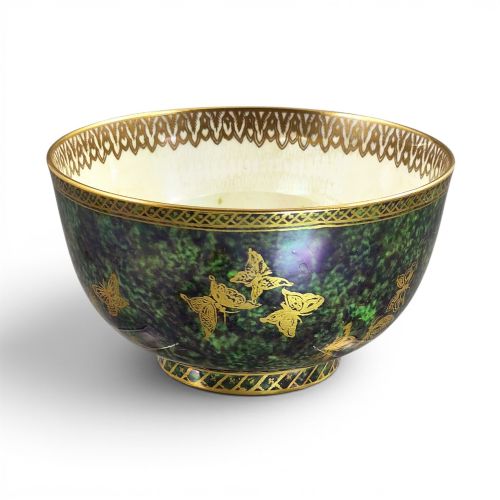
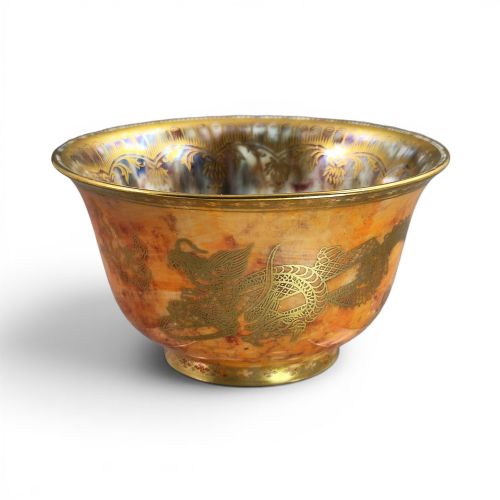
English lustre pottery encompasses earthenware and ceramic vessels treated with metallic glazes that create iridescent, reflective surfaces. These pieces range from Georgian pearlware jugs featuring poetic panels and transfer prints of the Iron Bridge to Edwardian and Art Deco decorative bowls adorned with intricate butterfly and fairy motifs.
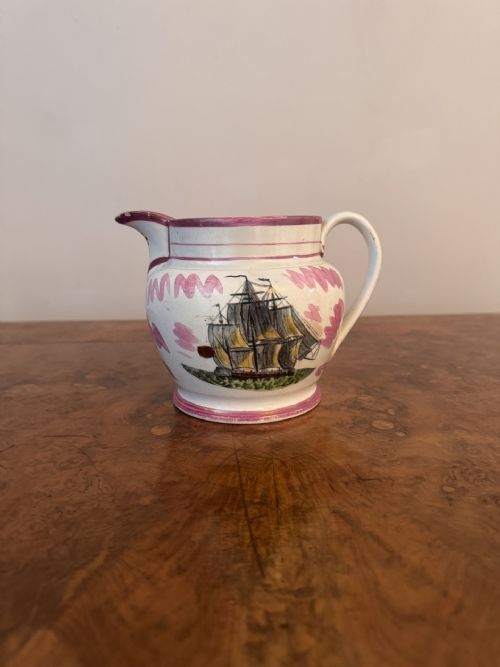
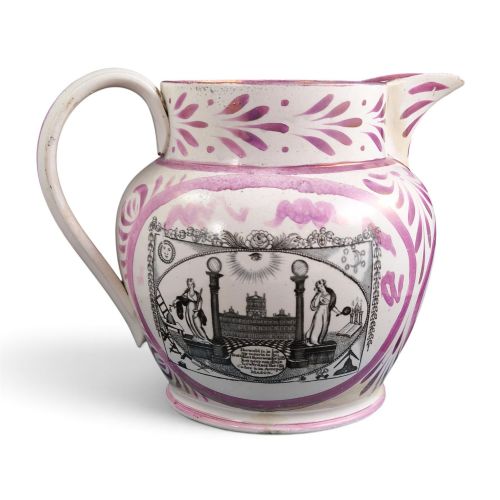
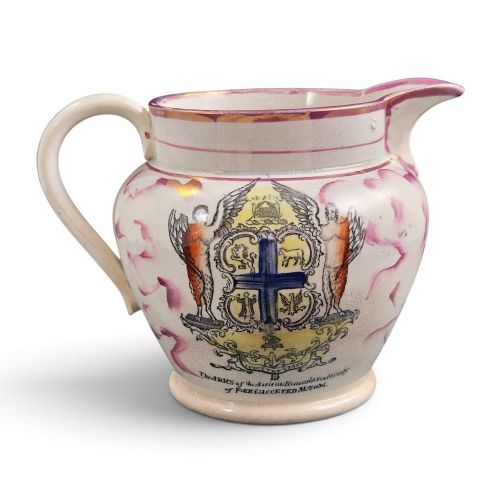
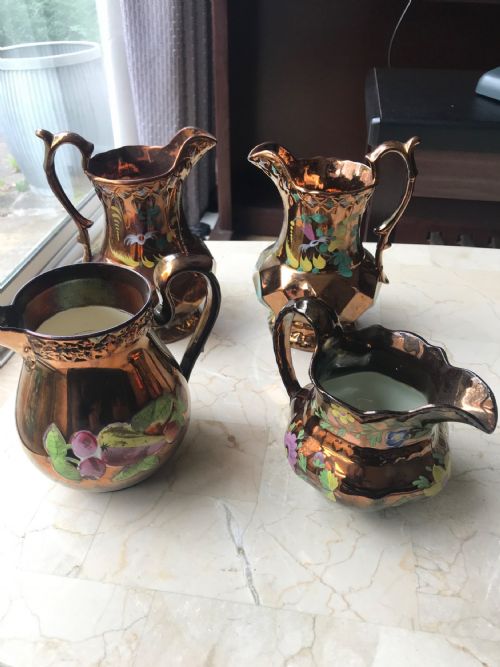
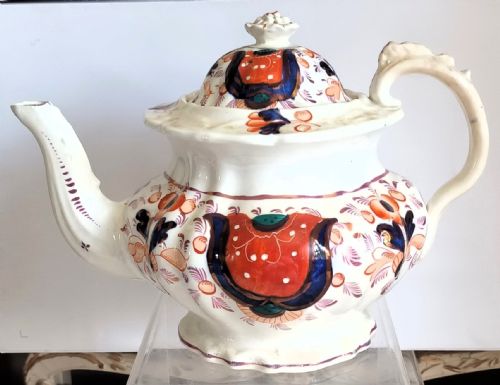
The version most commonly encountered on this page is the Sunderland pink lustre jug, typically decorated with maritime themes, masonic symbols, or ships. Alongside these northern wares, buyers frequently find Staffordshire copper lustre jugs, Gaudy Welsh ironstone teapots, and twentieth-century porcelain vases produced by prominent designers.
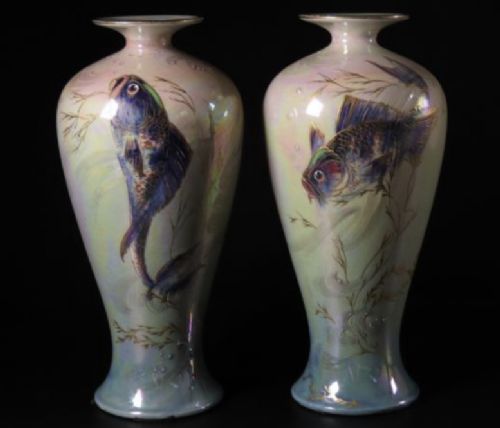
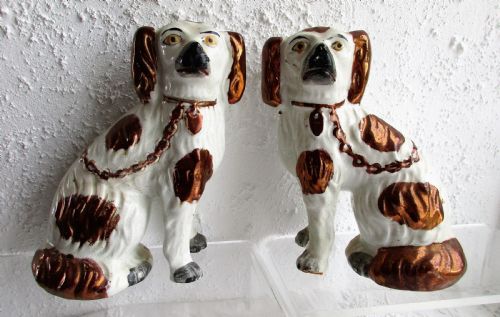
Forms extend beyond jugs to include decorative bowls, vases, and ceramic figurines such as Staffordshire spaniels. Dating spans from the Georgian era through the Victorian period and into the Art Deco styles of the nineteen-twenties.
Materials and Techniques
Potters built these items using earthenware, ironstone, creamware, pearlware, and porcelain, applying a metallic glaze derived from silver, copper, or gold to achieve the characteristic sheen. Pink and purple splash effects were often created by applying metallic salts that separated during the firing process.
Decoration relied heavily on transfer printing for intricate narrative panels, maps, and verses, which were subsequently hand-coloured with enamel and occasionally highlighted with gold leaf. This combination of transfer-printed outlines and hand-painting gave individual vessels distinct character.
English Lustre Pottery Retail Price Guide 2026
Typical asking prices for english lustre pottery among the pieces listed under this phrase on Sellingantiques today, from the lower quarter to the upper quarter. They describe what is for sale here now, not the wider market.
Listings span from Georgian pearlware jugs and Victorian Staffordshire figures to Art Deco Maling bowls and Wedgwood lustre vases.
Judging Quality
Quality rests in the crispness of the transfer printing and the richness of the metallic glaze, where even application and deep reflection distinguish finer examples from muted or clouded surfaces. Hand-painted enamel details show precision and care, particularly in multi-coloured botanical, figural, or maritime scenes.
The complexity of the form and the pedigree of the design significantly elevate the standing of a piece, as seen in specialised patterns by notable decorators compared to standard commercial production.
Wedgwood·Maling·Livesley Powell And Co·Royal Lancastrian
The English Lustre Pottery Glossary
- Lustre Glaze
- A metallic surface treatment containing agents like copper or silver that produces an iridescent sheen upon firing. This technique creates the signature reflective quality found across nineteenth-century and twentieth-century decorative wares.
- Transfer Print
- A decorative method where an engraved design is transferred onto pottery using paper and ink before glazing. It allowed complex maritime scenes and poetic verses to be applied consistently to jugs and bowls.
- Pearlware
- A fine-grained earthenware developed in the late eighteenth century with a slightly bluish glaze that pooled in recesses. It served as a common base for early lustre jugs.
- Creamware
- A refined light-coloured earthenware perfected by Staffordshire potters for domestic and decorative vessels. Its warm tone complements copper and silver lustre applications.
- Ironstone
- A durable, dense ceramic material developed in the nineteenth century to imitate Chinese porcelain. It frequently carries colourful patterns such as those seen in Gaudy Welsh wares.
- Enamel
- Opaque coloured glass fused to the ceramic body during secondary low-temperature firings. It provides the bright hues used to hand-colour transfer-printed designs.
English Lustre Pottery: Frequently Asked Questions
What are Sunderland lustre jugs?
Sunderland lustre jugs are earthenware vessels produced in the North East of England, readily identified by their pink splash glaze and transfer-printed maritime motifs. They frequently feature images of local landmarks like the Iron Bridge over the Wear, alongside masonic emblems and sentimental poems.
Potters made these items for sailors, tradesmen, and local households during the Georgian and Victorian periods. Their distinct appearance comes from metallic salts applied during firing to create a mottled pink finish.
How do I care for lustre pottery?
Caring for these ceramic pieces requires gentle handling and keeping them away from harsh cleaning agents or abrasive scrubbers. The metallic glaze and hand-painted enamels can degrade if subjected to modern dishwashers or harsh chemical immersions.
Dusting with a soft cloth preserves the reflective surface of the glaze. Displaying them out of direct, prolonged sunlight protects the enamel colours from fading over time.
How are copper lustre items different?
Copper lustre pieces use a metallic glaze that imparts a warm, reddish-brown metallic appearance reminiscent of polished copper. They were widely produced in Staffordshire during the nineteenth century as utilitarian milk jugs, water jugs, and mantel ornaments.
Unlike pink splash Sunderland wares, copper lustre often covers the entire ceramic body or appears alongside bands of hand-painted fruit and floral decoration. They offer a more solid metallic aesthetic compared to mottled pink varieties.
Who was Daisy Makeig-Jones?
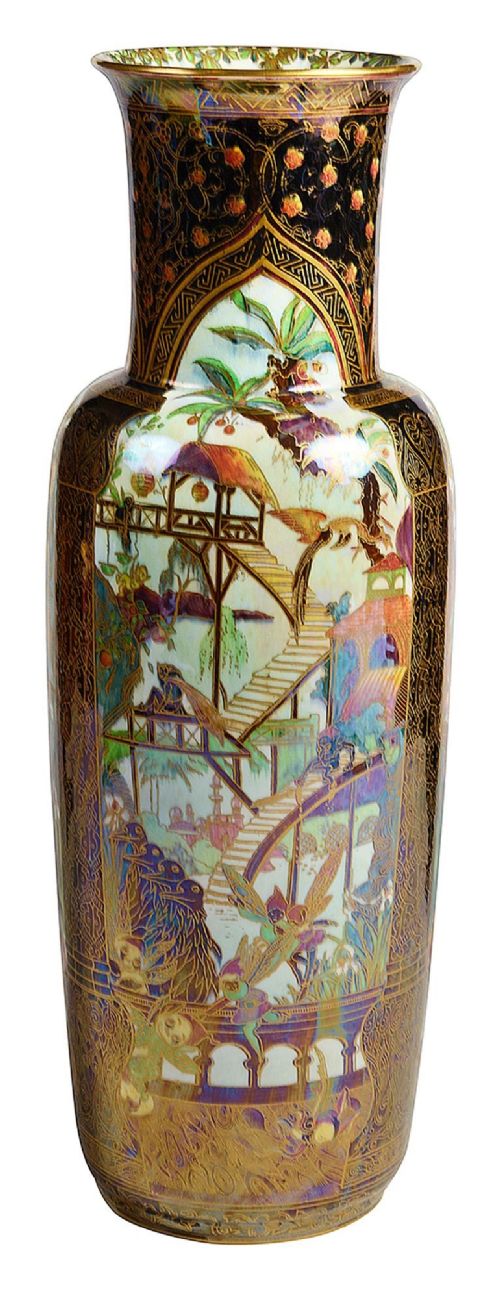
Daisy Makeig-Jones was a prominent designer at Wedgwood who created the celebrated Fairyland Lustre lines during the early twentieth century. Her work featured fantastical themes with dragons, fairies, and intricate butterflies rendered in vibrant lustre glazes.
Pieces from her designs remain highly sought after by collectors of twentieth-century ceramics. The production involved complex multi-stage firings to achieve the rich colour palette and luminous finish.