
English Georgian Table
When choosing an english georgian table, you select from dining boards, Pembroke designs, and small oak tripod pieces crafted for daily domestic life.
English Georgian Table
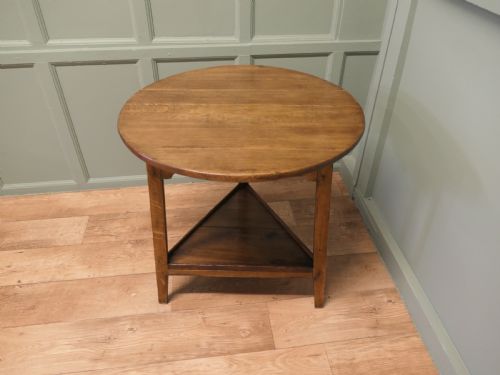
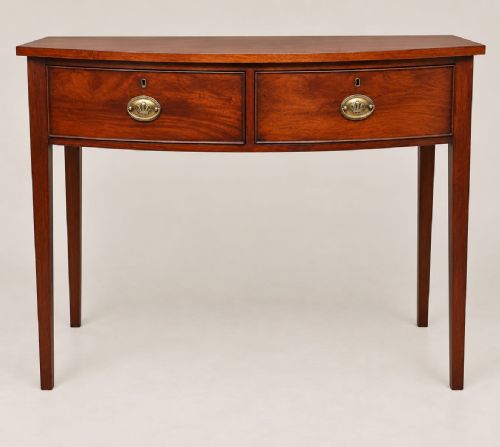
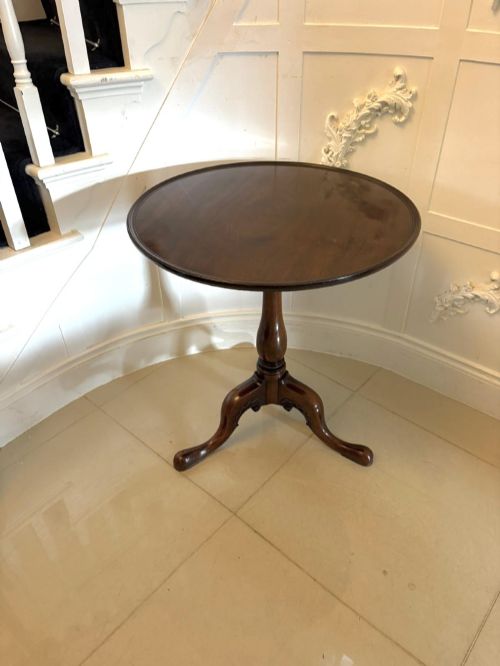
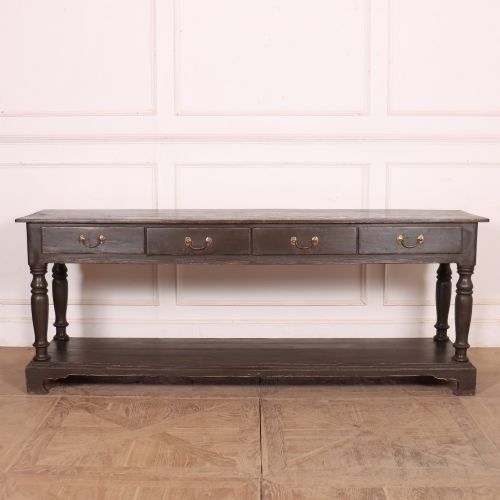
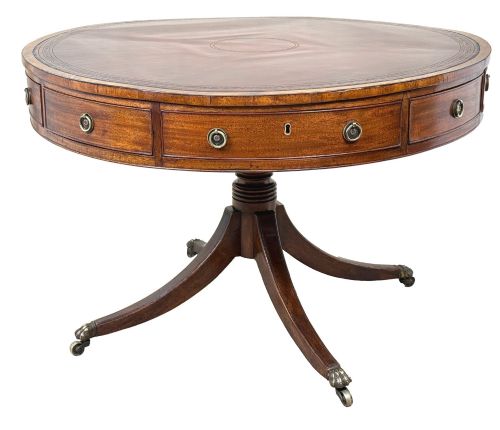
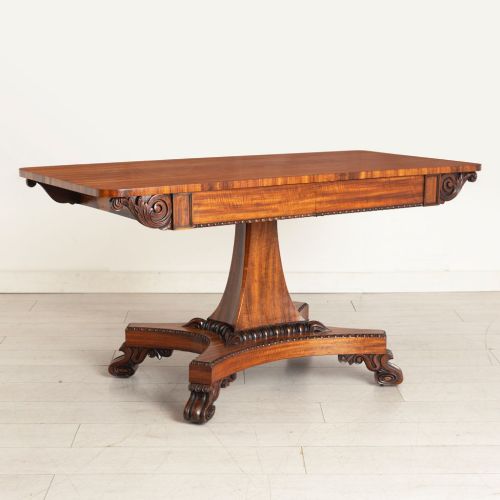
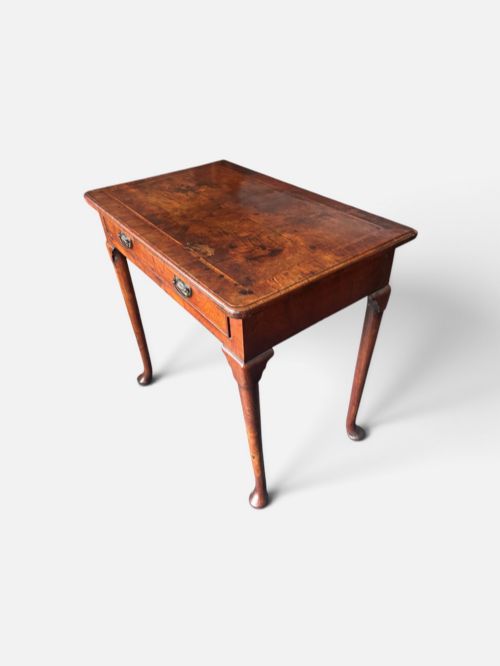
The english georgian table encompasses a vast domestic range from robust country oak farmhouse boards and three-legged cricket tables to refined mahogany tilt-tops, Pembroke variants, and card tables designed for parlour use.
Buyers browsing this selection commonly encounter utilitarian country furniture alongside formal Georgian and Regency mahogany pieces, reflecting how households across the eighteenth and early nineteenth centuries utilised timber for dining, writing, and display.
Originating in eras spanning the reigns of the Georges through to William IV and later revivals, these survivors demonstrate the adaptability of British cabinet-making traditions to changing domestic habits.
Materials and construction
Cabinet-makers relied heavily on native timbers such as oak, elm, ash, and fruitwood for provincial country pieces, while utilising imported dense mahogany and figured walnut for urban drawing-room furniture.
Joinery methods combined pegged mortise and tenon joints on sturdy gateleg and refectory frames with sophisticated turning, dovetailing in drawer construction, and delicate edge mouldings on tripod and fold-over mechanisms.
Listings feature structural timbers including oak, elm, ash, mahogany, walnut, and satinwood across the Georgian and Regency periods.
Distinctions in craftsmanship
Quality separates through the selection of timber figures, such as highly grained burr walnut or well-matched mahogany veneers, and the restraint or elegance shown in carved details like pie-crust edges and brass inlays.
Structural integrity and the retention of original fittings, including brasses and hinges, distinguish workshop pieces that have survived intact from those altered or heavily restored over subsequent centuries.
Thomson of London·Widenham of London·Comitti Of London·William Gard
The English Georgian Table Glossary
- Cricket table
- A small, three-legged occasional table typically constructed from oak or elm with a round top.
- Pembroke table
- A drop-leaf table featuring hinged flaps on either side and usually a single drawer underneath.
- Lowboy
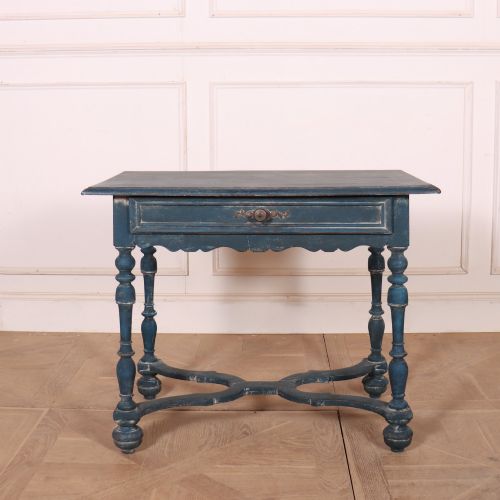
- A small provincial writing or dressing table fitted with one or more drawers beneath a rectangular top.
- Tilt-top table
- A round occasional table equipped with a mechanism that allows the top to pivot vertically when not in use.
- Demi-lune
- A half-moon shaped console or card table designed to sit flat against a wall or combine with a twin to form a circular dining surface.
English Georgian Table: Frequently Asked Questions
What is a cricket table used for?
Historically utilised in modest households as stable three-legged stands on uneven flagged floors, these small round tables served for general domestic tasks near the hearth.
Today, buyers frequently place them beside armchairs or in hallways as compact lamp or occasional tables.
How do I identify a Pembroke table?
A Pembroke table is instantly recognised by its rectangular central leaf flanked by two hinged drop-leaves, creating an expandable surface suited to smaller parlours.
They generally include one small drawer and were originally moved around rooms for breakfast, reading, or needlework.
Are tilt-top tables stable?
Tilt-top tables rely on a central pedestal supported by three or four splayed legs, balanced carefully so the top locks flat when in use.
The hinged mechanism allows the surface to tilt upright against a wall, saving precious floor space in tighter historic chambers.
What distinguishes oak from mahogany examples?
Oak and elm tables generally stem from provincial country workshops, prioritising heavy structural utility and thick plank construction for everyday tasks.
Mahogany and walnut variations emerged predominantly in fashionable urban settings, showcasing finer grain, intricate carving, and lighter proportions.