





English Genre Watercolour
An english genre watercolour captures domestic or rural scenes in pigment on paper, bringing 19th-century everyday life directly into a modern room.
English Genre Watercolour
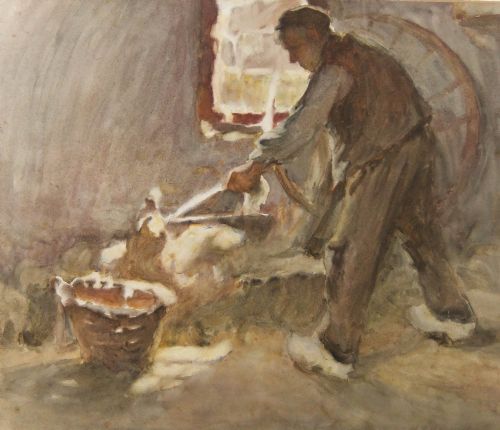
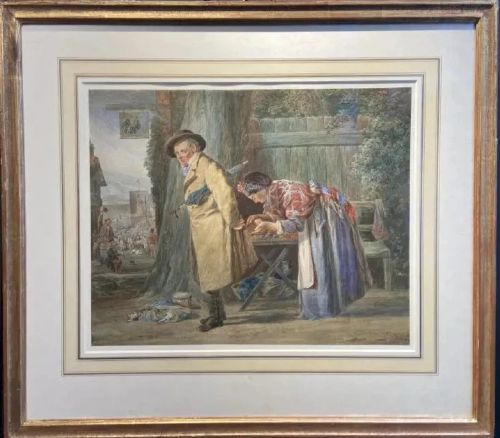
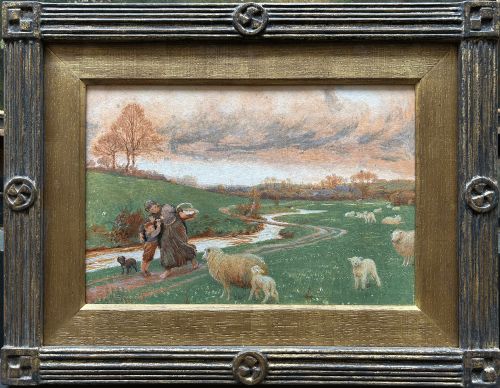
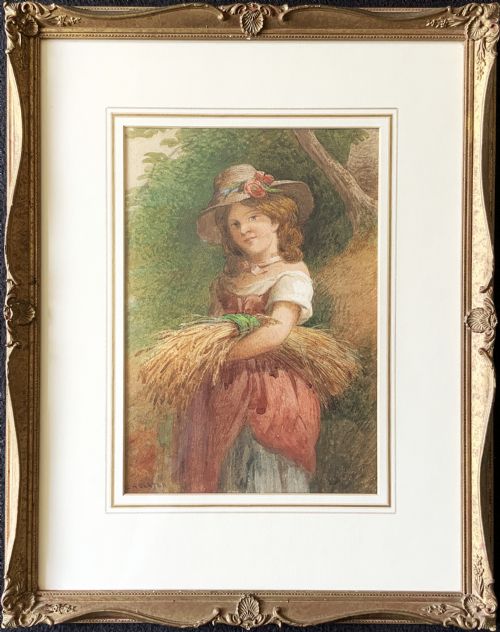
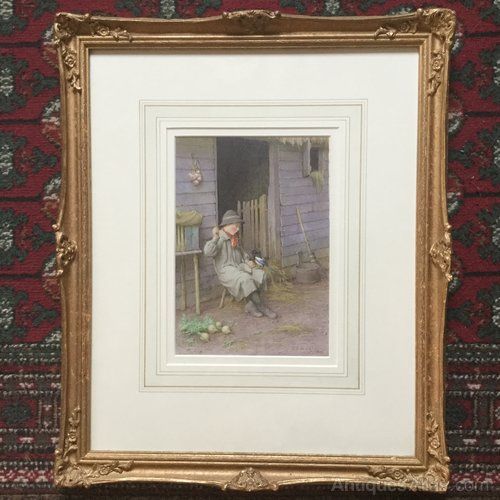
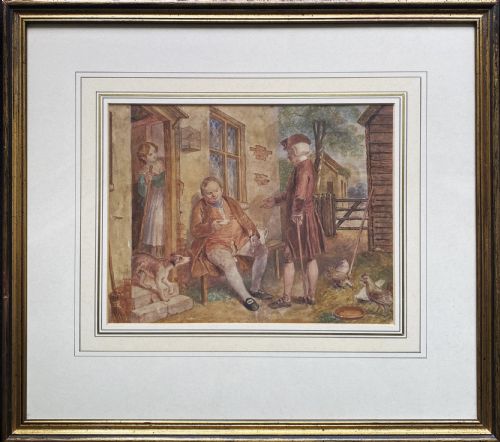
When searching for an english genre watercolour, collectors encounter framed artworks depicting everyday narrative scenes, rural pastimes, and cottage life. The pieces on this page span the Victorian era, the nineteenth century, and the early twentieth century, showing figures at smithies, cottage doors, and river banks.
Most examples originate from the nineteenth century or around nineteen hundred, capturing British Impressionism and Victorian genre realism. Buyers find subjects ranging from children boating to village street scenes, all executed on paper and presented behind glass.
Materials and technique
These works utilise watercolour pigment applied to paper support surfaces, often framed behind glass with wood, gesso, and giltwood mouldings. Artists built translucent washes and fine details to create narrative depth.
Gold leaf and gesso frequently finish the periods' ornate frames, protecting the delicate paper paintings within.
Listings feature paper supports, watercolour pigment, glass, wood, gold leaf, gesso, and giltwood spanning the nineteenth century and early twentieth century.
Judging quality in watercolour painting
Quality rests upon the artist's handling of pigment and the expressiveness of the figures within the narrative scene. Stronger compositions display confident brushwork and well-defined atmospheric light rather than stiff, overly laboured detailing.
The integration of the original frame, whether giltwood or gesso, contributes to the overall integrity of the piece.
Henry Silkstone Hopwood·Joseph H Barnes·Frederick Walker·Charles Henry Slater·James Hayllar·Charles Edward Wilson·James Hardy Junior·Helena Maguire·Linnie Watt·George Kilburne·David Woodlock·John Masey Wright·Edward Killingworth Johnson·William Henry Hunt·Arthur Claude Strachan·William Stephen Coleman·George Goodwin Kilburne·Fred Morgan·Frank Dadd·John Pedder·George Cattermole
The English Genre Watercolour Glossary
- Genre painting
- Artwork depicting scenes from ordinary life, typically involving people engaged in familiar activities. These works focus on narrative moments rather than formal portraits.
- Watercolour pigment
- Colouring material ground in a water-soluble binder, used to paint on paper supports. Artists dilute the medium to achieve subtle washes and varied opacity.
- Giltwood
- Wood carved and covered with a thin layer of gold leaf. This material frequently frames nineteenth-century works.
- Gesso
- A plaster mixture applied to wood frames before gilding. It provides a smooth surface for detailed moulding work.
- Victorian realism
- An artistic approach emphasising accurate, unidealised depiction of everyday subjects. This style underpins many nineteenth-century narrative paintings.
English Genre Watercolour: Frequently Asked Questions
What is an english genre watercolour?
It is a painting on paper depicting everyday human narratives from the nineteenth and early twentieth centuries.
These artworks record domestic interiors, rural street life, and children at play.
How should I display them?
Hang these framed works away from direct sunlight to protect the watercolour pigments from fading on the paper.
Keep them in stable room environments behind their protective glass.
How do I identify the period?
Dating relies on stylistic markers of Victorian genre realism and British Impressionism across the nineteenth century and early twentieth century.
Signatures, framing techniques, and subject matter often point to specific decades.