




English Garden Watercolour
An english garden watercolour captures the quiet charm of domestic horticulture through delicate washes of pigment on paper.
English Garden Watercolour
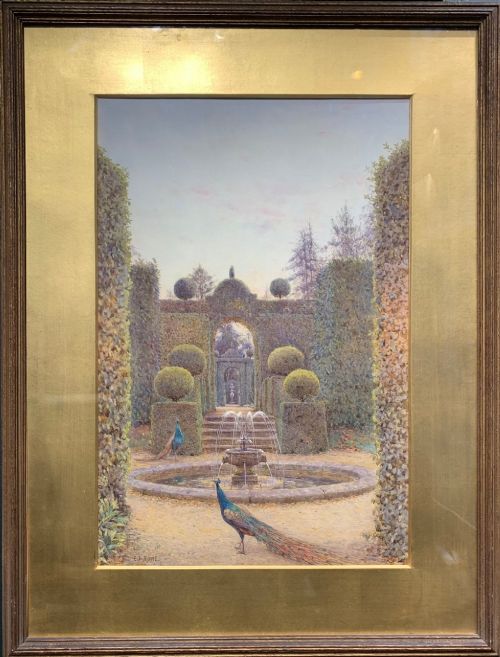
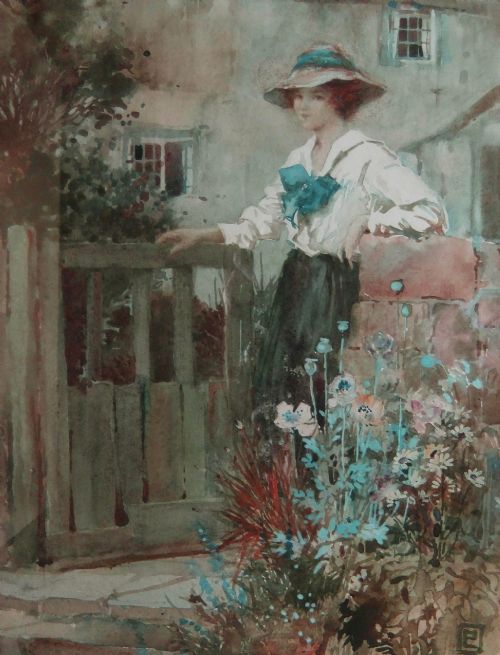
When you search for an english garden watercolour, you are looking at original works on paper depicting domestic landscapes, cottage gardens, and formal planting schemes. These paintings span the Victorian, Edwardian, and early twentieth century periods, reflecting a sustained fascination with horticulture and rural life.
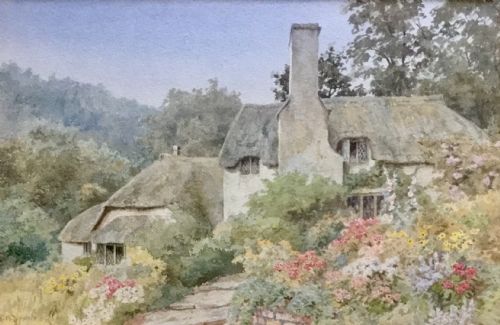
The pieces you meet most often on this page date from the late nineteenth century through to the nineteen forties. They frequently showcase specific planting such as sunflowers, delphiniums, and Michaelmas daisies set against thatched cottages or country houses.
Makers and painters of this subject matter often specialised in botanical detail and pastoral atmosphere. Works range in scale from intimate depictions of garden seats to larger views of walled enclosures and park landscapes.
Materials and technique
Artists executed these works using watercolour pigment applied to paper, building up translucent washes to achieve light and depth. Many surviving examples retain their original framing materials, including glass and gilt wood or gold leaf mouldings.
Techniques relied on precise brushwork combined with fluid washes to render floral textures and architectural elements such as cottage walls and garden paths. The support paper varied in weight, providing a stable surface for the water-soluble pigments.
The listings on this site span the nineteenth, twentieth, and early twentieth centuries, utilising paper, watercolour, gilt wood, and gold leaf.
What varies in quality
Quality rests upon the artist's handling of light, botanical accuracy, and compositional balance. Superior works convey a distinct atmosphere and direct observation of seasonal colour rather than a rigid formula.
The preservation of the pigment also influences the standing of a piece, as fugitive colours can fade over decades of exposure to light. Strong tonal contrast and confident brushwork distinguish the finest examples from more pedestrian topographical efforts.
Ernest Arthur Rowe·Percy Lancaster·Harry Wanless·Theresa Stannard·Owen Bowen·Lilian Stannard·David Woodlock·Arthur Claude Strachan·Thomas Nicholson Tyndale·Jane Utley·Henry John Sylvester Stannard·Beatrice Parsons·George Frederick Nicholls·Sidney Valentine Gardner·Mary Stevens
The English Garden Watercolour Glossary
- Watercolour pigment
- The finely ground colour substance mixed with a binder for use in painting. It provides the translucent qualities characteristic of these works.
- Gilt wood
- Wood carved and coated with gold leaf or metallic powder to form a decorative frame. This finish frequently surrounds nineteenth and early twentieth century paintings.
- Washed border
- A lined margin applied to the mount surrounding the artwork to frame the composition. It acts as a transitional space between the painting and the frame.
- Monogram
- A motif made by overlapping or combining two or more letters to form a recognizable symbol. Artists often used these initials in place of a full signature.
English Garden Watercolour: Frequently Asked Questions
How should I frame an old watercolour?
Protect the paper from direct sunlight and moisture to prevent fading and foxing. Use acid-free mounts and glass with ultraviolet filtration.
Ensure the artwork does not touch the glass directly by using a mat or spacers. This preserves the delicate pigment and paper over time.
How do I identify the period of a painting?
Examine the framing style, the signature, and the clothing or architecture depicted in the scene. Edwardian and Victorian works often feature distinct palettes and subject matter.
Paper types and handwritten inscriptions on the reverse also provide clues to the exact date of creation.
Where were these gardens usually located?
Many depict domestic cottage gardens across Yorkshire, Somerset, and the home counties. Public spaces such as Kew Gardens and St James's Park also appear.
Artists frequently painted local pastoral scenes directly from nature during their travels across rural Britain.