



English Creamware Ceramic
English creamware ceramic pieces are pale earthenware vessels prized for their smooth, warm glaze and practical utility across multiple historic periods.
English Creamware Ceramic
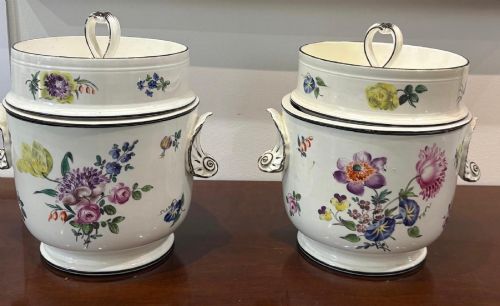
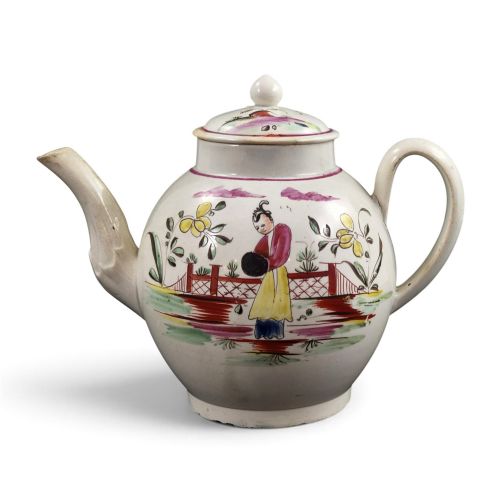
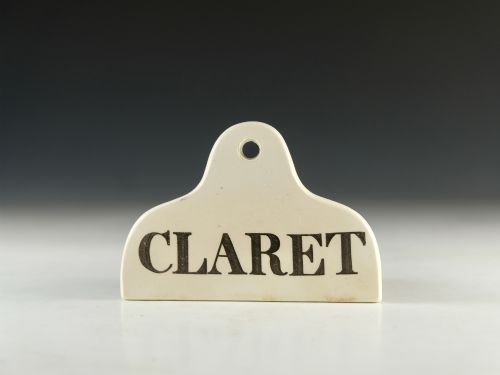
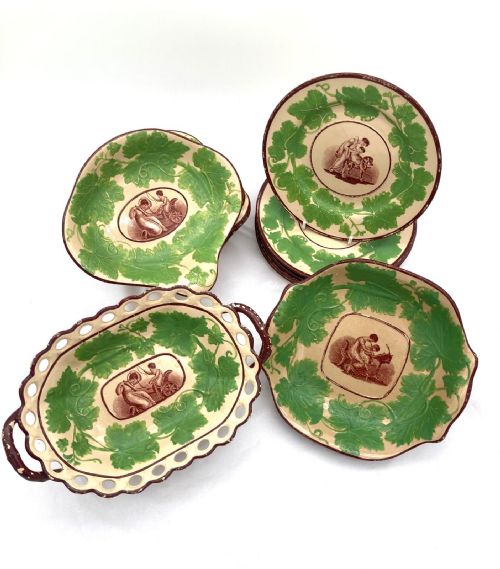
When you search for English creamware ceramic, you encounter utilitarian and decorative vessels spanning the eighteenth, nineteenth, and twentieth centuries. The selection includes domestic items such as jugs, mugs, ice pails, and dessert services.
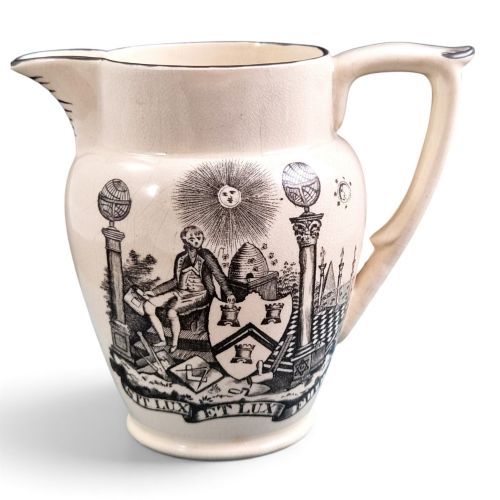
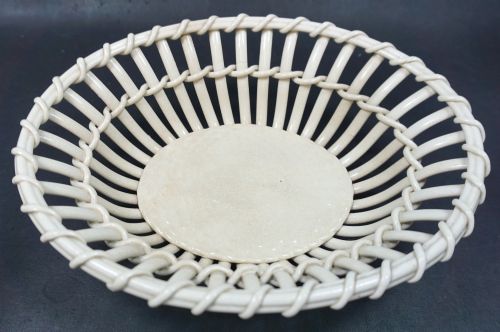
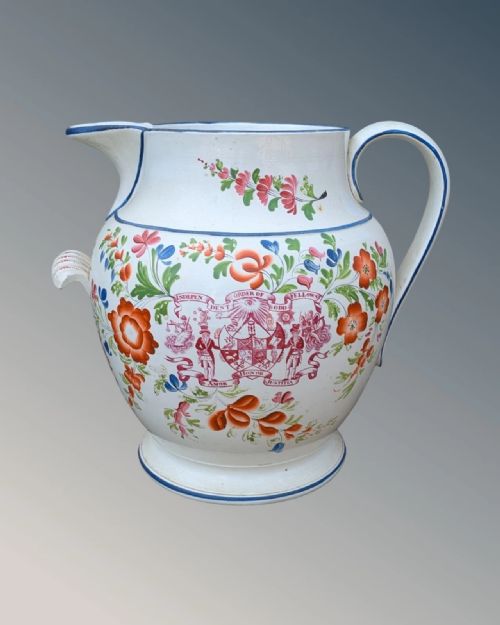
Most pieces date from the Georgian era through to the Victorian period, featuring both plain cream-coloured surfaces and decorated examples with transfer printing or enamel work. Forms range from large cheese domes and fruit baskets to inscribed mugs and Masonic jugs.
The material evolved alongside related earthenwares like pearlware, while maintaining its distinct straw-coloured or pale yellow glaze. Makers utilise classic forms that reflect the changing domestic habits of successive centuries.
Materials and production
Potters produced these objects using refined earthenware bodies coated in a transparent lead glaze that pooled to a rich yellowish hue in crevices. Artisans shaped vessels on the potter's wheel or formed them in moulds to create decorative baskets and detailed ice pails.
Decoration often involved black or coloured transfer printing, hand-painting in enamel, and the application of variegated lustre. Kiln firing fixed these designs onto the porous ceramic body beneath the protective glaze.
English Creamware Ceramic Retail Price Guide 2026
Typical asking prices for english creamware ceramic among the pieces listed under this phrase on Sellingantiques today, from the lower quarter to the upper quarter. They describe what is for sale here now, not the wider market.
Listings feature earthenware materials including creamware and pearlware, spanning the Georgian, Victorian, and Edwardian periods.
Quality and execution
The distinction between ordinary utility wares and finer examples lies in the crispness of the moulded relief work and the evenness of the glaze. Early pieces often exhibit lighter potting weights and more delicate handles than later Victorian productions.
Transfer printing clarity and the precision of hand-painted enamel details separate standard production items from those commissioned for specific lodges or commemorative purposes. The condition of the glaze and the retention of original colour define the preservation state.
Wedgwood·Leeds Pottery
The English Creamware Ceramic Glossary
- Creamware
- A fine earthenware developed in England during the eighteenth century, distinguished by its pale yellowish lead glaze. It superseded heavier salt-glazed stonewares for domestic dining.
- Pearlware
- A refined earthenware introduced in the late eighteenth century, possessing a bluish-tinted glaze that made the underlying ceramic body appear whiter. It represents a direct technical successor to standard creamware.
- Transfer print
- A decorative technique where an engraved copper plate transfers a design onto paper, which is then stamped onto the unglazed or bisque ceramic body. This method allowed for intricate pictorial scenes on jugs and plates.
- Queen's Ware
- The commercial name given by Josiah Wedgwood to his superior creamware after receiving royal patronage in the seventeen-sixties. It became a standard descriptor for high-grade English earthenware.
- Ice pail
- A vessel designed to hold ice for cooling wine or dessert courses at the dining table, often supplied with liners and covers. Creamware versions frequently feature pierced rims and classical proportions.
English Creamware Ceramic: Frequently Asked Questions
What is English creamware?
English creamware is a refined earthenware covered in a transparent lead glaze, developed in the eighteenth century to provide a lighter and more affordable alternative to porcelain.
Its warm, pale yellow tone and versatile nature made it the dominant tableware material for decades.
How do I date a creamware piece?
Dating relies on stylistic clues such as handle shapes, foot rims, and the type of decoration applied, as early pieces from the seventeen-seventies differ significantly from nineteenth-century productions.
Transfer printing styles and specific maker marks also provide precise chronological markers.
Can I use antique creamware daily?
While these ceramics were originally built for daily dining and household use, age and historic glaze crazing make modern gentle hand washing essential.
Avoid dishwashers and sudden temperature changes to preserve the integrity of the earthenware body.