
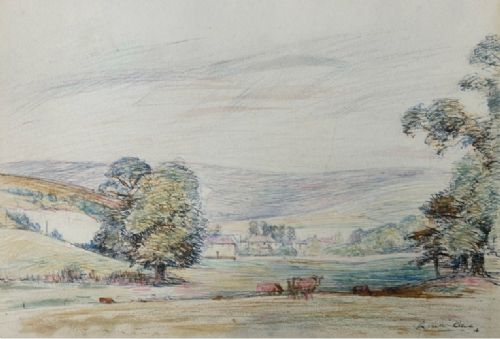


English Countryside Watercolour Painting
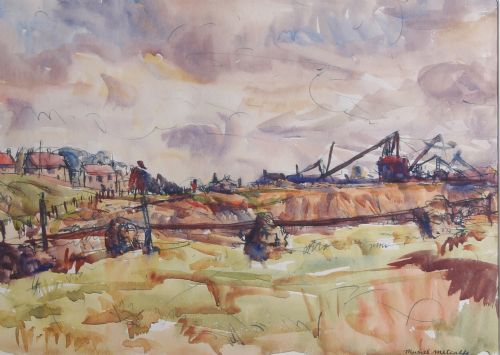
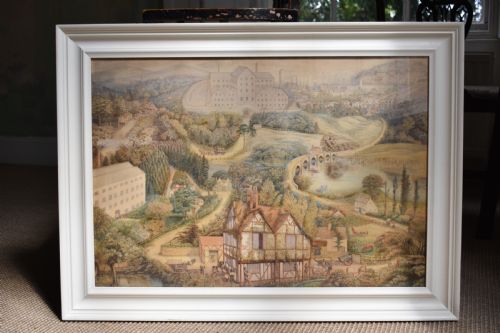
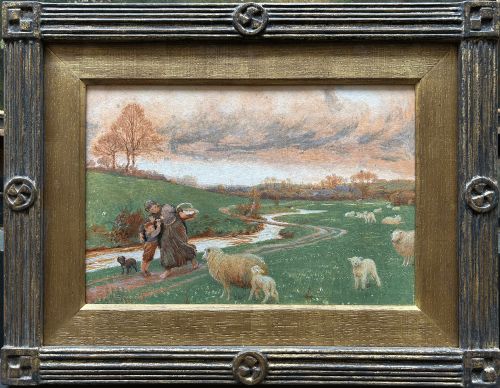
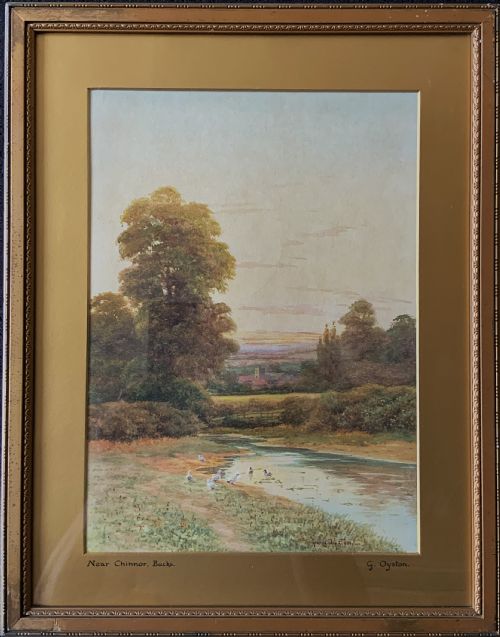
An english countryside watercolour painting captures quiet fields, winding rivers and rural stone cottages through delicate washes of pigment.
How They Were Made
Artists painted primarily with watercolour pigment suspended in water, applied directly onto absorbent paper sheets to achieve translucent washes and fine linear details. Many surviving examples retain their original wood and gold leaf frames, sometimes protected beneath glass.
Makers built up compositions using layered transparent washes for skies and distant hills, alongside more opaque touches of bodycolour to highlight figures, livestock and cottage walls. The support paper varied in weight and texture, influencing how fluidly the pigment settled during application.
What Varies in Quality
Quality rests upon the artist's handling of light, atmospheric depth and compositional balance within the landscape. Finer works demonstrate confident brushwork and tonal control that evoke the specific weather and season of the British countryside.
Preservation of the paper and pigment integrity distinguishes superior examples. Works protected from prolonged sunlight retain the delicate blues, greens and earthy ochres intended by the painter, avoiding the fading common in lesser-stored sheets.
Recorded periods span the Victorian era, Edwardian pastoral movements, and mid-twentieth-century British modernism.
George Oyston·Charles Gregory·Henry Charles Fox·Fred Lawson·George Arthur Fripp
The English Countryside Watercolour Painting Glossary
- Watercolour
- A painting method where natural pigments are mixed with water-soluble binders and applied to paper. This medium allows for translucent layers that capture shifting light.
- Wash
- A thin, fluid layer of diluted watercolour pigment spread evenly across the paper. Painters use washes to create expansive skies or distant atmospheric backgrounds.
- Bodycolour
- Watercolour paint mixed with a white pigment to make it opaque. Artists employ this technique to add highlights and solid details over transparent washes.
- Victorian Naturalism
- An artistic approach focusing on detailed, lifelike observation of the natural world. This style governed many nineteenth-century rural landscape representations.
- British Impressionism
- A movement prioritising loose brushwork and the play of natural light over strict topographical detail. Practitioners recorded transient atmospheric conditions in rural settings.
English Countryside Watercolour Painting: Frequently Asked Questions
How should I frame and hang these waterpaintings?
Protect the paper by mounting the painting away from direct sunlight using acid-free materials and UV-filtering glass. Keep them in rooms with stable humidity to prevent paper warping.
Position the artwork on interior walls where daylight remains indirect. Regular placement away from heat sources preserves the delicate pigments.
What periods do these rural watercolours cover?
The available works span from the nineteenth century through the Edwardian era and into the mid-twentieth century. Victorian and Edwardian examples often feature pastoral scenes with livestock and cottages.
Later twentieth-century pieces shift toward modernist interpretations of regional topography. Each era reflects changing artistic attitudes toward the British landscape.
How do I identify the specific location in a painting?
Look for artist inscriptions, signature blocks, or handwritten notes on the reverse of the paper or frame. Many nineteenth and twentieth-century artists titled their views directly on the work.
Local landmarks, rivers, and village names often appear within the composition or listing details. Cross-referencing these place names helps pinpoint the exact region.
Are these watercolours original works?
Every piece listed is an original, hand-painted work on paper rather than a mechanical reproduction or print. Artists applied wet pigments directly to the paper support during their respective eras.
Brush textures, pigment pooling, and paper fibres confirm the hand-painted nature of each item. Archive records confirm their status as unique historical paintings.