



English Countryside Canvas
An english countryside canvas brings the riverbanks, valleys and pasturelands of past centuries straight into a room.
English Countryside Canvas
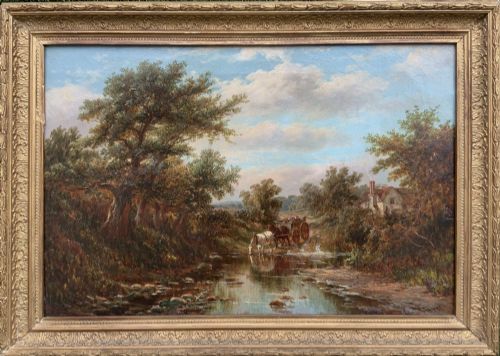
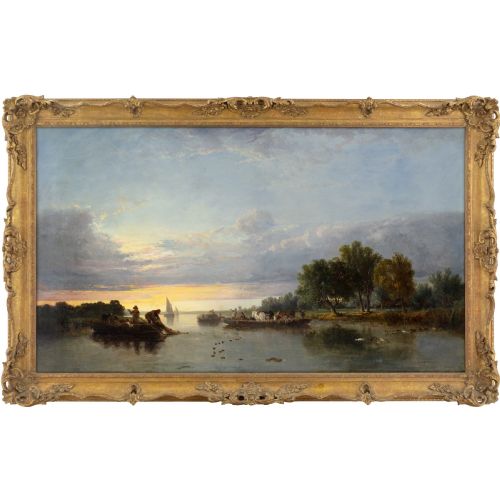
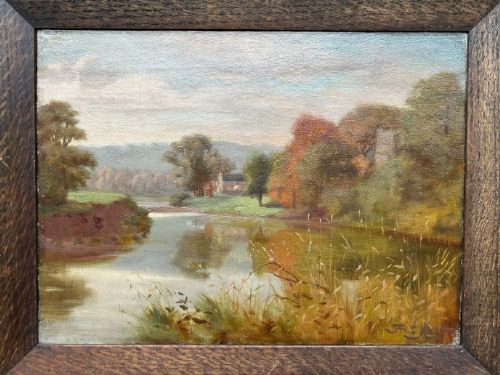
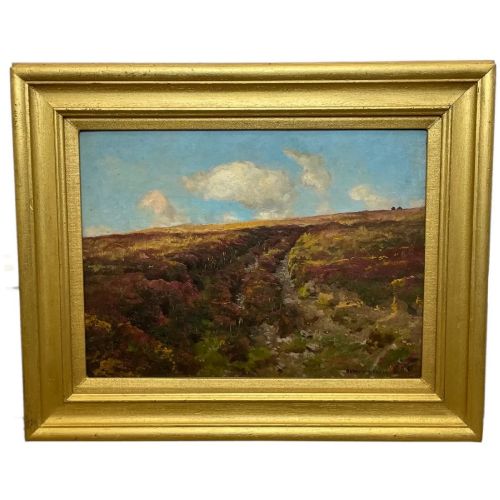
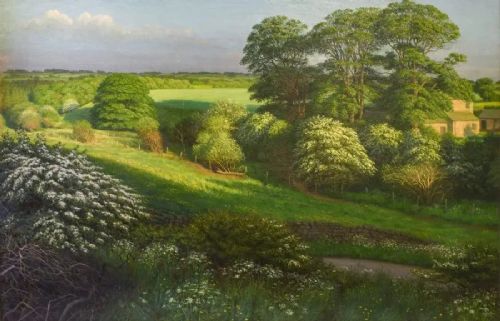
An english countryside canvas captures rural scenes, farming life, and quiet villages across the nineteenth and twentieth centuries. These paintings portray river views, coastal hills, and pastoral farmsteads under shifting daylight.
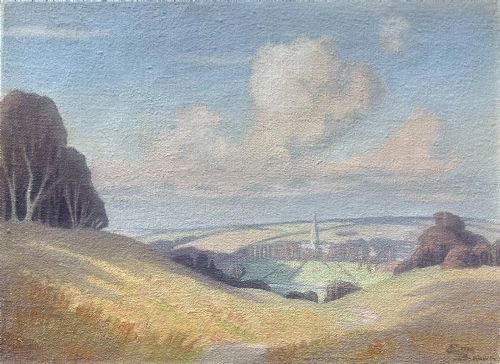
The works on this page lean heavily into Victorian pastoral, British impressionism, and realist interpretations of the land. Painters often recorded specific localities, from Yorkshire riversides to Devon moorlands and Kentish water meadows.
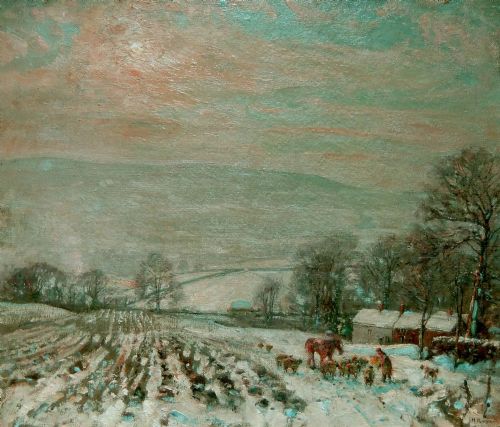
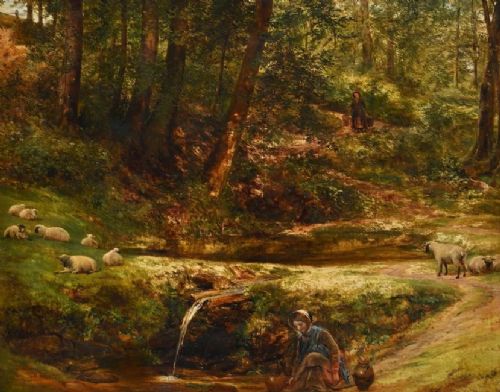
Framed landscapes range from intimate depictions of thatched cottages to expansive valley views populated by figures, horses, and sheep. Buyers encounter both signed works by known regional painters and unsigned pieces from the broader British school.
Materials and Technique
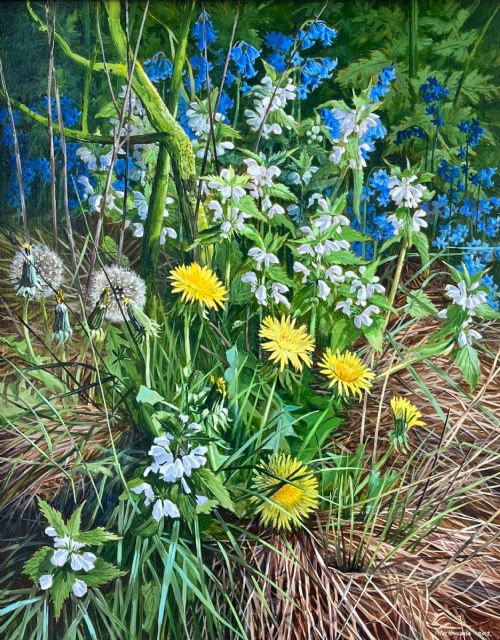
Artists built these compositions primarily using oil paint applied to stretched canvas, occasionally supported by wood panels. Pigments were layered to create depth in skies, foliage, and water, sometimes utilising impasto for textured highlights on fields and riverbanks.
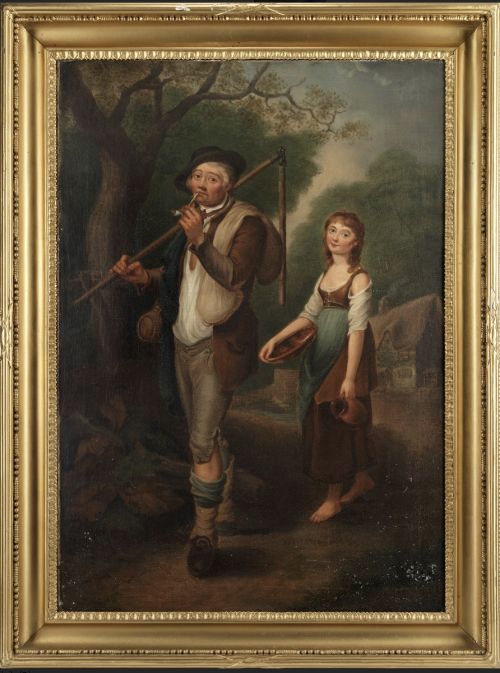
Many works retain their period frames, commonly constructed from gilt wood or moulded wood that complements the depth of the painted scene. The physical support relies on traditional wooden stretchers holding the woven canvas stable over decades.
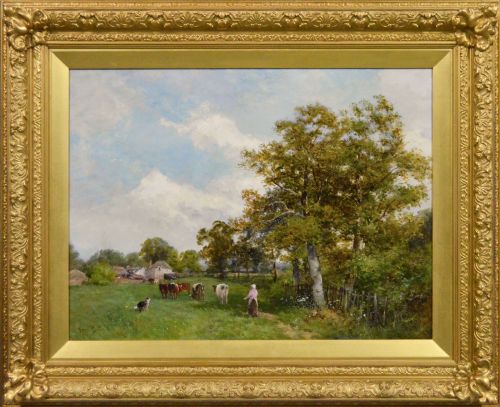
Several sheep and at least one dog appear to have held very still while generations of cows wandered past them.
Judging the Canvas
Quality rests on the confidence of the brushwork and the artist's handling of natural light across open terrain. Stronger paintings demonstrate a clear command of atmospheric perspective, rendering distance and weather with immediate visual truth.
Compositional balance and the vitality of figures or animals integrated into the landscape separate standard topographical records from superior artistic achievements. The integrity of the original paint surface and the harmony of the framing also influence the standing of any given piece.
George Graham·Frederick Marriott·Arthur Wardle·Herbert Royle·David Bates·Lucy Pratt·Raymond Booth·Eric Brown·Richard Redgrave·Peter Newcombe·John Horace Hooper·Joseph Edward Hennah·Charles Walter Simpson·Helen Layfield Bradley·William Sydney Cooper·Owen Bowen·Sidney Richard Percy·J Phipps·MC Hider·Robert John Hammond·William Greaves·Charles Vickers·William Mellor·John Linnell·Robert Finley McIntyre
The English Countryside Canvas Glossary
- Impasto
- Paint applied thickly to a canvas so that it stands out from the surface. This technique allows brush or knife marks to retain their three-dimensional texture.
- British School
- A loose term for artists trained or working within Britain whose specific identities remain unrecorded. These works often reflect regional styles without bearing a master's signature.
- Giltwood
- Wood carved and covered with a thin layer of gold leaf or gilt powder. Period frames finished this way provide a warm metallic border to nineteenth-century landscapes.
- Provenance
- The documented history of a painting's ownership from its creation to the present day. Clear records help verify the origin and authenticity of older works.
- Topographical
- Pertaining to the accurate representation of specific real-world places. Many rural paintings rely on this descriptive approach to record named rivers, hills, and villages.
English Countryside Canvas: Frequently Asked Questions
How do I identify the period of a landscape painting?
Dating relies on stylistic clues, framing methods, and the canvas stretcher construction behind the work. Costume details on figures and the specific pigments used can also narrow down the decade.
Signatures offer direct links to active exhibition dates when an artist's records survive. Comparing handling techniques to known dated examples helps place unsigned pieces within the nineteenth or twentieth century.
Where were these rural scenes typically painted?
Artists travelled across rural counties such as Yorkshire, Devon, Dorset, and Kent to record working farms and river valleys. Many canvases depict specific named locations, from Welsh mountain ranges to local riversides.
Painters often worked directly from nature before finishing canvases in their studios. This direct observation preserved the specific light and atmosphere of British country life.
How should I care for an oil painting on canvas?
Keep paintings away from direct sunlight and steady extremes in room temperature to prevent the canvas and paint layers from cracking. Gentle dusting with a soft, dry brush is sufficient for routine maintenance.
Avoid using water or liquid cleaners on the painted surface or the gilt frame. Professional conservators should handle any deeper cleaning or structural repairs to the canvas.
What defines British impressionism in these landscapes?
This style focuses on capturing transient effects of light, weather, and shadow using looser brushstrokes than earlier academic traditions. Artists abandoned rigid studio finishes in favour of immediate outdoor observation.
Palettes often lighten to reflect morning sunlight or evening glow across fields and estuaries. The emphasis shifts from strict topographical detail to the sensory experience of the landscape.