





English Country Wall Decor
English country wall decor brings rural life and sporting heritage indoors through period paintings, carved timber, and framed prints.
English Country Wall Decor
English country wall decor encompasses traditional oil paintings, pastels under glass, framed prints, and hanging wooden pieces designed for rural interiors. The selection spans from the Victorian era into the mid-twentieth century, reflecting domestic and sporting life in the countryside.
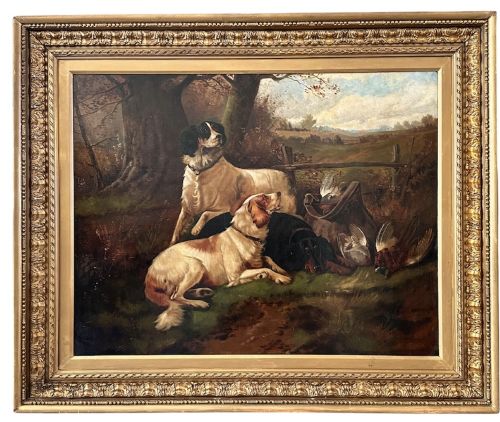
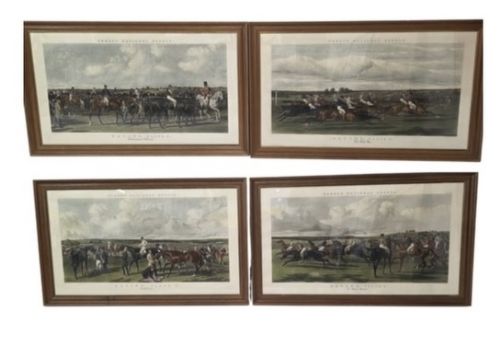
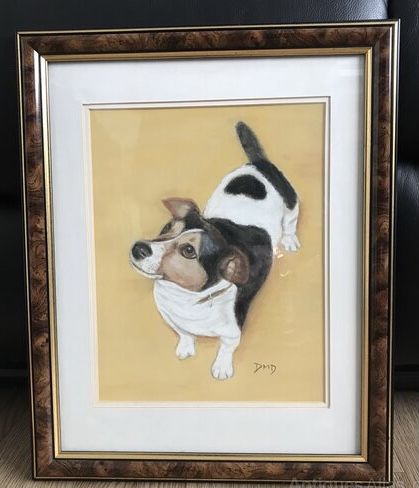
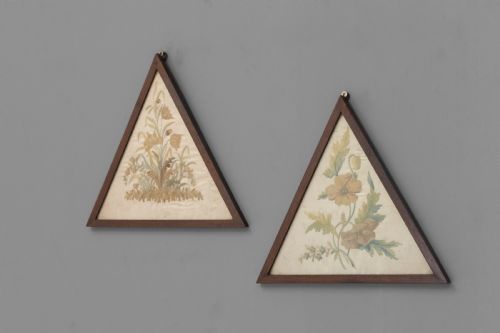
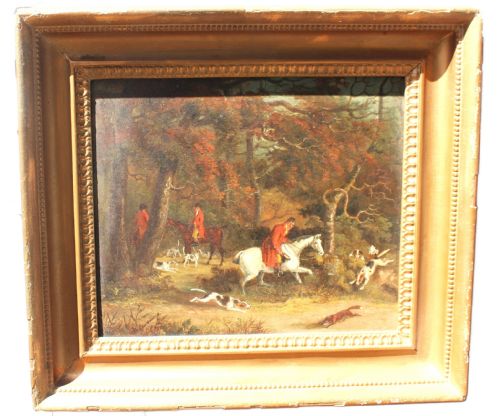
Oil paintings on canvas form a substantial part of the offerings, often depicting agricultural scenes, horse racing, hunt meetings, and domestic animals such as terriers and gun dogs. These sit alongside paper works, watercolours, and embroidered panels.
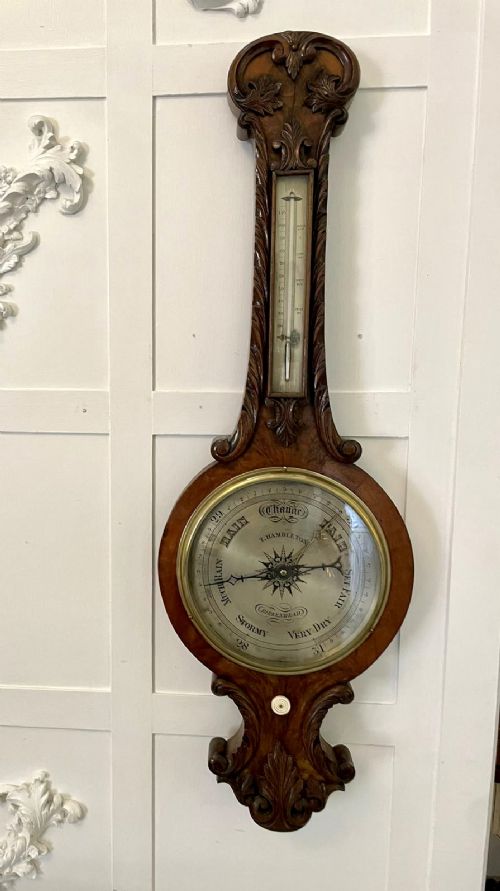
Functional wooden items configured for wall display, including carved barometers and candle boxes, appear alongside purely decorative plaques and trays. The aesthetic draws heavily on the English country house tradition and nineteenth-century British school painting.
Materials and construction
Canvas and paper serve as the primary grounds for painted and drawn works, utilising oil paint, pastel, and watercolour. Canvases are frequently stretched over timber frames, occasionally laid onto board in later conservation.
Cockerels, chickens, and chicks stare down viewers from nineteenth-century canvas alongside earnest terriers and leaping salmon.
Quality and execution
The integrity of the materials and the preservation of the original surface dictate standing. Untouched oil surfaces and period frames matching the date of the canvas command greater interest than heavily restored or later married elements.
Charles Faulkner·John Atkinson·Herbert Royle·Edgar Hunt·Jennens & Bettridge
The English Country Wall Decor Glossary
- Chrystoleum
- A Victorian method of applying a hand-coloured print to glass and rendering it transparent with oils or varnish so it could be further painted from the rear. This creates a glossy, layered depth distinct from standard framing.
- Pastel
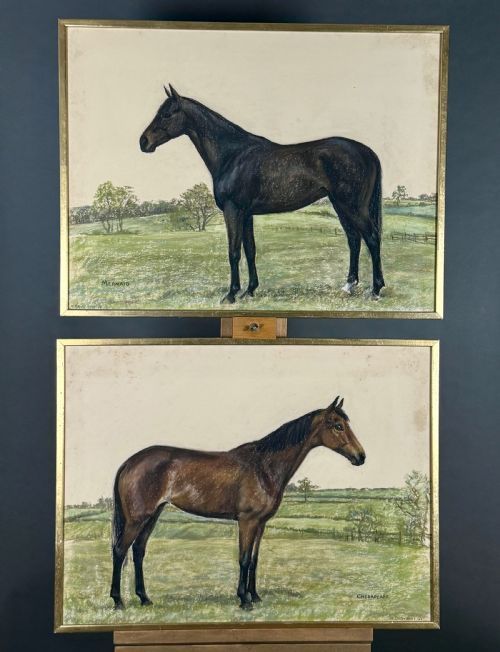
- A dry drawing medium composed of powdered pigment and a binder, worked onto paper to produce velvety matte colour. These works require glazing under glass to protect the pigment from disturbance.
- Banjo barometer
- A weather-measuring instrument housed in a distinctive curved wooden case shaped like a banjo. Victorian examples frequently employ burr walnut and carved details for wall display.
- Shoulder yoke
- A curved wooden implement carved to fit across the shoulders for carrying buckets or loads. Elm and beech versions are adapted for rural wall display.
English Country Wall Decor: Frequently Asked Questions
How do I hang heavy wooden wall pieces safely?
Heavy items such as barometers or carved wooden plaques require secure fixings into wall studs or appropriate masonry anchors. The hanging wire or bracket on the rear must match the substantial weight of the timber.
Position pieces at eye level to replicate historical country house display methods. Ensure they avoid direct sunlight and damp walls to protect the wood and any interior mechanics.
What defines the Victorian sporting art style?
Victorian sporting art focuses on equestrian events, horse racing, hunt meetings, and working dogs in rural landscapes. Artists recorded these subjects with careful attention to animal anatomy and the specific red and green coats of the hunt.
These works often capture specific named events or locations, utilising oil paint on canvas or detailed pastel studies. They reflect the rural preoccupations of the nineteenth-century British country house.
How do I identify a nineteenth-century frame?
Nineteenth-century frames frequently employ moulded composition or carved wood, often finished with gilt or dark patination suited to oil paintings. The corners reveal hand-joined mitres, and the reverse shows oxidized fixings and aged timber.
Original frames complement the artwork and show consistent wear matching the age of the canvas. Modern replacements lack this integrated patina and structural alignment.