


English Country Sporting Scene
An English country sporting scene brings the motion and drama of nineteenth-century fields and kennels straight onto a wall.
English Country Sporting Scene
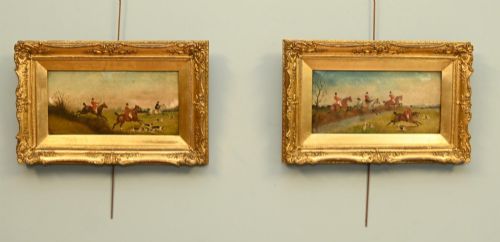
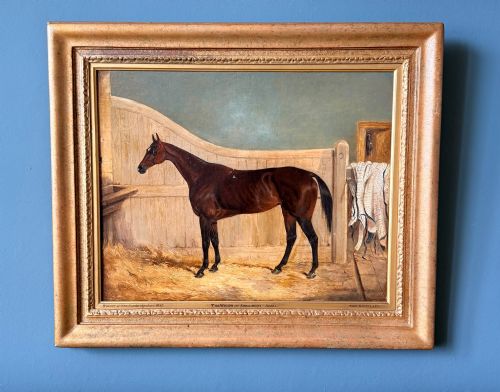
An English country sporting scene captures the traditions of the countryside through depictions of hunts, hounds, and equestrian portraits. These works typically date from the nineteenth century, spanning Victorian and Edwardian periods.
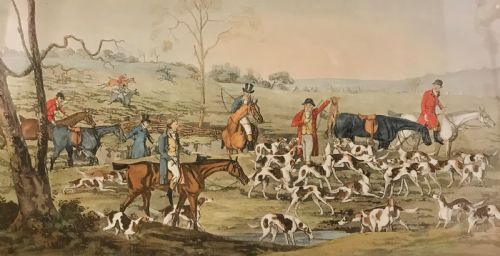
Buyers will encounter oil paintings on canvas alongside hand-coloured engravings, lithographs, and watercolours. Framed art prints and drawings also appear frequently among the listings.
Subjects range from the Berkeley Hunt and coaching routes to prize greyhounds and quiet moorland shooting parties. The works document rural pastimes with detailed realism and landscape settings.
Materials and Techniques
Painters applied oil paint to canvas or wood panels, building rich textures for horses, coats, and hounds. Watercolours and pencil drawings on paper offer lighter, more immediate impressions of the countryside.
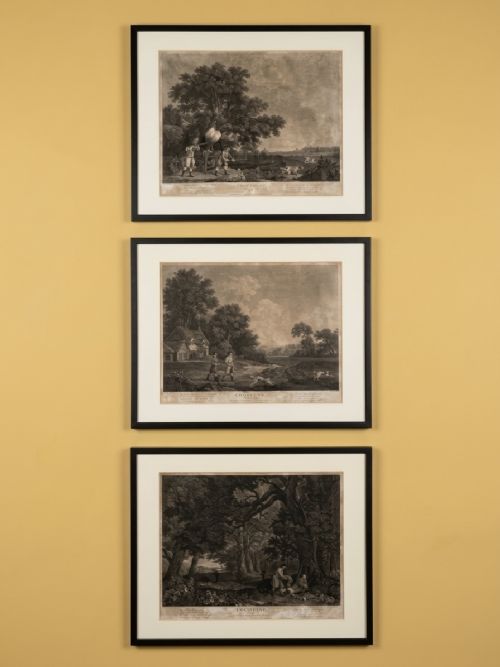
Printmakers utilised paper and ink for engravings and lithographs, often applying hand-colouring to enhance the published plates after artists such as Alken and Turner.
Materials span oil on canvas, pencil, chalk, watercolours, and hand-coloured engravings on paper.
Determinants of Quality
The precision of anatomical rendering in horses and hounds distinguishes superior works from more formulaic studio output. Artists who understood sporting mechanics captured movement and tension with greater conviction.
Condition of the canvas, paper, and original framing plays a significant role in evaluation. Well-preserved pigment layers and crisp engraving lines retain the narrative clarity intended by the maker.
Thomas Walker Bretland·Michael Lyne·Samuel Spode·Charles Faulkner·John Frederick Herring Jnr·Samuel Henry Alken·Henri Schouten·Thomas Ivester Lloyd·William J Hodgson·John Vine of Colchester·Francis Calcroft Turner·Edward B Herberte·Dean Wolstenholme
The English Country Sporting Scene Glossary
- Lithograph
- A print produced by drawing on limestone or metal with a greasy substance. The process allows for subtle tonal gradations and detailed reproduction of original drawings.
- Engraving
- An image incised into a metal plate using a sharp tool. Ink is held in the grooves and transferred under pressure to paper.
- Giltwood
- Wood carved and coated with gold leaf or a gold-coloured finish. This material frequently frames nineteenth-century oils.
- Watercolour
- A paint consisting of pigment suspended in a water-soluble binder. It produces transparent washes on paper.
- Provenance
- The documented history of a piece from its creation to the present. It helps verify authorship and past ownership.
English Country Sporting Scene: Frequently Asked Questions
What subjects appear in these scenes?
The works depict fox hunting, coaching inns, horse portraits, and shooting parties with spaniels. Hounds and horses feature prominently alongside rural landscapes.
Artists recorded specific hunts like the Berkeley Hunt and named prize-winning animals. The focus remains squarely on rural sport and equine life.
How should I care for these works?
Keep oil paintings and works on paper away from direct sunlight to prevent fading of pigments and discolouration of paper. Stable humidity protects wooden stretchers and canvas integrity.
Display framed pieces securely on interior walls using appropriate hardware for heavy giltwood or canvas weights. Avoid hanging them near active heat sources.
How do I identify the period?
Look to the clothing styles, such as grey top hats and red hunting coats, alongside framing materials. Nineteenth-century works often carry specific dress codes and artistic conventions.
Signatures, dates inscribed on the canvas, and publisher details on prints offer reliable clues. Victorian and Edwardian aesthetics govern the composition and palette.
Are prints or originals better?
Original oil paintings provide textured brushwork and unique hand-rendered detail from named artists. They stand as singular historical records of rural pursuits.
Hand-coloured engravings and lithographs offer historical access to popular published imagery from the nineteenth century. Both formats hold distinct places in a sporting collection.