




English Country Pine Cabinet
An English country pine cabinet brings honest utility and warmth to a room, offering robust storage built from durable softwood.
English Country Pine Cabinet
When searching for an English country pine cabinet, buyers encounter practical storage furniture built for domestic life across several centuries. The selection on this page spans kitchen dressers, linen cupboards, chests of drawers, and corner cupboards from the eighteenth, nineteenth, and early twentieth centuries.
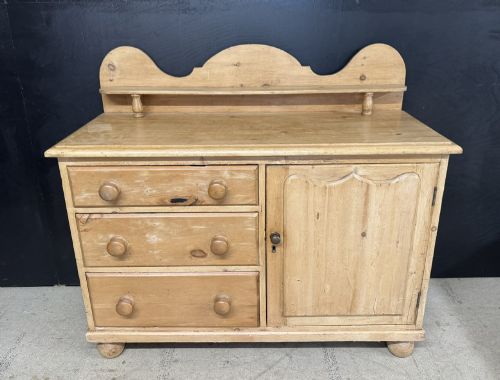
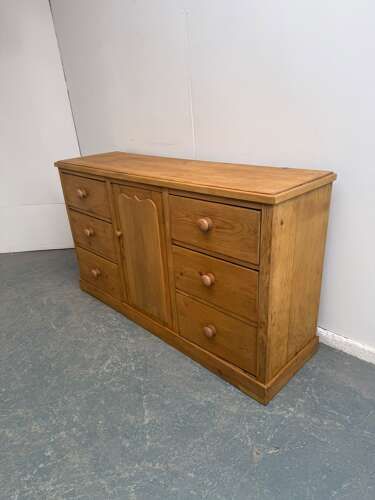
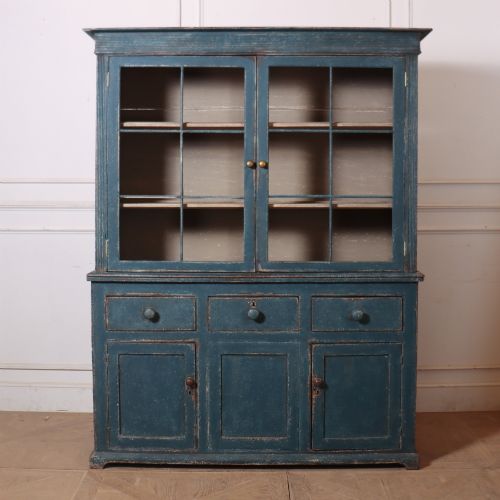
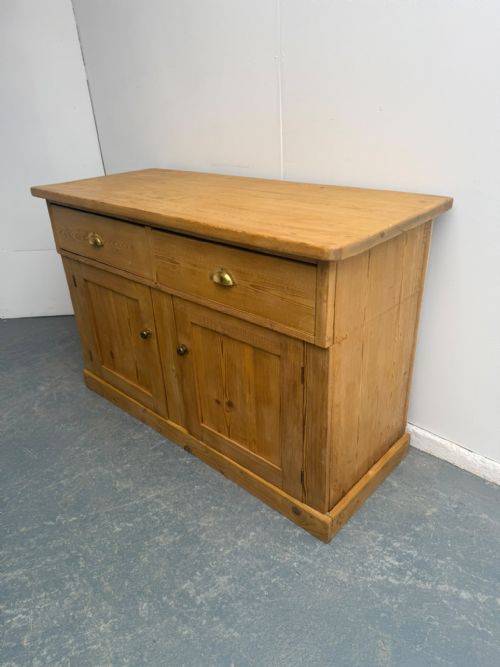
The version most commonly met here is the nineteenth-century pine dresser base or painted cupboard originating from regional workshops. These pieces showcase vernacular styles, including West Country variations, with straightforward proportions designed for everyday storage rather than formal display.
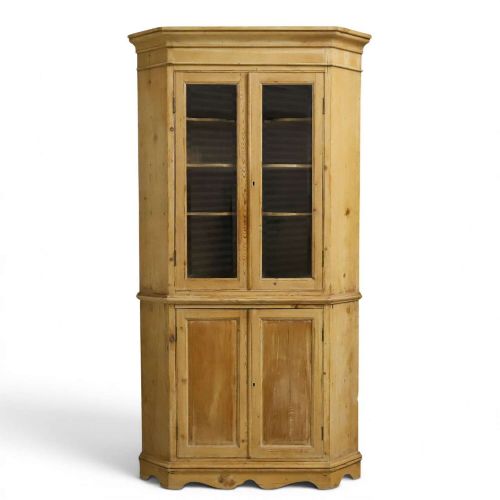
Forms range from tall breakfront kitchen dressers and housekeepers' cupboards to smaller bedside cabinets and open bookcases. Solid pine serves as the primary material, frequently complemented by brass fittings and glass doors on upper sections.
Judging Quality
Quality in these vernacular pieces rests upon the integrity of the timber construction and the preservation of original surfaces. Cabinets retaining their early painted finishes or honest waxed patination stand apart from examples stripped down or heavily altered over time.
Proportion and structural balance also distinguish finer examples, where drawers run smoothly and doors hang true within the solid pine frame. The presence of regional characteristics, such as specific West Country moulding details, adds distinct regional interest.
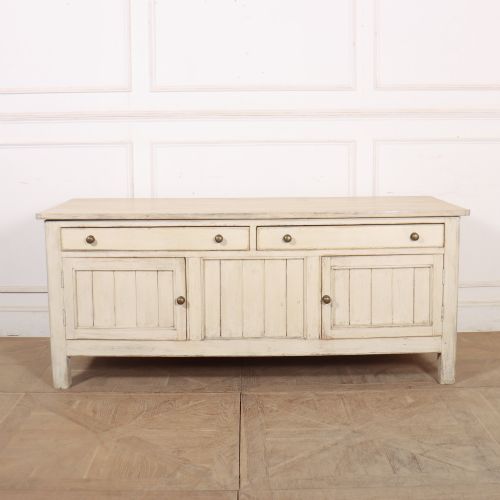
Several pieces preserve stubborn layers of historic paint applied generations ago by practical owners who simply wanted a change of colour.
The English Country Pine Cabinet Glossary
- Pine
- A softwood derived from coniferous trees, widely utilised in British vernacular furniture for its strength and ease of working. It forms the primary body of the pieces listed here.
- Dresser Base
- The lower section of a kitchen dresser, typically featuring a combination of drawers and cupboards beneath a solid top surface. These served as practical work counters and storage units.
- Housekeeper's Cupboard
- A large, tall storage cabinet traditionally used in substantial houses for linens, provisions, or household stores. They feature panelled doors enclosing extensive internal shelving.
- Breakfront
- A cabinet design where the central section projects forward from the flanking wings, creating visual depth and varied internal space. This layout appears on larger cupboards and dressers.
- Waxed
- A surface finish applied to timber using natural waxes to nourish the grain and provide a soft sheen. This treatment protects the pine while allowing the natural character of the wood to show.
English Country Pine Cabinet: Frequently Asked Questions
What is an English country pine cabinet?
An English country pine cabinet is a utilitarian storage piece made from softwood in regional British workshops, encompassing dressers, cupboards, and chests from the eighteenth to early twentieth centuries.
These pieces were constructed for practical domestic storage in kitchens, pantries, and bedrooms rather than formal reception rooms.
How were these cabinets used originally?
Households utilised these pine cabinets for storing provisions, tableware, linens, and personal clothing in everyday domestic settings.
Larger pieces like housekeepers' cupboards and kitchen dressers acted as the central storage hubs for a working household.
How do I live with a pine cabinet?
Living with a pine cabinet involves placing it in kitchens, dining rooms, or hallways where its robust storage and warm timber tone complement daily life.
Maintain the wood by avoiding direct heat sources and applying appropriate wax finishes to preserve the surface patination.
How do I tell different periods apart?
Distinguishing periods involves examining construction methods, hardware types, and stylistic indicators such as drawer dovetails and moulding profiles.
Eighteenth-century examples often display hand-cut joinery and proportions distinct from standard Victorian or Edwardian production.