
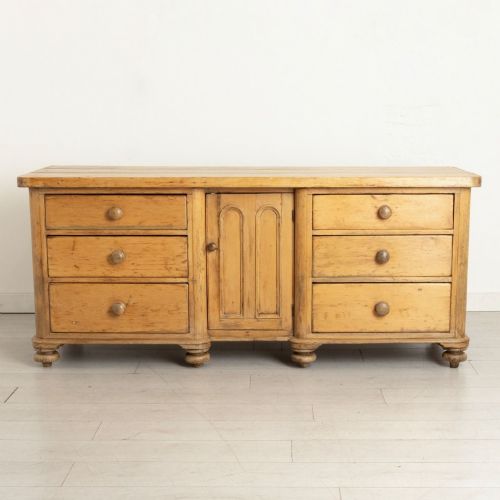
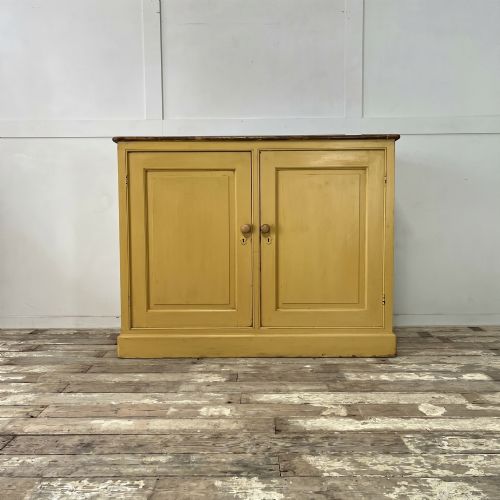
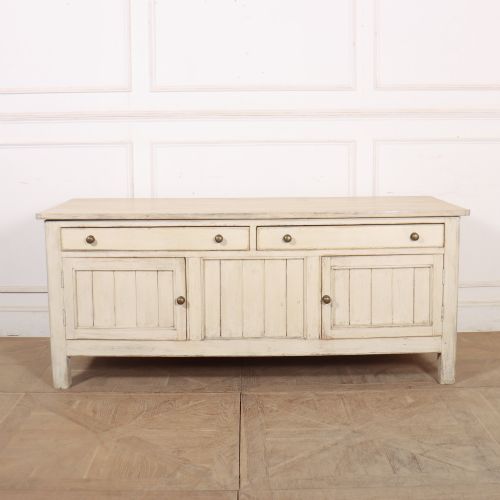


Low Pine Sideboard Cabinet
These low pine sideboard cabinet pieces offer honest domestic utility and warmth, built to anchor a room without dominating it.
Low Pine Sideboard Cabinet
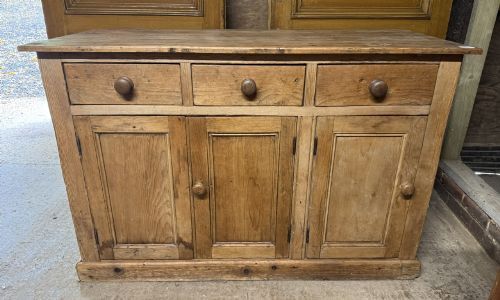
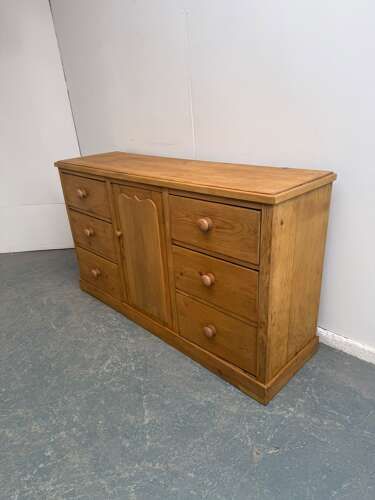
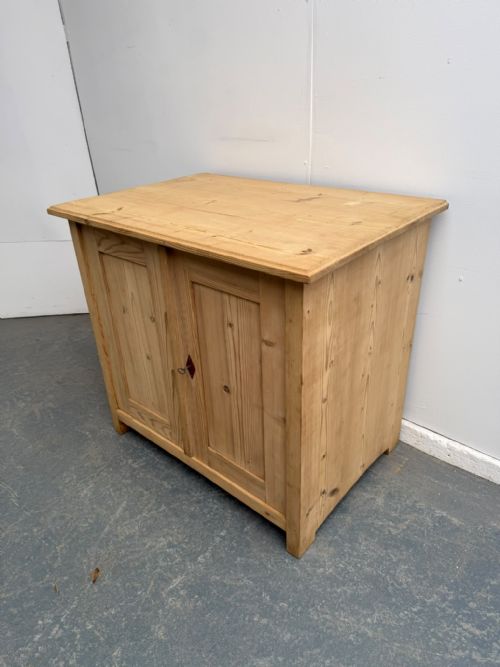
When you search for a low pine sideboard cabinet, you are looking at utilitarian storage furniture designed for domestic spaces like kitchens, dining rooms and hallways. These pieces combine the low, horizontal proportions of a sideboard or dresser base with the enclosed storage of a cupboard.
The versions you are most likely to meet on this page hail primarily from the nineteenth century, including specific decades such as the eighteen-fifties, sixties, seventies and nineties, alongside Edwardian examples. They span English, Victorian, and Scandinavian country traditions, reflecting practical rural and provincial origins.
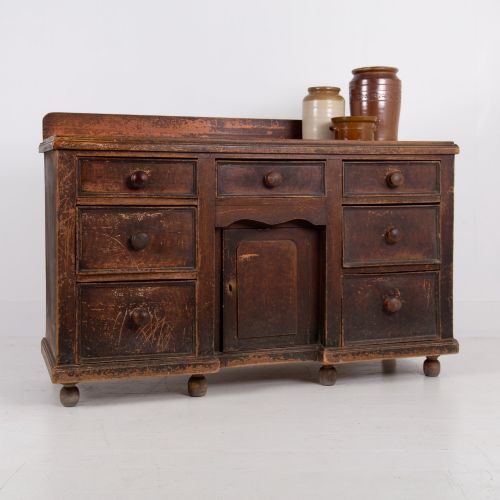
Forms vary from kitchen dresser bases and breakfront linen cupboards to small chiffoniers, school cupboards and wide storage units. Materials range from solid pine and pitch pine to painted wood surfaces and iron or brass hardware.
How they were made
Carpenters constructed these low pine sideboard cabinet pieces using solid pine and pitch pine, selecting timber for its utility and grain. Many examples feature panelled doors and sturdy frames built to withstand heavy daily use in kitchens and domestic interiors.
Surface finishes are integral to their construction, ranging from waxed natural wood to original paint. Iron and brass fittings such as hinges and handles complete the construction, serving both structural and functional roles.
An eight-door pitch pine cupboard proves that some Victorian householders took their storage very, very seriously indeed.
What varies in quality
The distinction between ordinary and exceptional pieces lies in the integrity of the timber and the honesty of the surface finish. Pieces retaining original paint or deep, mellow waxed patination command greater interest than those stripped down indiscriminately.
Proportion and scale also separate standard utility items from finer provincial cabinetmaking. Well-proportioned breakfront layouts and balanced drawer arrangements indicate thoughtful design within vernacular traditions.
The Low Pine Sideboard Cabinet Glossary
- Dresser base
- The lower section of a kitchen dresser, featuring cupboards and drawers beneath a flat top surface. It functions independently as a low sideboard or serving surface.
- Pitch pine
- A dense, resinous softwood prized for its durability and strong grain pattern. It appears frequently in robust nineteenth-century storage furniture.
- Chiffonier
- A compact low cabinet featuring drawers and doors, popular during the Victorian and Edwardian eras. It provides versatile storage in a smaller footprint.
- Breakfront
- A piece of furniture where the central section projects forward from the flanking outer sections. This architectural feature adds visual depth to large cupboards and sideboards.
- Patina
- The surface sheen and colour developed through years of handling, waxing and ageing. It represents the natural history of the wood.
Low Pine Sideboard Cabinet: Frequently Asked Questions
Where were these low pine cabinets used?
These low pine sideboard cabinet pieces served primarily in kitchens, sculleries, and dining areas as practical storage for tableware, linens, and provisions. Their low tops also provided convenient working or serving surfaces.
Over time, many transitioned into living spaces and hallways as general storage units and decorative focal points in country-style interiors.
How do I care for a waxed pine cabinet?
Maintaining a waxed pine surface involves regular dusting with a dry cloth and occasional application of traditional beeswax to nourish the timber. Avoid placing these pieces near direct heat sources to prevent the wood from drying out.
Keep moisture away from the surface by using coasters and wiping up spills promptly to preserve the finish and patina.
Are painted pine cabinets original?
Many nineteenth-century pieces retain original painted surfaces, which show authentic wear, layering, and texture acquired over decades of domestic use. Others were stripped or painted at later dates depending on prevailing domestic tastes.
Examining the paint adherence around hinges, edges, and crevices helps determine whether the finish dates to the period of manufacture.
How do I distinguish Victorian from Edwardian pine furniture?
Victorian pine pieces generally display heavier proportions, robust mouldings, and utilitarian construction suited to nineteenth-century rural and domestic life. Their hardware often includes heavier iron or brass fixtures.
Edwardian examples tend towards slightly lighter scaling, refined detailing, and more compact dimensions, reflecting changing interior styles at the turn of the twentieth century.