


English Cottage Artwork
English cottage artwork captures rural life through watercolours and oils spanning the Victorian era to the mid-twentieth century.
English Cottage Artwork
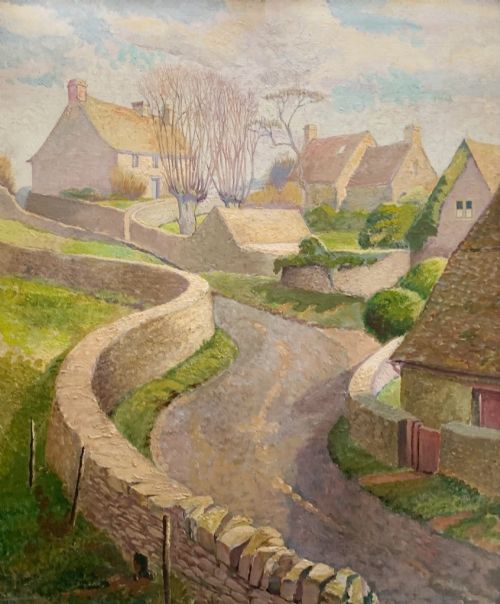
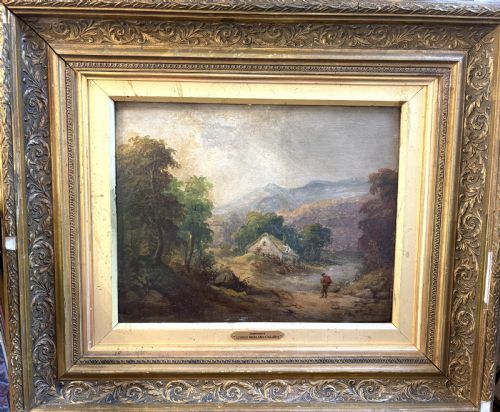
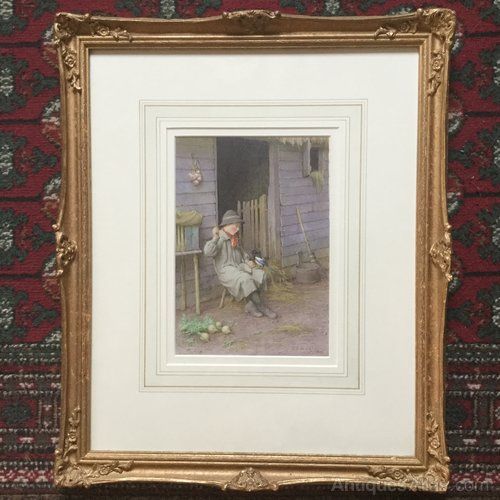
English cottage artwork encompasses framed paintings, watercolours, and mixed media pieces depicting rural landscapes, village scenes, and thatched dwellings. Buyers exploring this category encounter pastoral views recorded by artists working across the nineteenth and twentieth centuries.
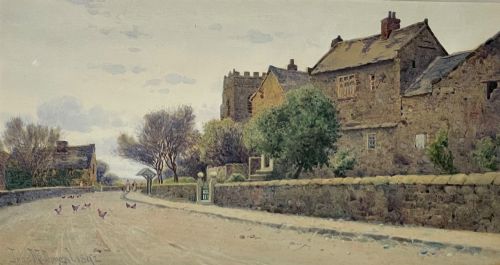
The selections on this page feature works created during the Victorian, Edwardian, and later twentieth-century periods. Many pieces capture specific locations across the British countryside, from Yorkshire views to southern riverbanks.
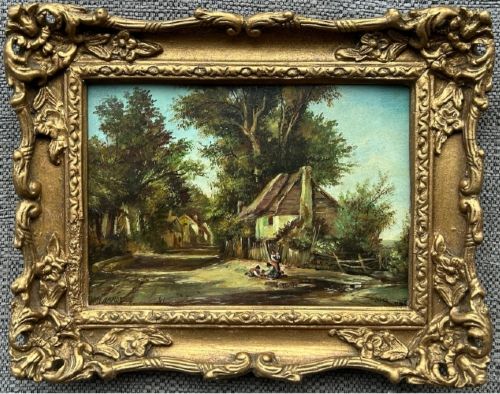
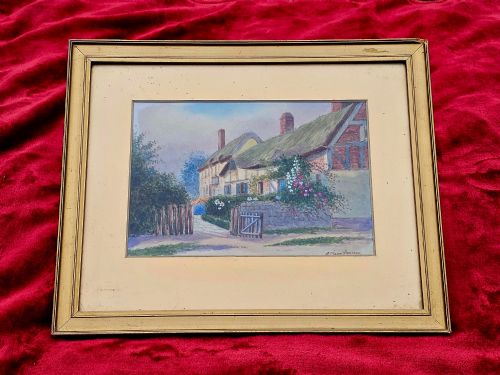
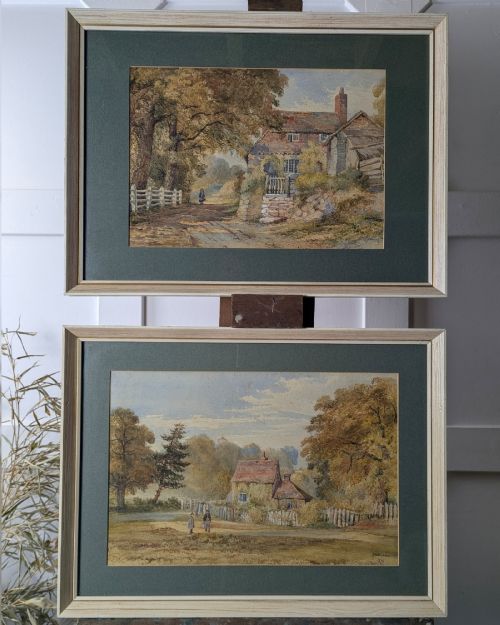
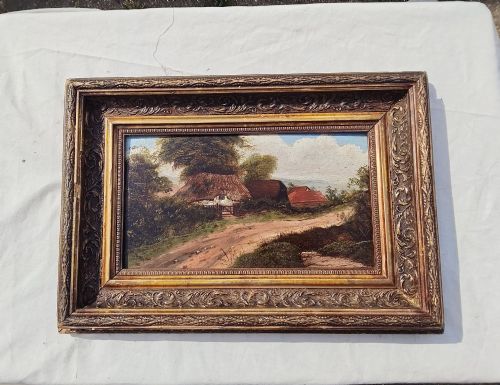
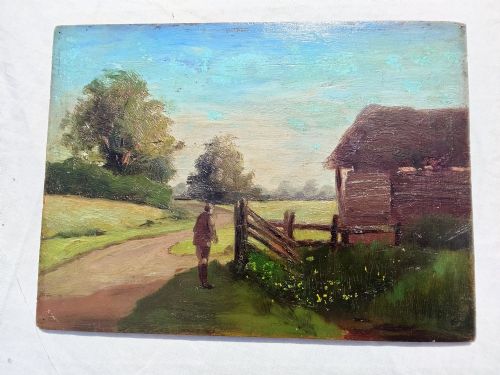
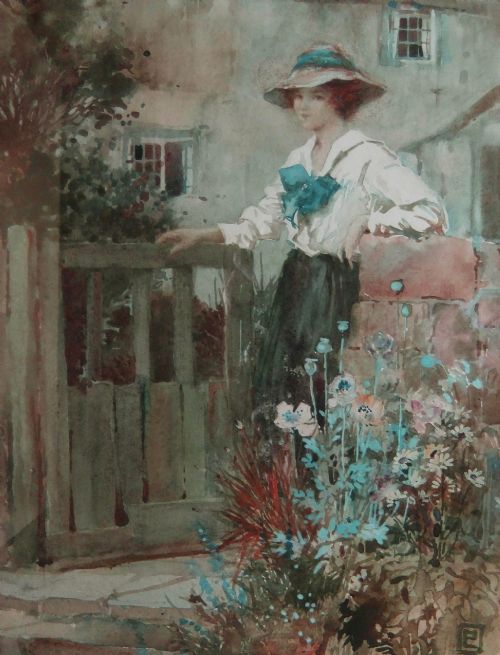
Watercolours on paper and oil paintings on canvas, panel, board, or card dominate the selection. These depictions range from detailed studies of garden gates and farmsteads to broader rural vistas populated by figures and livestock.
Materials and technique
Artists relied on watercolour pigments applied to paper, alongside oil paint worked onto canvas, wooden panels, cards, or boards. These traditional mediums defined the visual texture of British pastoral scenes across successive generations.
Framing utilised carved or moulded wood, frequently accented with gilding to complement the tonal qualities of the paintings within. Supports varied from stretched linen canvases to rigid wooden boards suited to plein air painting.
Several cottages in these works share their pastures with ducks, geese, and tethered ponies patiently waiting out the artist's brush.
Quality variations
Distinction within these works rests upon the surety of the brushwork and the artist's command of natural light and atmospheric depth. Superior pieces demonstrate a confident handling of pigment that brings clarity to architectural details and surrounding foliage.
The relationship between the subject and its spatial composition determines the visual strength of a painting. Works executed with deliberate observation of rural architecture and seasonal colour hold greater artistic presence than formulaic studies.
William Howard Hardy·A. Marie Parsons·John McDougal·Robert A. Nottingham·Percy Lancaster·George Morland·Charles Edward Wilson·John Horace Hooper·Reginald Grange Brundrit·Fred Lawson·Arthur Tucker·J S Ainley·James Hardy Junior·Frederick James Knowles·William Greaves·Charles Vickers·William Henry Knight·Theresa Stannard·Robert Finley McIntyre·Helena Maguire·Linnie Watt·Owen Bowen·Ernest Higgins Rigg·Lorenzo Headley·Lilian Stannard
The English Cottage Artwork Glossary
- Watercolour
- A painting method in which fine pigment is suspended in a water-based solution and applied to paper. This medium allows for translucent washes that capture soft daylight.
- Oil on Canvas
- Pigment bound in drying oil applied to a woven fabric stretched across a wooden frame. This surface supports rich layering and varied texture.
- Panel
- A flat piece of wood or card utilised as a rigid support for oil painting. It provides a stable surface favoured for smaller rural studies.
- English School
- A designation for artists trained or working within the British artistic tradition. This term unites diverse painters sharing regional subjects and stylistic influences.
English Cottage Artwork: Frequently Asked Questions
What subjects appear in these paintings?
The compositions focus primarily on rural English scenery, featuring thatched cottages, country gardens, farmsteads, and village rivers.
Human figures, livestock, and working horses frequently appear alongside these architectural and landscape elements to depict everyday nineteenth and twentieth-century pastoral life.
How are these artworks framed?
Many pieces retain their original wooden or gilded frames selected to complement the period aesthetic of the painting.
These frames range from simple mouldings to ornate decorative borders that help define the presentation of the artwork.
How can I date a piece?
Dating relies upon artist signatures, inscribed dates, stylistic markers, and the physical materials of the support and frame.
Victorian and Edwardian works often display specific framing techniques and paper watermarks characteristic of their decade of production.
Where should I hang these artworks?
These domestic scenes suit traditional living spaces, studies, or hallways where natural light enhances the subtle tones of watercolour and oil.
Protecting the pieces from direct sunlight preserves the paper supports and pigment integrity over time.