


English Coastal Oil Painting
An english coastal oil painting captures the changing light, harbours, and shores of Britain across centuries of maritime life.
English Coastal Oil Painting
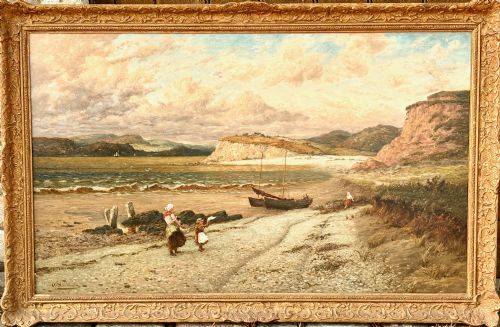
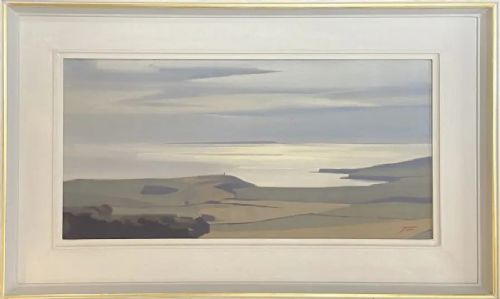
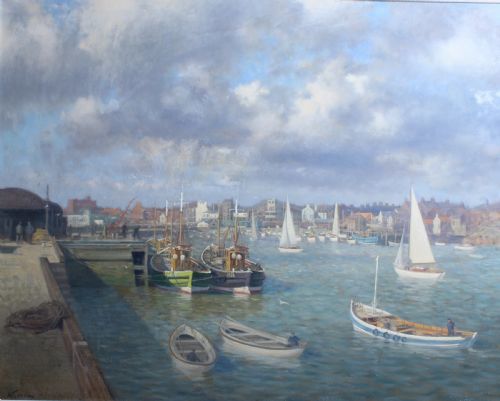
When searching for an english coastal oil painting, collectors encounter works depicting harbours, estuaries, and cliffs around Britain. The selection spans the nineteenth century through the mid-twentieth century, capturing varied maritime scenes from busy fishing ports to quiet sandy beaches.
Victorian examples often record detailed topographical views and shipping activity, while later twentieth-century works lean towards impressionistic brushwork and atmospheric coastal light. Common subjects include Yorkshire bays, Cornish harbours, and Dorset cliffs rendered on canvas, board, or wood panel.
Materials and methods
The combination of oil pigments with linseed or other drying oils allowed painters to capture transparent washes for water and heavy, opaque strokes for stormy seas and clouds.
The listings include works on canvas, board, card, and wood panel dating from the eighteenth century through the mid-twentieth century.
Evaluating quality and execution
Quality rests upon the artist's ability to render atmosphere, coastal light, and topographical accuracy with confident brushwork. Stronger examples display balanced composition and a perceptive handling of marine weather, whereas weaker works rely on formulaic repetition.
The survival of the original surface, stability of the paint layer, and the appropriateness of the period frame also influence the overall standing of an individual canvas.
James Fry·Walter Goodin·Joseph Edward Hennah·William Edward Webb·Charles Napier Hemy·Helen Layfield Bradley·Herbert Royle·Alfred Henry Vickers·Daniel Sherrin·Donald Wood·Thomas Rose Miles·William Shayer·Walter J Hall·Walter Meegan·Alfred Egerton Cooper·Frank Hider
The English Coastal Oil Painting Glossary
- Impasto
- Paint applied thickly to a canvas or board, standing out in relief from the surface and catching the light. This technique is frequently seen in twentieth-century maritime works to convey crashing waves or clouds.
- Gesso
- A traditional paint mixture consisting of a binder mixed with chalk, pigment, or gypsum used to prepare rigid surfaces and ornate frames. It provides a smooth base for gilding and decorative mouldings.
- Giltwood
- Timber carved and coated with gold leaf or gold-coloured metal leaf for picture frames. It is a defining feature of formal nineteenth-century salon presentations.
- Estuary
- The tidal mouth of a large river where the tide meets the stream, forming a common subject for British landscape and marine artists. These views often focus on shipping, mudflats, and changing coastal light.
English Coastal Oil Painting: Frequently Asked Questions
How do I date an english coastal oil painting?
Dating relies on stylistic clues, clothing on figures, the type of shipping vessels shown, and framing materials. Signatures and exhibition labels on the reverse also provide helpful chronological markers.
Changes in artistic movements from Victorian realism to mid-century impressionism help narrow down the decade of creation.
What subjects are most common?
Popular subjects include busy fishing harbours, lighthouses, sailing vessels in choppy seas, and quiet sandy bays. Views often focus on specific regions such as Yorkshire, Cornwall, Dorset, and Devon.
Artists frequently returned to familiar coastal locations to record the local fishing fleets and maritime trade.
Are these paintings on canvas or board?
Both supports appear frequently across different periods. Nineteenth-century works more commonly use stretched canvas, while twentieth-century examples often utilise wooden panels or thick board.
The choice of support frequently reflects the scale of the work and the artist's preferred painting technique.
How should I care for an oil painting?
Keep paintings away from direct sunlight, high humidity, and rapid temperature fluctuations to protect the canvas and paint layers. Dust gently with a soft, dry brush without applying pressure to the surface.
Avoid using liquid cleaners or touching the pigment directly with bare hands.