





English Clock Face
These English clock face pieces range from brass and painted iron dials to complete longcase clocks in oak and mahogany.
English Clock Face
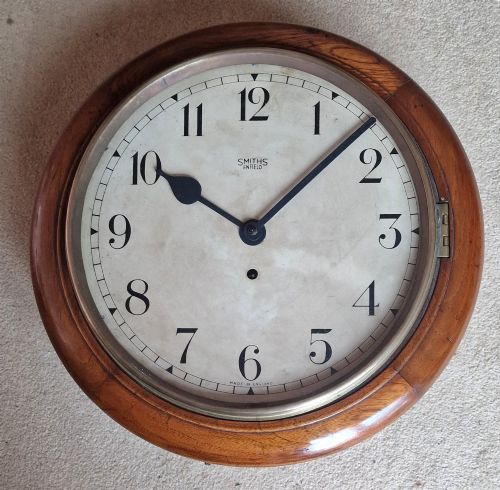
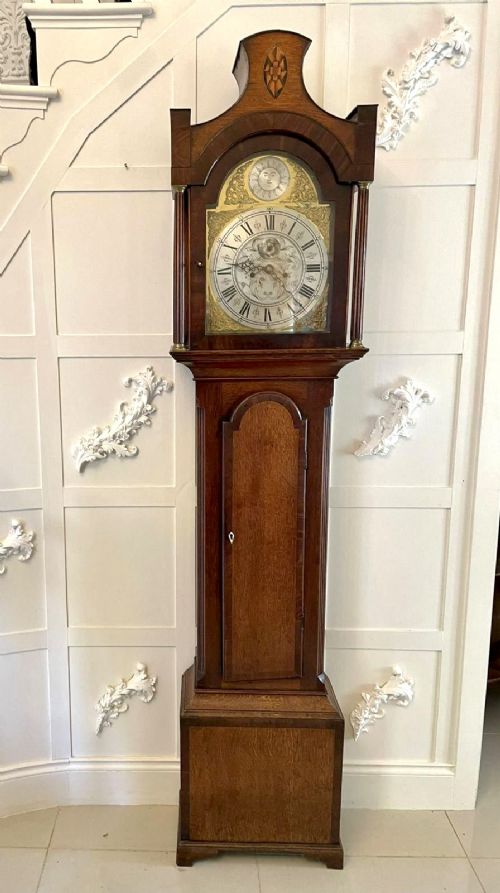
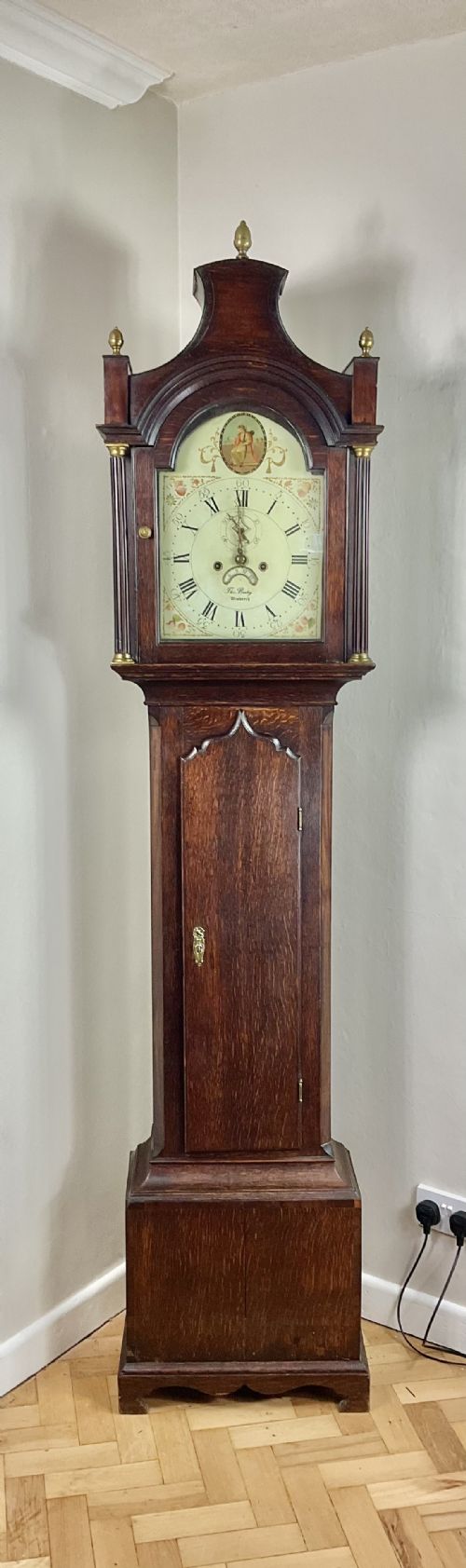
An English clock face encompasses both individual dials and complete timepieces spanning the eighteenth and nineteenth centuries, alongside early twentieth-century examples. You will frequently encounter longcase clocks housed in oak or mahogany cases, accompanied by wall clocks and desk clocks.
The material palette of an English clock face shifts from heavy brass and rich walnut of the earlier periods towards painted iron and industrial metals in later pieces. Oak and mahogany dominate the cabinetry for longcase and dial clocks.
Origins span Georgian, Victorian, and Art Deco periods, capturing shifts from ornate brass work to clean dial designs. Wall clocks and barometers represent the more compact domestic forms within this group.
Materials and construction methods
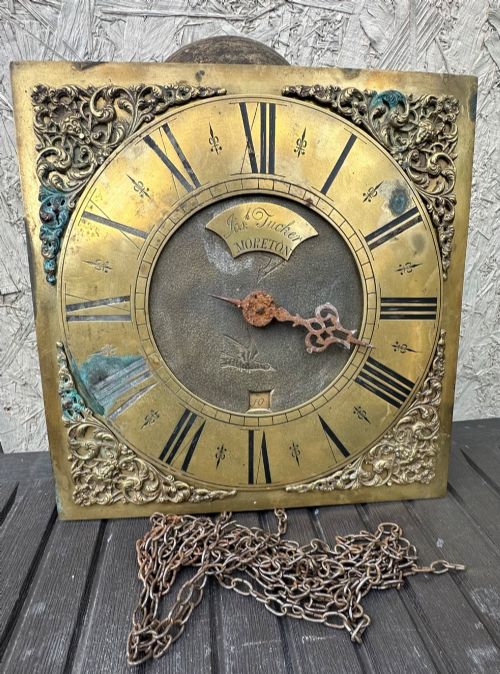
Makers constructed clock faces using cast brass, steel, and painted iron, often mounted onto robust timber backplates or housed within heavy wooden cases of oak, walnut, and flame mahogany.
Movements relied on intricate brass gear trains and eight-day mechanisms, sometimes featuring striking functions, alarm complications, or quarter repeating capabilities.
Cabinetry involved traditional joinery techniques suited to hardwoods, while dial surfaces combined hand-engraved brass or detailed iron painting.
English Clock Face Retail Price Guide 2026
Typical asking prices for english clock face among the pieces listed under this phrase on Sellingantiques today, from the lower quarter to the upper quarter. They describe what is for sale here now, not the wider market.
Listings feature periods from the eighteenth century, Georgian, Victorian, and early twentieth century up to nineteen-thirty.
Factors that define quality
The refinement of the metalwork on the dial and the crispness of the engraved or painted numerals set the better examples apart from simpler work.
Cabinet timber selection plays a role, with figured flame mahogany and richly grained walnut commanding attention over standard oak.
The complexity of the internal movement, such as quarter repeating mechanisms or eight-day durations, elevates the technical standard of the piece.
Richard Northen·James Draycot Wells·John Taylor London·C Coleman London·Richard Peckover London·Richard Watkin·Smiths of London
The English Clock Face Glossary
- Longcase clock
- A tall pendulum clock housed in a wooden case standing directly on the floor. These tall enclosures protected the weight-driven movements.
- Bracket clock
- A portable table or shelf clock originally designed to sit on a wall bracket. They often feature carrying handles and fine wood veneers.
- Dial clock
- A wall-mounted clock featuring a prominent circular face, frequently used in public spaces or hallways. Mahogany and oak frames are typical.
- Quarter repeating
- A mechanical complication where the clock chimes the hours and the elapsed quarters on demand. This indicates advanced horological skill.
- Skeletonised
- A movement design stripped of solid plates to expose the internal gears and escapement. This showcases the mechanical layout directly to the viewer.
English Clock Face: Frequently Asked Questions
What defines an English clock face?
An English clock face refers to dials and complete clocks produced in England across the eighteenth, nineteenth, and early twentieth centuries.
They incorporate materials like brass, painted iron, oak, and mahogany.
How do I identify a Georgian clock?
Georgian pieces typically date from the eighteenth century up to eighteen-thirty, featuring brass or painted iron dials within oak or mahogany longcases.
Stylistic cues include traditional proportions and regional cabinet craftsmanship.
Where were wall clocks displayed?
Wall clocks served both domestic hallways and commercial spaces, offering clear visibility of the time.
Robust mahogany and dial designs ensured durability in busy environments.
What is an eight day movement?
An eight day movement requires winding only once a week, making it more convenient than thirty-hour variants.
This mechanism appears frequently in better quality longcase and desk clocks.