






English Ceramic Wall Art
These pieces of english ceramic wall art combine painting and pottery, bringing painted scenes and patterns onto walls.
English Ceramic Wall Art
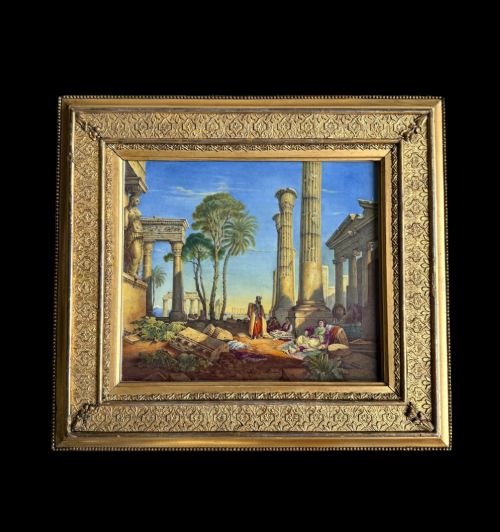
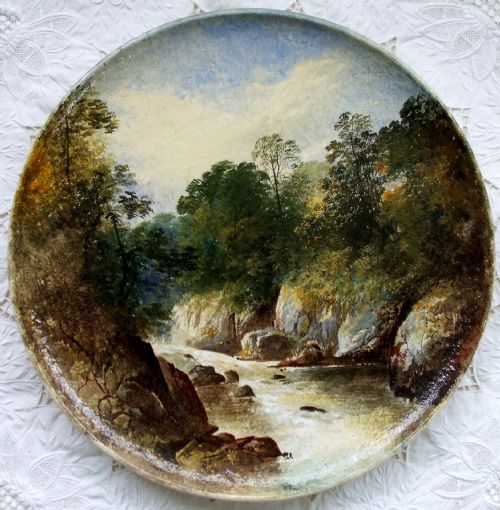
When you search for english ceramic wall art, you encounter decorative plaques, chargers, and plates designed to be hung rather than used at the table. Victorian pieces often feature hand-painted Welsh landscapes on pottery plaques, while later twentieth-century examples lean towards vibrant Art Deco designs.
The selection ranges from nineteenth-century earthenware and porcelain to modernist works from the nineteen-thirties. You will frequently find signed artist-decorated plaques alongside patterned chargers and plates bearing familiar studio marks.
Makers and painters represented on this page include established porcelain factories and named artists working in earthenware. Their output spans serene landscape studies and striking geometric patterns.
How they were made
The pieces rely on earthenware and porcelain bodies shaped into plaques, chargers, and plates before receiving their decoration. Artists applied pigments and glazes directly onto the ceramic surface, often firing the pieces multiple times to fix the colours.
Techniques such as tubelining created raised outlines to hold vibrant glazes in place on Art Deco chargers and plates. Fine brushwork brought landscapes and still-life studies to life on Victorian and Edwardian pottery plaques.
English Ceramic Wall Art Retail Price Guide 2026
Typical asking prices for english ceramic wall art among the pieces listed under this phrase on Sellingantiques today, from the lower quarter to the upper quarter. They describe what is for sale here now, not the wider market.
Several artists spent their days carefully painting miniature Welsh waterfalls onto cold clay panels just so someone could admire them indoors.
What varies in quality
The skill of the hand-painted detail separates standard factory output from exceptional works by named artists. Finely executed brushwork on landscape plaques shows greater artistic control than simpler decorative application.
The complexity of the glaze work and the clarity of the firing define the visual strength of the piece. Crisp lines in tubelined designs and well-preserved painted surfaces command closer attention.
Copeland Pottery·Royal Worcester·Crown Ducal·Bursley Ware·Birks
The English Ceramic Wall Art Glossary
- Plaque
- A flat panel of earthenware or porcelain intended for display on a wall rather than functional use.
- Charger
- A large decorative plate suitable for hanging or prominent display.
- Tubelining
- A ceramic decoration technique where liquid clay is piped onto a surface to form raised outlines enclosing areas of glaze.
- Earthenware
- A porous pottery body fired at lower temperatures, commonly used for Victorian and twentieth-century decorative pieces.
- Porcelain
- A dense, vitreous ceramic material prized for its smooth white surface and refined finish.
English Ceramic Wall Art: Frequently Asked Questions
Are these pieces meant for daily use?
These items are designed primarily for display rather than functional dining or serving purposes. Plates and chargers intended for walls often carry delicate painted decoration or glazes unsuited to cutlery.
Treat them as works of art rather than tableware to preserve their condition over time.
How do I distinguish Victorian from Art Deco pieces?
Victorian examples tend to feature detailed landscape paintings rendered in muted natural tones on porcelain or earthenware plaques. They often carry nineteenth-century signatures and traditional gilt frames.
Art Deco items showcase bold geometric patterns, bright palette choices, and distinct tubelined outlines typical of the nineteen-thirties.
What is the difference between a plaque and a charger?
A plaque is specifically formed as a flat or slightly curved panel intended solely for wall display. A charger is a large decorative plate that shares its shape with dining ware but serves a purely ornamental function.
Both formats provide a broad canvas for artists to paint scenes or abstract patterns.