



English Ceramic Flatback Figure
An english ceramic flatback figure brings 19th-century domestic portraiture and popular theatre into the room with robust earthenware charm.
English Ceramic Flatback Figure
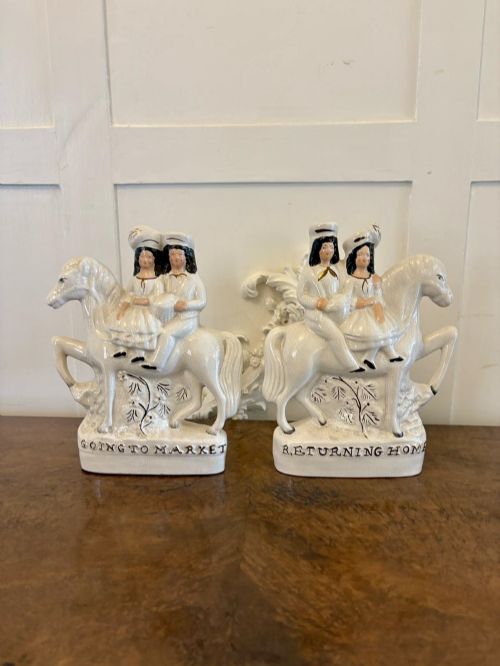
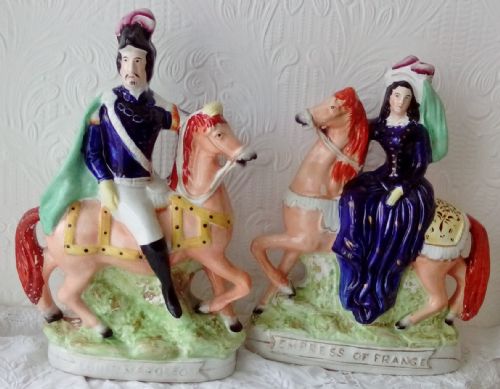
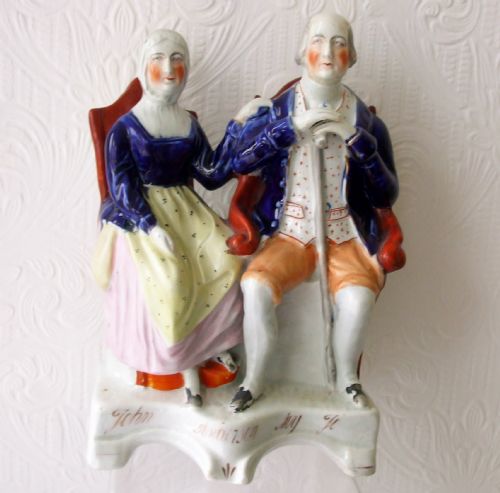
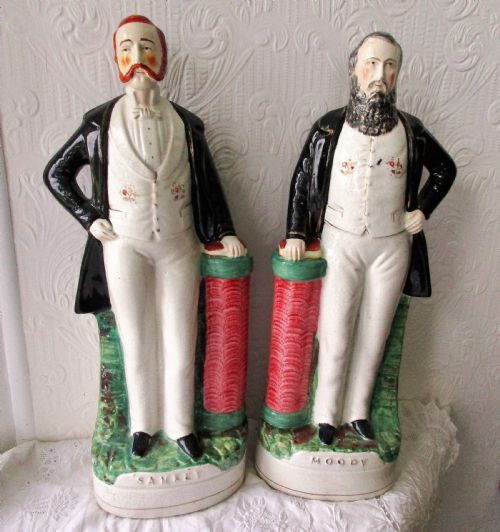
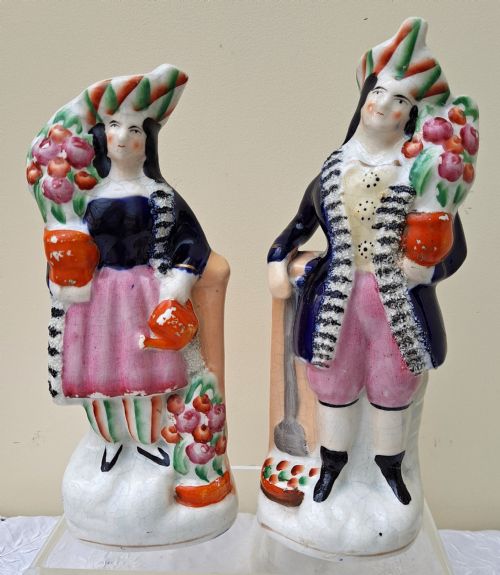
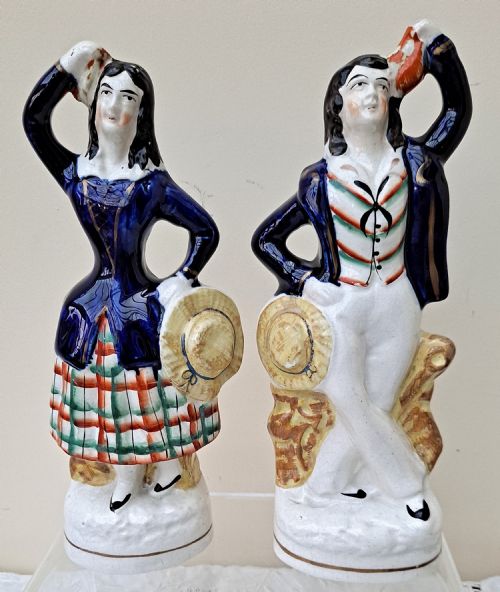
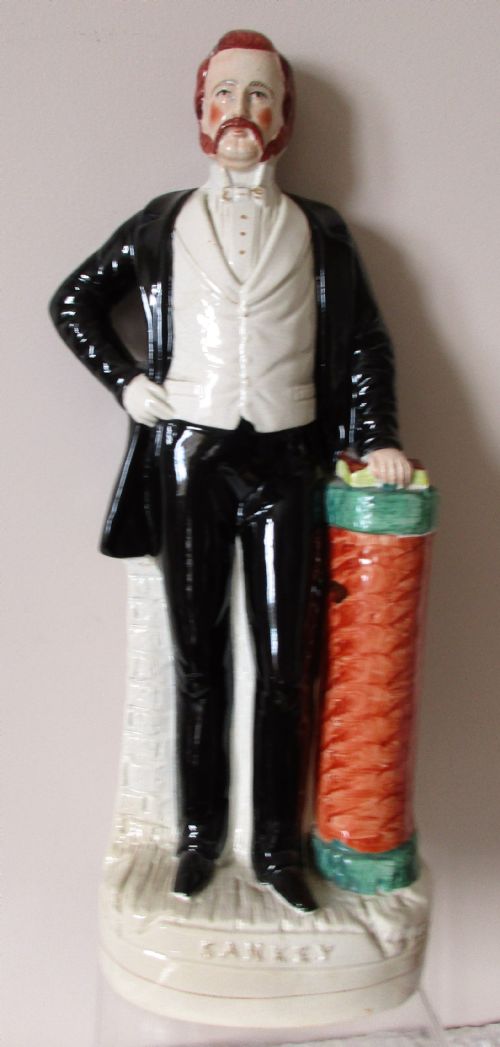
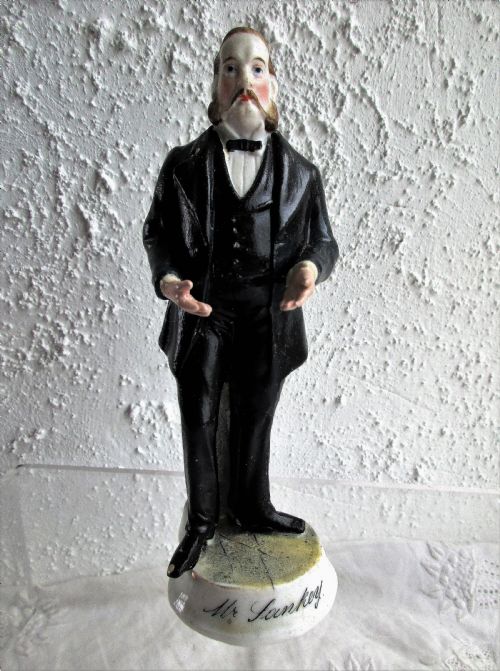
The english ceramic flatback figure represents a distinct category of 19th-century mantelpiece ornament designed primarily to be viewed from the front. These pieces emerge chiefly from Victorian Staffordshire potteries during the decades between 1860 and 1890, capturing public interest through portraits of royalty, military heroes, literary characters, and pastoral pairs.
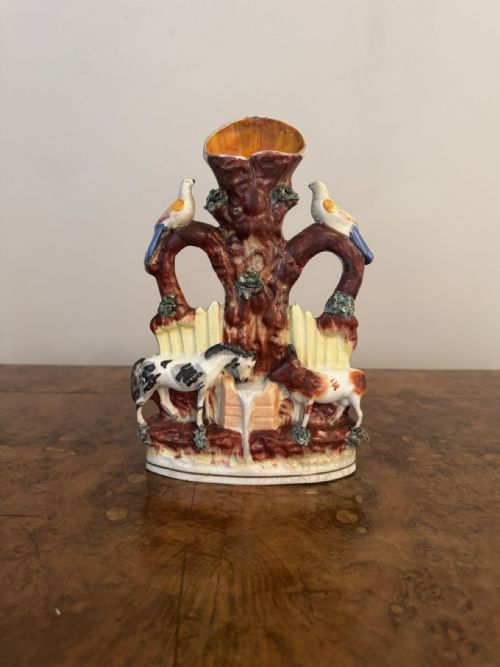
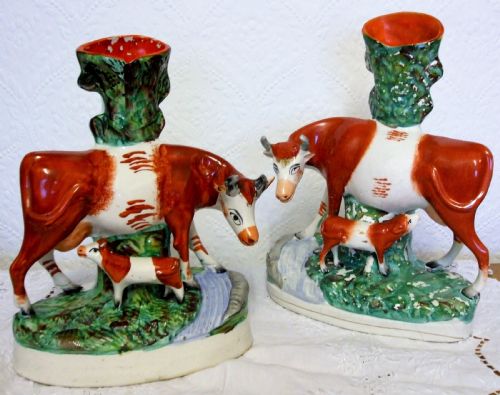
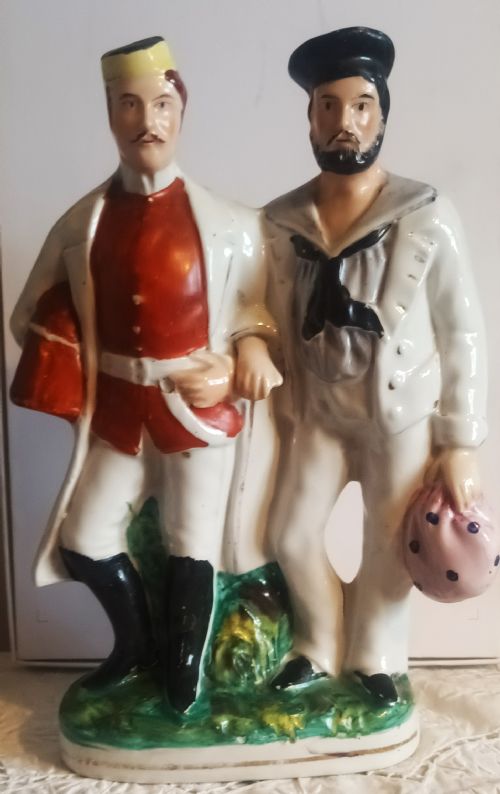
Buyers encounter subjects ranging from Crimean War alliances and royal weddings to temperance groups, theatrical figures, and animal spill vases. The unglazed flat rear indicates their intended position against a cottage or parlour wall, saving on materials while concentrating decorative effort on the painted front.
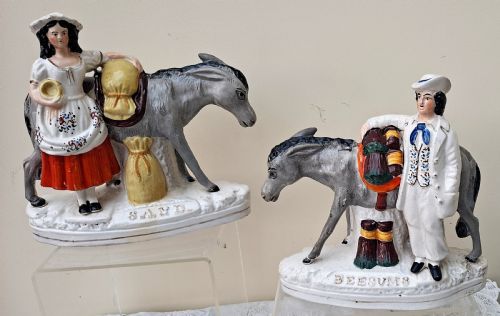
The form spans single portrait figures, large pairs, and complex figure groups involving horses, castles, and watch-holders. Most examples date broadly to the nineteenth century, reflecting the tastes of provincial homes that sought affordable likenesses of contemporary newsmakers and traditional folk themes.
How they were made
Potters shaped the body using earthenware clay pressed into moulds, leaving the reverse flat and plain to save weight and material. The resulting figures received a clear lead glaze to seal the porous ceramic base before going to the kiln.
Materials recorded across the inventory include earthenware, lead glaze, enamel paint, ceramic, and gold leaf.
What varies in quality
Scale and ambition separate standard mantel ornaments from substantial portrait groups, pairs, and large animal figures. Pieces depicting complex historical alliances or theatrical scenes required greater technical skill in the kiln to prevent distortion.
The English Ceramic Flatback Figure Glossary
- Flatback
- A ceramic figure modelled fully on the front and sides while the reverse remains flat and unadorned. This construction allowed the piece to sit flush against a mantelpiece or shelf.
- Spill Vase
- A hollow cylindrical holder incorporated into a ceramic figure, designed to hold wooden spills for lighting pipes or candles. These often feature animals, tree trunks, or human figures.
- Earthenware
- A porous, opaque ceramic body fired at lower temperatures than porcelain. It forms the standard structural material for nineteenth-century Staffordshire pottery figures.
- Lead Glaze
- A liquid glass coating containing lead oxide applied to pottery before firing. It melts in the kiln to create a shiny, protective surface over the earthenware body.
- Enamel Paint
- Opaque coloured decoration applied over the fired glaze. It provides the bright reds, blues, and blacks characteristic of Victorian figure ornamentation.
- Watch-Holder
- A specialised ceramic form incorporating a central hook and miniature framing device. It served as a bedside or mantel stand to suspend a pocket watch securely.
English Ceramic Flatback Figure: Frequently Asked Questions
What is a flatback figure?
A flatback figure is a moulded ceramic ornament with a detailed front and a flat, unglazed back designed to rest against a wall. This construction maximised visual impact on the mantelpiece while economising on clay and firing space.
Potters produced these pieces extensively during the nineteenth century to depict royalty, contemporary events, and popular theatrical personalities for Victorian households.
How were spill vases used?
Spill vases combined decorative sculpture with a practical household accessory by including a hollow tube alongside the main figure. Victorian families placed thin wooden splints, called spills, inside the vase to transfer fire from the hearth to lamps and pipes.
These combination pieces frequently featured animals, rustic couples, or woodland scenes flanking the central receptacle.
How do I date these figures?
Dating relies heavily on the historical events, royal marriages, and public figures commemorated in the titles, such as the Crimean War or the wedding of Queen Victoria and Prince Albert. Most documented examples originate from Victorian Staffordshire potteries active between 1860 and 1890.
Stylistic markers include the use of earthenware bodies, lead glazes, and overglaze enamel paints characteristic of nineteenth-century production methods.
Where should I display them?
These figures suit traditional mantelpieces, bracket shelves, and shallow display cabinets where their frontal orientation can be appreciated. Because the backs are flat and plain, placing them against a wall or the back of a cabinet provides the correct context for their design.
Grouping pairs or themed subjects together reflects the manner in which nineteenth-century collectors arranged their parlours.