

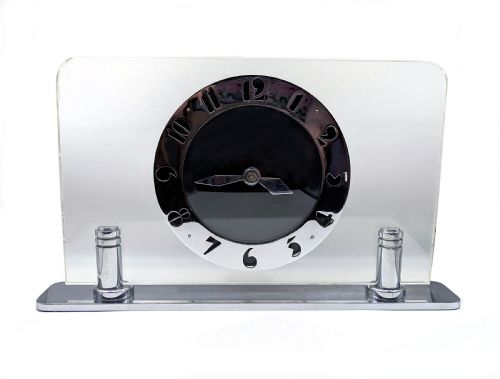


English Art Deco Desk
Solid walnut, chrome and glass define an english art deco desk, offering functional workspace paired with unmistakable interwar geometry.
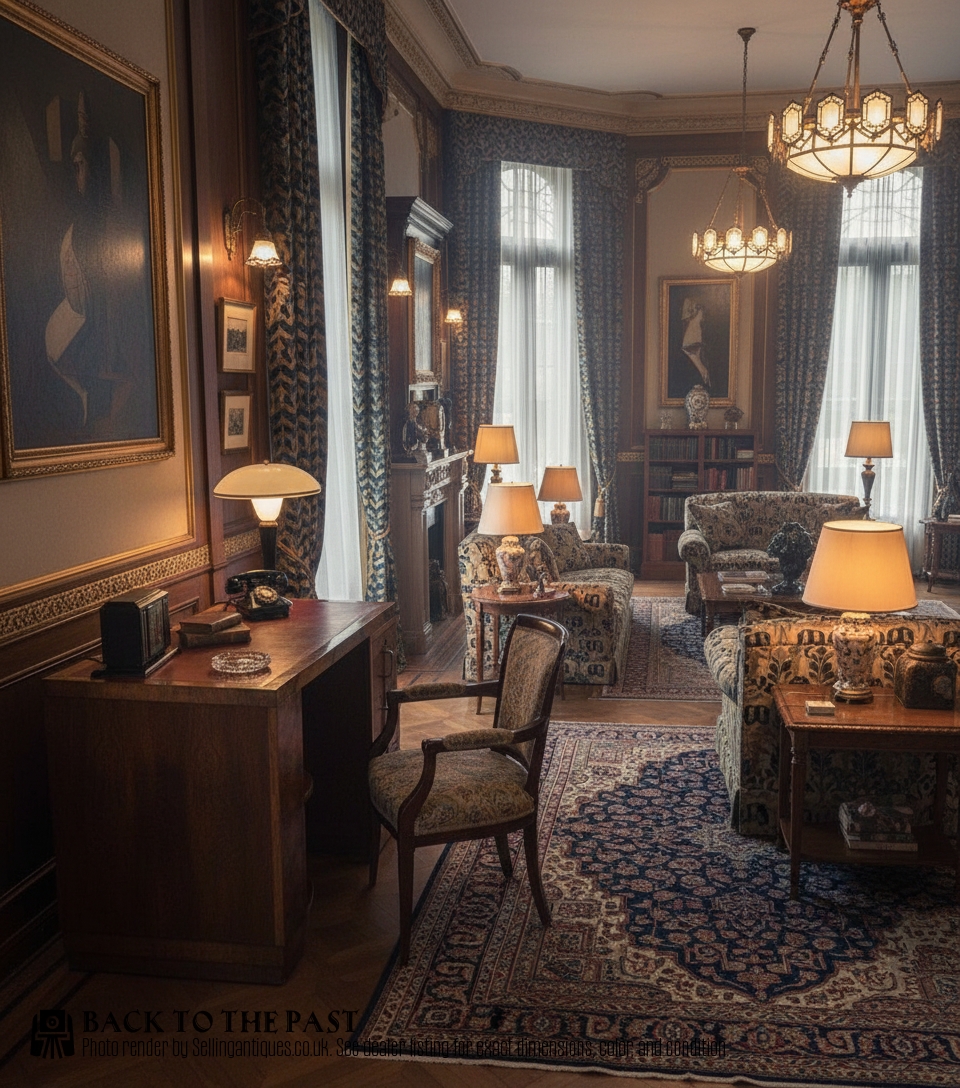
English Art Deco Desk
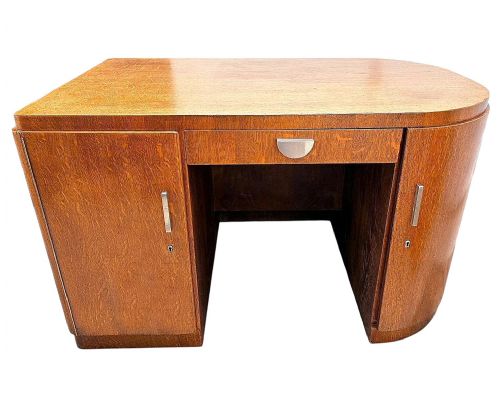
An english art deco desk emerges primarily from the interwar period around nineteen thirty, taking the form of pedestal writing desks, compact bureaus and kneehole tables. These pieces combine practical workspace with the clean, streamlined geometry characteristic of the era.
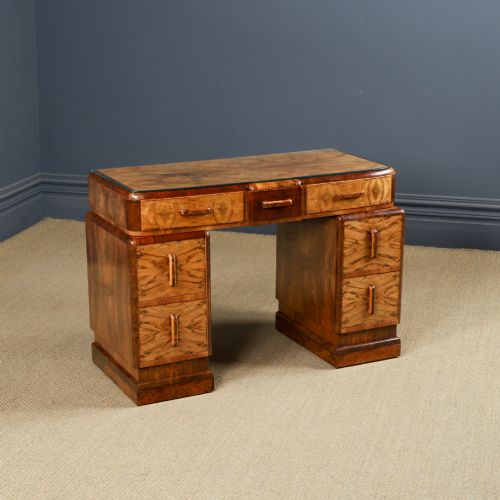
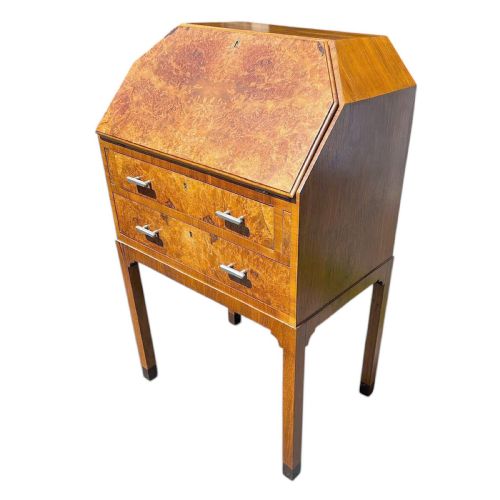
Pedestal configurations dominate the selection, often featuring banks of drawers flanking a central recess alongside matching revolving office armchairs. Smaller writing bureaus and two-sided D-end tables appear frequently, built to suit both executive offices and residential studies.
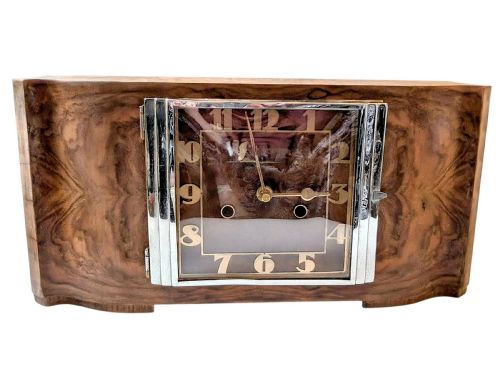
Makers construct these items using domestic and exotic timbers, frequently pairing rich wood grains with contrasting elements of glass, chrome and leather inserts. The resulting furniture balances heavy structural presence with the sleek, modern curves of the nineteen thirties.
Materials and Construction
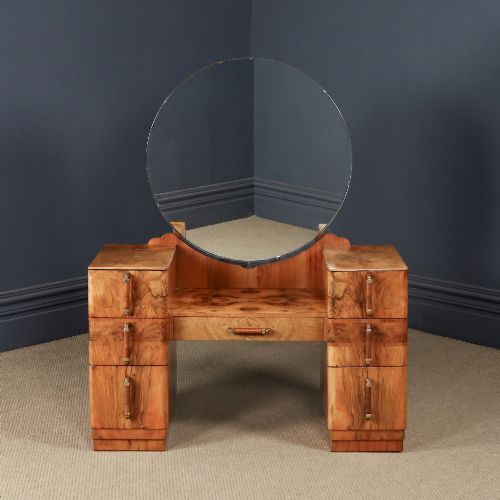
Craftsmen construct the primary framework of an english art deco desk using solid hardwoods like oak and walnut, overlaid with figured veneers such as burr walnut, burr elm and macassar ebony to create striking surface patterns.
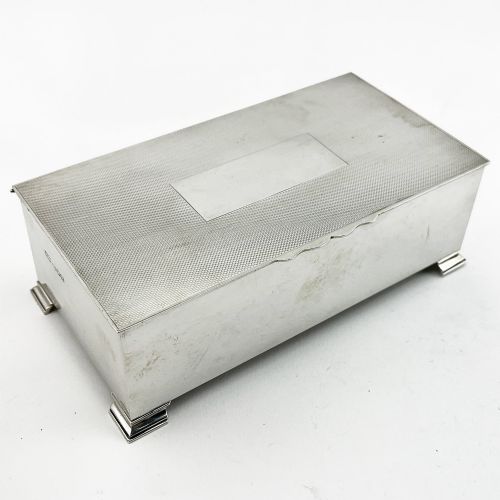
Details incorporate polished chrome, brass and sterling silver for handles and framing, while desktop surfaces often integrate inset panels of coloured leather, peach mirror glass or clear plate glass.
Joinery methods combine traditional cabinet-making techniques with modern industrial elements, mounting glass screens and metal fittings directly into shaped wooden carcases.
Pedestal writing desks and kneehole tables appear alongside matching revolving armchairs and small desktop items.
Evaluating the Pieces
The sophistication of the veneer matching dictates visual success, where book-matched burr walnut or exotic grain sweeps symmetrically across drawer fronts and desktop panels. Simpler surfaces utilise plain timber or minimal figuring, shifting the aesthetic focus entirely toward form.
Hardware integrity and metalwork finish separate standard production from superior pieces, with heavy cast chrome, polished brass and original sterling silver fittings maintaining sharper definition than plated substitutes.
The treatment of secondary materials, such as bevelled peach glass, guilloche enamel details and hand-tooled leather writing surfaces, determines the overall refinement of the construction.
The Barker Brothers·Smiths Clockmakers·Mappin And Webb·Asprey·Broadway And Co·A L Davenport
The English Art Deco Desk Glossary
- Burr Walnut
- A figured wood grain derived from the wart-like growths on walnut trees, prized for its swirling, organic patterns on desk surfaces. Cabinet-makers slice this timber into thin veneers to display decorative natural abstracts.
- Guilloche
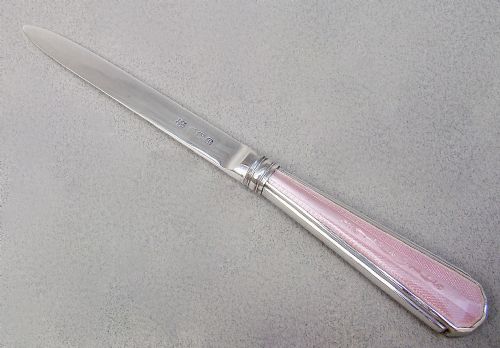
- A mechanical engraving technique that produces precise, intricate geometric patterns under translucent enamel surfaces. Artisans apply this decoration to desk accessories and silver-mounted items.
- Pedestal Desk
- A freestanding writing table supported by two structural columns of drawers flanking a central kneehole. This form provides substantial storage beneath a wide top surface.
- Skyscraper
- A stepped architectural style applied to furniture design, echoing the vertical setbacks of modern city buildings. Pieces featuring this profile display ascending tiers of wood or glass.
- D-End
- A table shape where one or both short ends curve in a semi-circle resembling the letter D. This outline softens the rectangular geometry typical of interwar office furniture.
English Art Deco Desk: Frequently Asked Questions
What woods were used on these desks?
Makers relied heavily on walnut, burr walnut, oak and burr elm for the primary carcases and decorative exterior surfaces. They also incorporated exotic accents such as macassar ebony to create striking visual contrast.
Secondary woods provided structural support behind the figured veneers, ensuring stability across the pedestals and writing surfaces during daily office use.
How do I identify a nineteen thirties desk?
Look for distinct geometric silhouettes, cloud-shaped writing bureaus, skyscraper pedestals and the combination of warm woods with industrial chrome or glass. These design choices reflect the modernist shift away from heavy Victorian ornamentation.
Hardware details, including stepped handles and tubular metal framing, further anchor the piece firmly within the interwar period.
Are these desks suitable for modern computers?
Many pedestal and kneehole writing tables offer sufficient surface area and legroom to accommodate modern desktop equipment and laptops comfortably. Their sturdy timber construction handles daily workspace demands without issue.
Two-sided D-end models also provide flexibility for placement away from walls, allowing cords and peripherals to be managed cleanly within a room.