


English Armorial Porcelain
English armorial porcelain carries the crests and coats of arms of landed families, offering a direct link to Britain's heraldic past.
English Armorial Porcelain
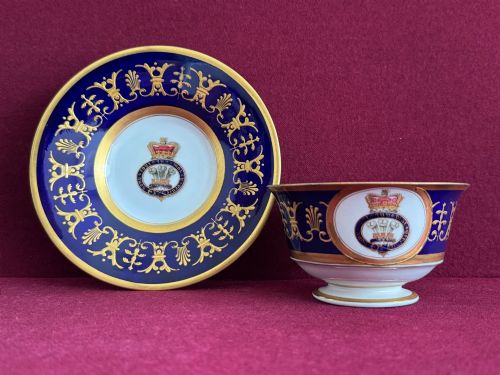
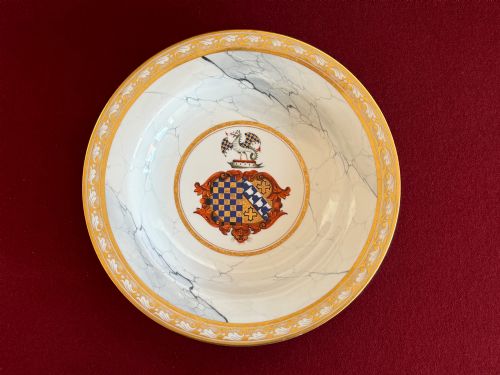
English armorial porcelain consists of ceramic tableware and display items painted or enamelled with specific family crests, mottos, and coats of arms. These services were commissioned by nobility, gentry, and institutions to cement their social standing during dinner parties and formal gatherings.
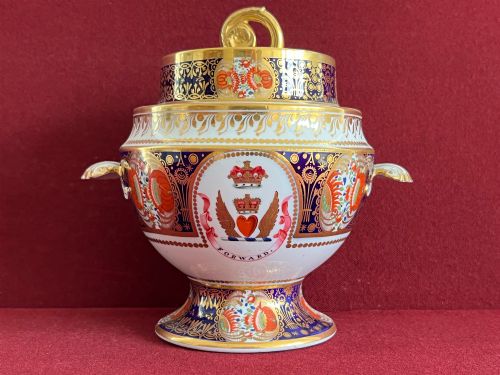
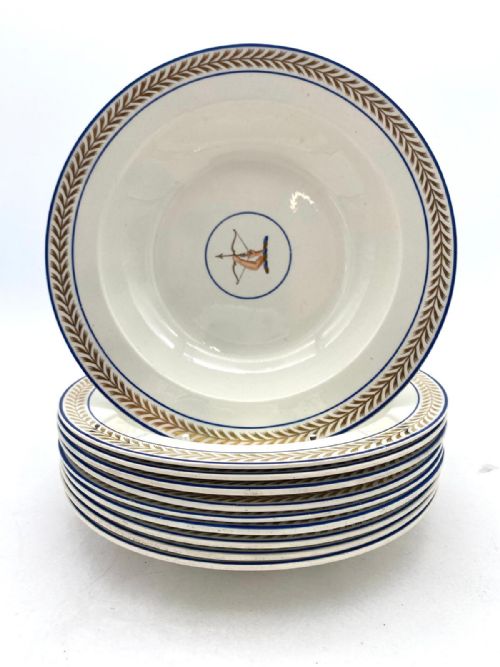
The selections encountered here span the eighteenth and nineteenth centuries, taking forms such as dessert plates, soup plates, teacups and saucers, jugs, tureens, and pudding bowls. Creamware, earthenware, bone china, and soft-paste porcelain all appear across Georgian, Regency, and Victorian periods.
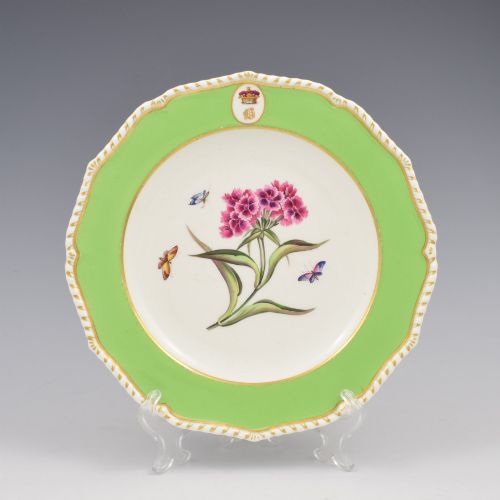
Buyers will find plates and servingware originating from prominent factories like Worcester, Derby, and Copeland. Each piece displays distinct heraldic painting, often accompanied by botanical details or gilded borders that denote the wealth of the original patron.
What varies in quality
The intricacy and precision of the hand-painted heraldry separate standard factory output from pieces made for high-ranking patrons. Skilled artists rendered intricate mantling, mottoes, and crest details with sharp lines and subtle shading.
The quality of the porcelain body and the richness of the gilding also define the hierarchy of these items. Heavier application of gold leaf and finer, unblemished ceramic pastes indicate more costly commissions intended for important aristocratic services.
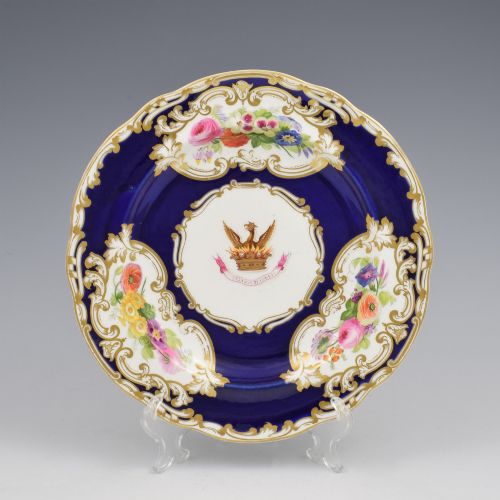
Several plates feature unexpected creatures in their crests, including a phoenix rising from flames and a dragon enclosed in compartments.
Wedgwood·Bloor Derby·Copeland·Chamberlain Worcester·Coalport·Flight Barr and Barr·Minton
The English Armorial Porcelain Glossary
- Armorial
- Bearing a coat of arms or heraldic crest. This design identifies the specific family or institution that commissioned the ceramic service.
- Creamware
- A refined earthenware with a pale yellowish-cream glaze, developed in Yorkshire during the eighteenth century. Wedgwood famously refined this durable body for domestic and formal dining.
- Soft-paste porcelain
- A ceramic composition made from white clay mixed with ground glass and other materials, fired at lower temperatures than hard-paste. It possesses a warm, slightly creamy translucence typical of early English wares.
- Gilt
- Covered with a thin layer of gold leaf or gold paint. Artisans applied this to rims, handles, and crest accents to enhance the visual splendour of the service.
- Crest
- The specific component of a coat of arms displayed above the shield, often taking the form of animals, birds, or symbolic objects.
English Armorial Porcelain: Frequently Asked Questions
What is English armorial porcelain?
English armorial porcelain encompasses ceramic tableware and decorative pieces painted with specific family crests and coats of arms. These items were commissioned by nobility and gentry families for elite dining and display.
The category includes plates, cups, tureens, and bowls made from materials such as creamware, bone china, and soft-paste porcelain. Each piece bears individual heraldic details connecting it to historical households.
How were these pieces used?
Wealthy families utilised these armorial services during formal banquets, afternoon tea, and grand dinners to impress guests with their lineage and social status. Plates and tureens served food at table, while cabinet pieces showed off family pride.
These ceramic services also functioned as diplomatic gifts or commemorations of marriages and titles. Their display signaled the household's pedigree and wealth to visitors.
How do I date an armorial piece?
Dating relies on identifying the ceramic body, the manufacturing style, and the factory marks stamped or painted on the base. Soft-paste porcelain and creamware generally point to the eighteenth century, while bone china and certain gilt styles suggest the nineteenth century.
Matching the crest to the specific historical family or peerage can also narrow down the year of commission. Factory patterns and registry numbers provide further chronological clues.
How should I display armorial porcelain?
These pieces look best in cabinets or mounted securely on walls where their hand-painted crests and gilding are easily visible. Proper plate hangers or enclosed display shelving protect the delicate ceramic bodies and gold leaf from accidental damage.
Keeping them away from direct sunlight preserves the vibrant enamel colours. Gentle dusting with a soft cloth maintains the glazed surfaces safely.