




End of Bed Ottoman
An end of bed ottoman grounds a bedroom scheme with practical storage and long, low seating drawn from centuries of fine cabinet-making.

End of Bed Ottoman
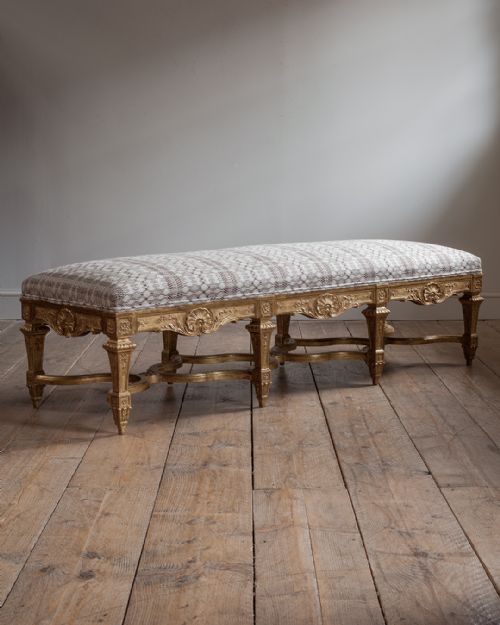
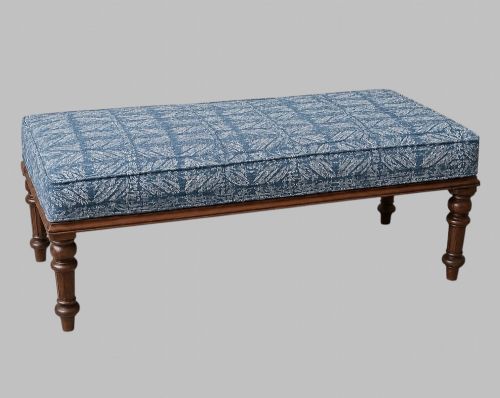
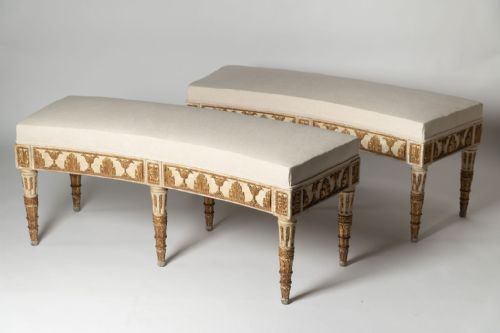
An end of bed ottoman serves as a functional anchor at the foot of a bed, combining seating and storage within various traditional forms. When you search for an end of bed ottoman, you encounter pieces functioning as window seats, blanket boxes, and long dressing stools.
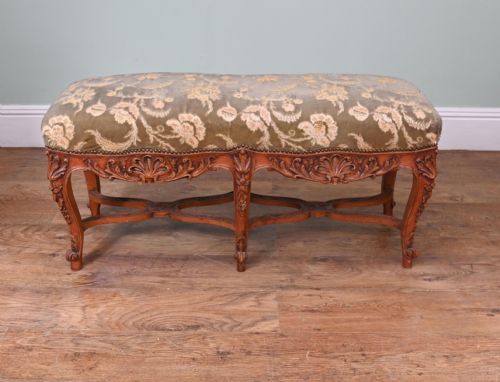
The selection ranges from Victorian walnut window seats to French provincial stools and substantial mahogany ottomans. Pieces span the nineteenth century through the early twentieth century, taking the shape of benches, storage chests, and long upholstered stools.
Victorian and Edwardian iterations dominate alongside continental styles like Louis XIV revival and French provincial designs. These forms provide a resting place for textiles or a seat while dressing, fulfilling both utility and decorative roles.
Materials and construction methods
Makers utilised solid timbers such as mahogany, walnut, oak, and pine to build sturdy frames capable of supporting upholstery and weight. Wood surfaces were carved, painted, or polished to reveal the natural grain and decorative potential of the material.
Upholstery relies on traditional textile coverings including linen, velvet, and patterned designer fabrics such as Robert Kime textiles. Buttoning and fine stitching secure the padding to the wooden bases, whilst brass details occasionally accent the feet and frames.
Design styles span Victorian, Regency, French provincial, and Louis XIV revival periods across the nineteenth and early twentieth centuries.
Distinctions in craftsmanship and design
Quality reveals itself in the integrity of the timber frame and the precision of hand-carved details like cabriole legs or ball and claw feet. Superior examples display thoughtful proportions and substantial wood selection, whether in solid mahogany or carved walnut.
The standard of upholstery and the choice of covering fabric significantly affect the finish and longevity of each piece. Retaining original structural integrity alongside sympathetic re-upholstery separates standard utility items from finer decorative pieces.
The End of Bed Ottoman Glossary
- Ottoman
- A low upholstered seat or bench without back or arms, often featuring an internal compartment accessed by lifting the top.
- Window seat
- A long, narrow bench designed to fit beneath a window, frequently constructed with an open or upholstered frame.
- Blanket box
- A large chest historically utilised for storing woollens and linens, sometimes elevated on legs or feet.
- Cabriole leg
- A furniture leg that curves outward and then tapers inward, inspired by the shape of an animal's leg.
- Deep buttoning
- An upholstery technique where twine is pulled through padding and secured with buttons to create a diamond pattern.
End of Bed Ottoman: Frequently Asked Questions
What is an end of bed ottoman?
An end of bed ottoman is a long, low seat or storage chest designed to sit at the foot of a bed. These pieces provide a convenient surface for sitting while dressing or a concealed space for extra blankets and linens.
Historically, makers adapted forms like window seats, blanket boxes, and long dressing stools for this purpose. They bring both architectural interest and practical utility to a bedroom layout.
How do I date an antique ottoman?
Dating an ottoman relies on examining the timber species, construction joints, and decorative carving styles present on the frame. Pieces from the nineteenth century often feature dense hardwoods like mahogany and walnut, alongside distinct revival motifs.
Victorian and Edwardian examples show specific turning patterns on legs and traditional upholstery methods beneath the fabric. Comparing these structural clues to established historical periods narrows down the decade of creation.
Can I use a window seat as an ottoman?
A window seat makes an excellent alternative to a traditional bedroom ottoman, particularly if it shares similar dimensions. Many antique window seats feature long, narrow proportions that sit comfortably at the foot of a standard bed.
Unlike lidded storage ottomans, open-framed window seats prioritise seating and visual lightness over internal storage space. They work well when you want to keep the floor area beneath the bed visible.
How do I care for antique upholstery?
Caring for antique upholstery involves gentle vacuuming with a soft brush attachment to remove dust and prevent fabric wear. Avoiding direct sunlight protects both the textile colours and the underlying wooden frame from fading.
If the piece has been recovered in designer or vintage fabric, follow specific textile cleaning guidelines rather than using harsh chemical treatments. Regular, light maintenance preserves the integrity of the padding and the outer material.