



Victorian Floral Storage Box
These victorian floral storage box examples are practical nineteenth-century pieces decorated with botanical motifs that add character to any room.

Victorian Floral Storage Box
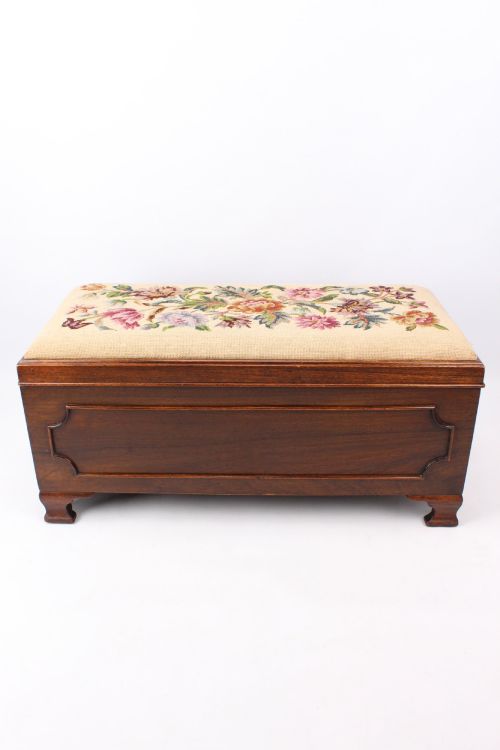
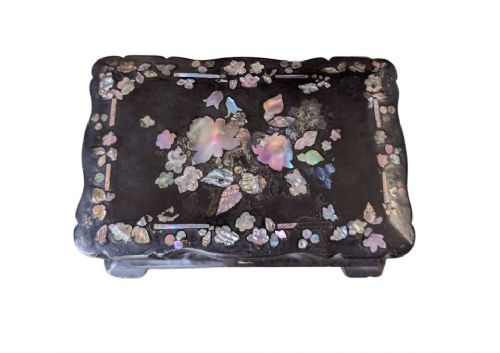
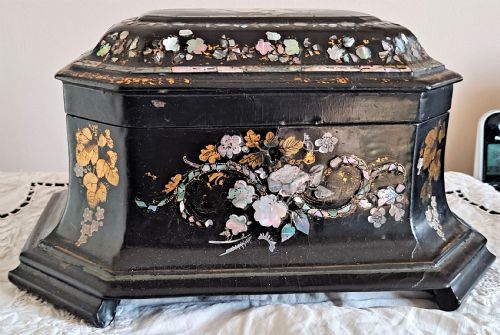
When you search for a victorian floral storage box, you are looking at nineteenth-century containers and seating with built-in storage designed for domestic use. The selections here include papier-mâché tea caddies, stationery boxes, ottomans, and marquetry boxes featuring floral and botanical themes.
You are most likely to meet papier-mâché tea caddies with mother-of-pearl inlay or upholstered ottomans with needlework and Liberty fabric seats. These items bridge the gap between utility and decoration, serving as functional storage while displaying period craftsmanship.
Materials and construction
Makers utilised woods such as mahogany, rosewood, walnut, and soft wood alongside papier-mâché, brass, and toleware. Many surfaces feature lacquer, gold leaf, and intricate marquetry inlay or hand-painted botanical details.
Fabric upholstery, needlework, and mother-of-pearl embellishments appear frequently across the seating and boxes. The construction combines structural timber frames or moulded papier-mâché bodies with decorative surface treatments.
Victorian Floral Storage Box Retail Price Guide 2026
Typical asking prices for victorian floral storage box among the pieces listed under this phrase on Sellingantiques today, from the lower quarter to the upper quarter. They describe what is for sale here now, not the wider market.
Some nineteenth-century makers concealed tea inside locked caddies to prevent the household staff from sampling the expensive leaves.
Assessing quality
The standard of a victorian floral storage box is determined by the crispness of the hand-painted details and the precision of the marquetry and mother-of-pearl inlay. Finer examples display harmonious proportions and well-preserved surface finishes that retain their original depth and colour.
Construction integrity distinguishes better examples, particularly in the joinery of wooden boxes and the stability of upholstered ottoman frames. Materials that remain intact without excessive replacement parts indicate superior original manufacture.
The Victorian Floral Storage Box Glossary
- Papier-mâché
- A composite material made of paper pulp or sheets of paper mixed with glue and oil, pressed and dried to form sturdy boxes and trays. This material took lacquer and mother-of-pearl inlay particularly well.
- Marquetry
- The art of applying pieces of veneer to a structure to form decorative patterns and floral motifs. Artisans used various coloured woods to create pictorial designs.
- Tea caddy
- A box originally manufactured to store loose tea leaves, often fitted with internal compartments and a lock. These boxes became central decorative objects in Victorian drawing rooms.
- Ottoman
- A piece of upholstered seating without a back or arms, featuring a hinged seat that opens to reveal a storage compartment. These items often utilise decorative textiles like needlework or Liberty fabric.
- Mother-of-pearl
- The iridescent internal layer of shells used by craftspeople to inlay floral designs onto dark papier-mâché and wood surfaces. This material catches the light and adds contrast to the piece.
Victorian Floral Storage Box: Frequently Asked Questions
What is a victorian floral storage box used for?
These pieces served practical storage functions in nineteenth-century homes, from holding tea leaves and stationery to concealing household clutter inside ottomans. Today, they continue to function as stylish containers while adding historical charm to living spaces.
Their varied forms mean they adapt easily to modern rooms as decorative accent pieces that provide hidden storage for everyday items.
How do I care for papier-mâché boxes?
Papier-mâché requires gentle handling and protection from excessive moisture and direct sunlight, which can damage the lacquer and painted surfaces. Dusting with a dry, soft cloth is sufficient for regular maintenance.
Avoid using liquid cleaners or polishes that might degrade the delicate finish or loosen the inlaid mother-of-pearl elements.
How do I identify a Victorian piece?
Identification relies on observing characteristic materials such as papier-mâché, rosewood, mahogany, and mother-of-pearl inlay combined with typical nineteenth-century decorative motifs. Construction methods, such as hand-cut dovetails and traditional adhesives, also point toward the period.
Comparing the form and ornamentation with documented examples from the nineteenth century helps confirm the era of manufacture.
Are these boxes and ottomans sturdy?
Most pieces were built for daily domestic use by skilled makers utilising solid timbers and durable composites like papier-mâché. Their survival in good condition demonstrates their inherent structural resilience over time.
While they remain functional, gentle use preserves their delicate inlaid details and upholstered fabric elements.