





Floral Fabric Ottomans
These floral fabric ottomans bring tactile comfort and period charm to a room, offering versatile seating alongside hidden storage.

Floral Fabric Ottomans
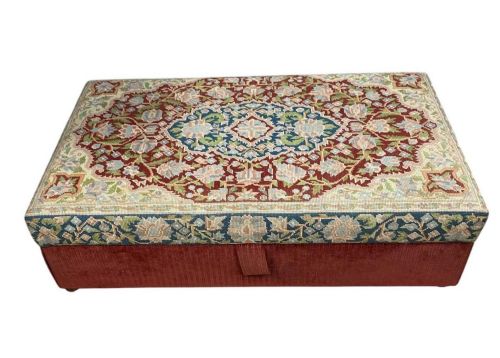
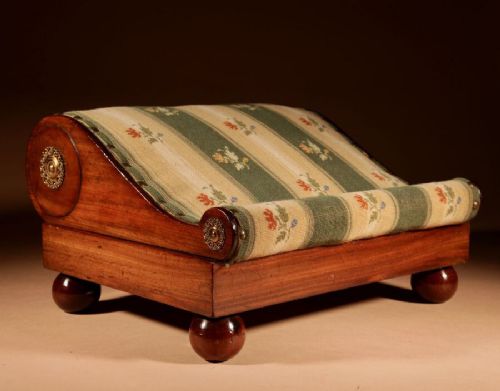
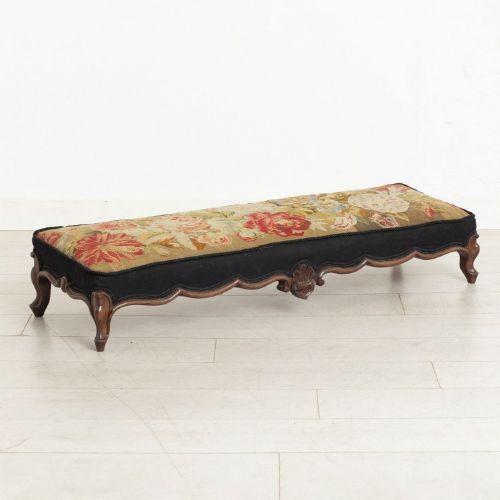
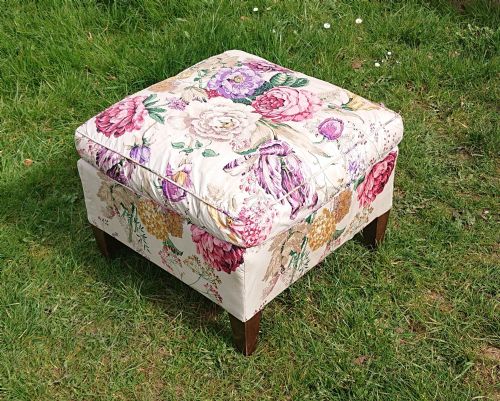
Floral fabric ottomans encompass low footstools, window seats, and storage boxes upholstered in decorative textile patterns. When you search for floral fabric ottomans, you encounter nineteenth-century pieces ranging from compact Victorian footstools to waisted Regency and William IV forms. These furnishings serve dual purposes as resting places for feet and as discreet compartments for household items.
The pieces appearing here lean heavily into Victorian and Edwardian aesthetics, alongside earlier Regency and William IV examples. Makers utilised sturdy timbers such as mahogany and walnut as foundations for elaborate upholstery schemes. Buyers frequently meet items featuring cabriole legs, cushion tops, and distinctive textile choices like Liberty cotton or tapestry.
How they were made
Cabinet makers built the structural frames of these stools using dense timbers like mahogany and walnut, shaping the wood into turned or cabriole legs. Brass fittings and castors occasionally appeared on legs to assist with movement across heavy carpets. The joinery relied on traditional methods to ensure stability under daily seating loads.
Upholstery involved layering natural stuffing materials beneath top covers of cotton, tapestry, or branded textiles such as Liberty fabric. Artisans secured these covers with careful tacking along the timber edges, sometimes creating piped or cushion tops. The resulting surfaces balanced rigid wooden support with soft, tactile padding.
Floral Fabric Ottomans Retail Price Guide 2026
Typical asking prices for floral fabric ottomans among the pieces listed under this phrase on Sellingantiques today, from the lower quarter to the upper quarter. They describe what is for sale here now, not the wider market.
Some nineteenth-century stools doubled as work boxes, hiding sewing needles alongside your ankles.
What varies in quality
Quality rests upon the integrity of the underlying timber frame and the sophistication of its silhouette, whether a simple low stool or a waisted ottoman. Pieces with refined joinery and carved legs command attention over plain or purely utilitarian boxes. The presence of makers associated with high-end workshop traditions elevates a piece significantly.
The condition and authenticity of the textile covering also dictate the standing of an ottoman. Items retaining their original upholstery or featuring high-grade Liberty fabric display a distinct material richness. Structural balance between the wooden base and the stuffed top ensures the piece functions as intended without wobbling.
Howard and Sons
The Floral Fabric Ottomans Glossary
- Ottoman
- A low upholstered seat or stool without arms or a back, frequently incorporating internal storage space. This form functions equally well as a footrest or an extra seat.
- Cabriole leg
- A furniture leg that curves out and then in, resembling the leg of an animal. This style appears frequently on quality Victorian seating.
- Liberty fabric
- Textile produced by the notable London department store known for distinctive decorative patterns. Pieces upholstered in these materials carry specific design pedigree.
- Waisted
- A profile that curves inward towards the middle before flaring out again. This shape gives nineteenth-century stools a lighter visual appearance.
- William IV
- A British design period spanning the early nineteenth century characterised by heavy, classical forms. Pieces from this era utilise substantial timbers and bold proportions.
Floral Fabric Ottomans: Frequently Asked Questions
What is an ottoman stool?
An ottoman stool is a low, padded seat designed for resting feet or sitting, often featuring internal storage.
These pieces combine functional utility with decorative upholstery, making them versatile additions to period interiors.
How do I identify a Victorian ottoman?
Victorian ottomans typically feature dense timbers like walnut or mahogany paired with elaborate upholstery.
Look for specific structural details such as cabriole legs or waisted frames that point to nineteenth-century manufacture.
Where were these stools used?
These furnishings were placed in drawing rooms, parlours, and bedrooms as moveable seats.
Their compact size allowed them to sit comfortably in front of fireplaces or beside window seats.
Are these ottomans comfortable?
They provide firm seating support through traditional stuffing methods beneath the textile cover.
Many examples include cushion tops designed specifically to enhance comfort during extended use.
Can I use these for storage?
Certain nineteenth-century variants incorporate internal compartments accessed beneath the top upholstery.
These work boxes and storage ottomans hide everyday items while maintaining a decorative surface.