



Floral Upholstery Footstool
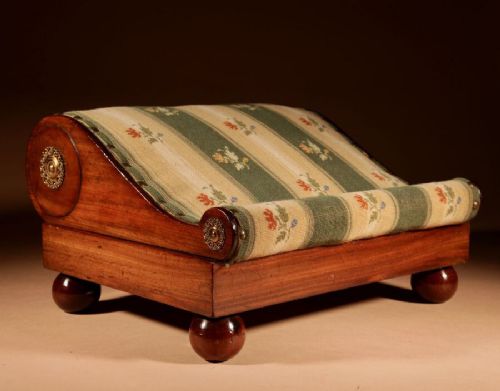
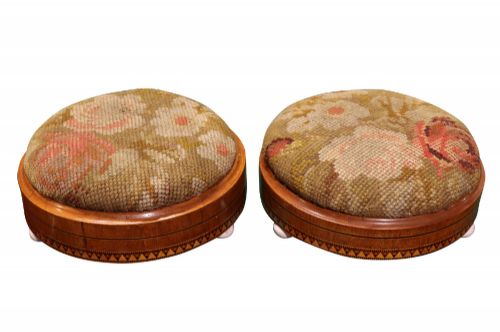
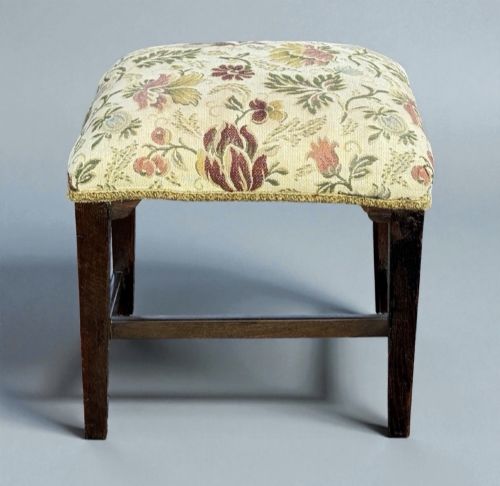
These floral upholstery footstool examples bring period textiles and rich timber frames together to ground a traditional seating arrangement.

Floral Upholstery Footstool
A floral upholstery footstool bridges the gap between utilitarian seating support and decorative interior furnishing, appearing across Georgian, Victorian, and Edwardian periods in this selection. Buyers examining these pieces encounter compact circular stools, larger ottomans, and long benches supported by timber frames.
The dominant forms span from the 18th century through to the early 20th century, encompassing styles such as Biedermeier and Queen Anne alongside standard Victorian interpretations. Walnut and mahogany provide the structural foundation for the textile coverings that define the aesthetic of these items.
Most items on this page lean heavily towards Victorian and walnut construction, offering robust frames paired with detailed fabric, tapestry, or velvet surfaces. These pieces serve equally well as low seats or resting places for feet in a period drawing room.
Materials and construction methods
Makers utilised solid walnut and mahogany for the timber chassis, often shaping the wood with carving or inlay to frame the textile upholstery. Frame joinery relies on traditional carpentry techniques appropriate to periods ranging from the Georgian era to Edwardian workshops.
The upper surfaces combine traditional stuffing and webbing beneath top layers of fabric, wool, tapestry, velvet, and textile. Brass elements occasionally appear on castors or decorative mounts, completing the material assembly recorded in these listings.
Floral Upholstery Footstool Retail Price Guide 2026
Typical asking prices for floral upholstery footstool among the pieces listed under this phrase on Sellingantiques today, from the lower quarter to the upper quarter. They describe what is for sale here now, not the wider market.
Several Victorian examples hide brass castors beneath their walnut frames, ready to roll across the parlour floor at a moment's notice.
Assessing quality in period footstools
The distinction between standard examples and superior pieces rests on the crispness of the timber carving and the sophistication of the inlay work. Walnut frames with detailed execution command attention through their sculptural presence and refined proportions.
Upholstery choice and execution also divide the range, where hand-worked tapestry or rich velvet demonstrates a higher grade of original commissioning than plain textile coverings. The integration of the textile with the wooden framework determines the overall visual balance.
The Floral Upholstery Footstool Glossary
- Ottoman
- A low upholstered seat or bench without a back or arms, often designed with internal storage or generous proportions.
- Biedermeier
- A Central European style dating to the 19th century emphasising utilitarian comfort and clean architectural lines over excessive ornamentation.
- Tapestry
- A form of heavy textile art hand-woven on a loom, frequently utilised for durable and decorative historical seat covers.
- Queen Anne Style
- A design movement characterised by cabriole legs, pad feet, and graceful, curved wooden profiles originating in the early 18th century.
Floral Upholstery Footstool: Frequently Asked Questions
Can these stools take daily use?
Most period frames are constructed from sturdy walnut or mahogany designed for physical support in a domestic setting.
However, historic upholstery foundations may require careful treatment compared to modern seating.
What is the difference between an ottoman and a footstool?
Ottomans typically offer a larger surface area or internal storage, functioning as alternative seating as well as foot rests.
Footstools are generally smaller, built specifically to elevate the feet while seated in an armchair.
How should I clean the fabric?
Maintenance depends entirely on whether the textile is historical tapestry, wool, velvet, or standard woven fabric.
Gentle surface dusting or specialist textile cleaning preserves the integrity of older fibres.