


Enamelled Silver Vanity Case
An enamelled silver vanity case brings together bright vitreous colour and solid metal work for everyday elegance.
Enamelled Silver Vanity Case
An enamelled silver vanity case combines precious metal work with decorative vitreous glass surfaces, primarily taking the form of powder compacts, cigarette cases, and watch cases. When you search for an enamelled silver vanity case, you find portable accessories designed for personal grooming and pocket utility.
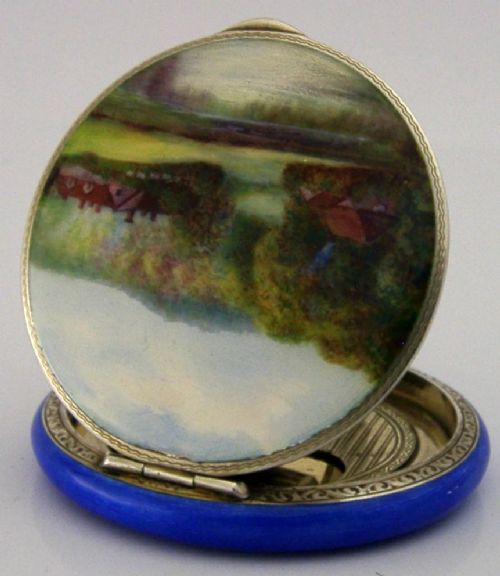
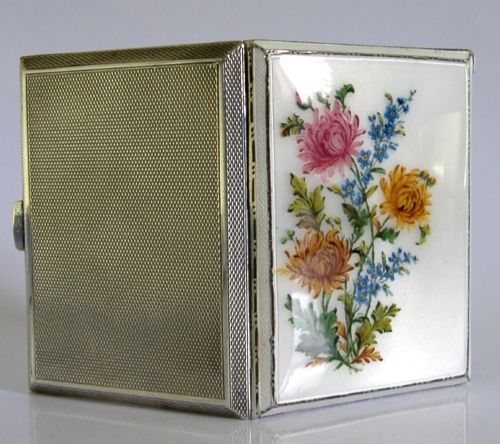
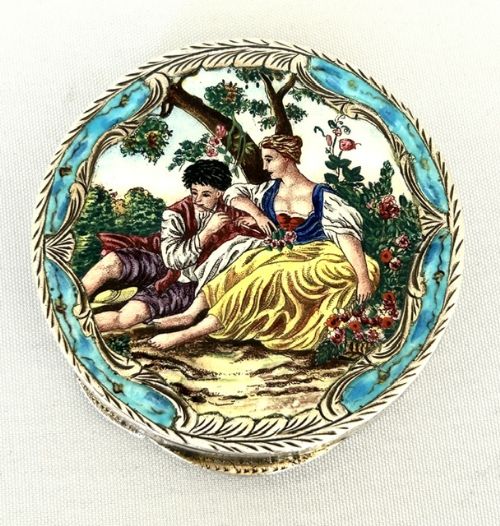
The pieces appearing on this page span several decades from the early twentieth century, showing strong representation from the 1920s and 1930s. Art Deco geometric patterns, hand painted floral motifs such as chrysanthemums, and scenic views define the primary aesthetic styles of these items.
Makers and manufacturers utilised sterling silver, 800 silver, and silver-gilt alongside enamel, metal, mesh, and suede linings. Formats range from simple single compartment compacts to combination cases and fob watch housings.
Materials and construction
Silversmiths formed the structural bodies of these accessories from sterling silver or 800 silver, sometimes applying silver-gilt finishes or pairing the metal with flexible mesh and suede linings. Guilloche techniques created intricate machine-turned patterns beneath translucent enamel layers.
Vitreous enamel was fused to the metal surface through high temperature firing, locking in hand painted floral scenes, chrysanthemums, and scenic compositions. Chrome and other base metals occasionally supplemented the silver frameworks in French and Italian pieces.
The listings on this page span the years 1910 to 1950, featuring sterling silver, 800 silver, and vitreous enamel.
Assessing craftsmanship and finish
The precision of the guilloche engine-turning beneath the translucent enamel dictates much of the visual depth in finer examples. Crisp hand painted details on floral or scenic panels separate standard production items from more accomplished studio work.
The integrity of the hinge mechanisms, the tightness of the closure, and the preservation of the vitreous enamel surface mark the distinction between average survivals and superior pieces. Hallmarks stamped into the silver provide clear evidence of origin and maker identity.
Henry Matthews·Henry Perkins And Sons·Giuliano Spinelli·Richard Hudnut·Houbigant
The Enamelled Silver Vanity Case Glossary
- Guilloche
- A decorative engraving technique that etches precise geometric patterns into metal using a mechanical lathe. This pattern shows translucently through layers of coloured enamel.
- Vitreous Enamel
- A material made by fusing powdered glass to a metallic substrate through firing at high temperatures. The resulting coating provides a smooth, glossy, and durable coloured finish.
- Silver-Gilt
- Silver that has been coated with a thin layer of gold on its surface. This treatment adds a warm golden tone to the interior or exterior metal elements.
- Compact
- A small portable case containing a mirror and typically used for holding face powder. Many examples also include spaces for puffs, lipsticks, or cigarettes.
- Fob Watch Case
- A small protective enclosure designed to hold a pocket watch meant to be attached to a ribbon or chain. These housings often featured decorative enamel covers.
Enamelled Silver Vanity Case: Frequently Asked Questions
What is an enamelled silver vanity case?
An enamelled silver vanity case is a small personal accessory made from silver and decorated with fused glass enamel. These items include powder compacts, cigarette cases, and watch housings designed for pocket or handbag carry.
Craftsmen produced them primarily during the early twentieth century, incorporating decorative techniques like guilloche engraving and hand painting. They served as both practical grooming tools and ornamental personal items.
How do I date an enamelled silver vanity case?
Dating relies heavily on silver hallmarks stamped directly into the metal, which indicate the assay office and year of manufacture. Stylistic indicators like Art Deco geometry or specific floral painting styles also help narrow the period.
Many pieces originate from the 1920s and 1930s, reflecting the design trends of the George V era and mid-century European workshops. Maker marks provide additional chronological reference points.
What materials are used in these vanity cases?
The primary structural material is sterling silver or 800 silver, occasionally enhanced with silver-gilt finishes. Vitreous enamel provides the coloured exterior decoration, sometimes laid over engine-turned guilloche patterns.
Interiors often feature fitted mirrors, mesh panels, and suede linings. Some continental European variations also integrate chrome or base metal components alongside the silver.
How were these cases used originally?
Owners carried these items in pockets or evening bags for quick touch-ups during social outings. Powder compacts held loose face powder and puffs for makeup application.
Other variations functioned as cigarette cases or protective enclosures for small pocket watches. They combined utility with personal fashion expression during the interwar years.