



Enamelled Metal Box
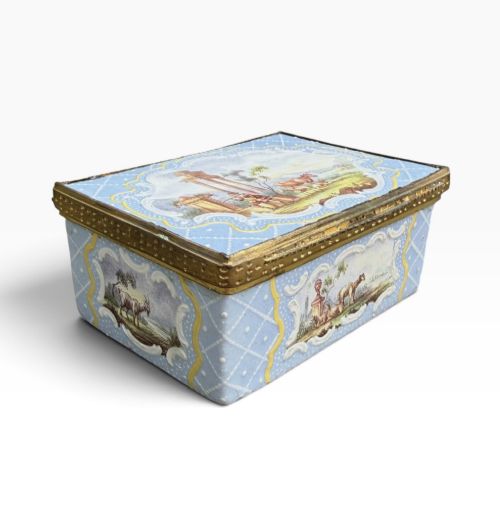
An enamelled metal box brings together durable base metals and vitreous colour, offering a small vessel for keepsakes or daily use.
Enamelled Metal Box
When you search for an enamelled metal box, you encounter a wide selection of small containers spanning several centuries and origins. The items on this page range from Georgian pocket containers and Staffordshire patch boxes to Japanese Meiji vessels and later Art Deco powder compacts.
How they were made
Makers formed the foundational bodies of these pieces using copper, bronze, brass, steel, gunmetal and gilt metal. Workers shaped these metals through casting, beating, and riveting before applying the vitreous surface treatments.
Coloured glass paste was fused to the metal substrate through high-temperature firing. Techniques such as cloisonné, champlevé, and painted enamel required careful control to bond the glass securely to the metallic surfaces.
Enamelled Metal Box Retail Price Guide 2026
Typical asking prices for enamelled metal box among the pieces listed under this phrase on Sellingantiques today, from the lower quarter to the upper quarter. They describe what is for sale here now, not the wider market.
Base materials range from traditional copper and bronze to industrial steel and gunmetal.
What varies in quality
The fineness of the finished work depends largely on the precision of the metal forming and the clarity of the fired enamel. Superior pieces display crisp lines in the metal compartments, tight hinge fittings, and smooth, even glazed surfaces without bubbling or clouding.
Artistic execution dictates distinction at the upper end of the range. Hand-painted pictorial scenes, detailed figural panels, and complex wirework compartments demonstrate greater skill than simpler geometric patterns or plain glazed surfaces.
Richard Hudnut·S Theeman
The Enamelled Metal Box Glossary
- Cloisonné
- Enamelling technique where thin metal wires are soldered to a metal base to create compartments for glass paste. These wire boundaries hold the colours separate during the firing process.
- Champlevé
- Enamelling method where troughs or cells are hollowed out directly into the thick metal plate and filled with vitreous paste. The remaining metal walls form the design outlines after firing.
- Patch box
- Small container originally used in the eighteenth century to hold cosmetic beauty patches made of fabric. They frequently feature hinged lids with interior mirrors.
- Snuff box
- Small pocket-sized vessel designed to hold dry tobacco powder for inhalation. Their compact proportions required tight-fitting lids to preserve the contents.
- Gilt metal
- Base metal treated with a thin layer of gold applied through fire gilding or electroplating. This finish provided the appearance of solid gold while utilising a cheaper core material.
Enamelled Metal Box: Frequently Asked Questions
How do I date an enamelled metal box?
Dating relies on stylistic clues, materials, and construction methods. Georgian pieces often feature copper bases with hand-painted polychrome scenes, whereas twentieth-century compacts utilise stamped brass or steel.
Maker marks, hinge types, and the specific composition of the metal also help narrow down the period of manufacture.
Were these boxes used for snuff?
Many eighteenth-century examples served specifically as snuff containers to keep the tobacco dry and accessible. Other forms were produced for different personal items.
The inventory also includes patch boxes, trinket holders, jewellery caskets, and powder compacts intended for cosmetics.
How should I clean an enamelled metal box?
Cleaning requires a gentle touch to protect both the metal surface and the fragile glass enamel. Use a soft, dry cloth to remove dust from the exterior.
Avoid liquid polishes and abrasive cloths, as chemical cleaners can pit the metal or damage the vitreous glaze.
What is the difference between cloisonne and champleve?
Cloisonné involves soldering thin metal wires onto the surface of the base metal to form distinct cells for the enamel colours. The wire outlines remain visible in the finished design.
Champlevé carves the design directly into the solid metal body, creating sunken troughs that receive the glass paste before firing.