


Enamelled Glass Flask
An enamelled glass flask brings colour and weight to a room, offering small vessels decorated by hand across centuries of European glassmaking.
Enamelled Glass Flask
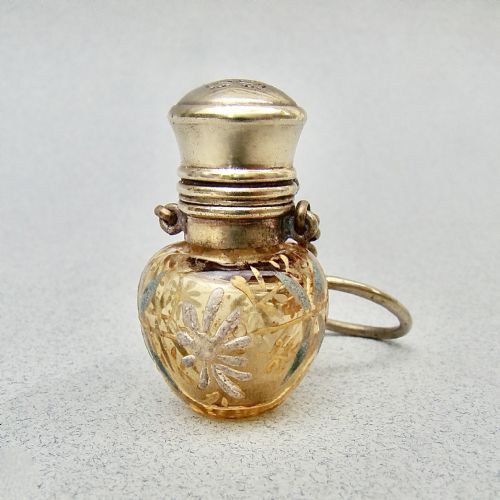
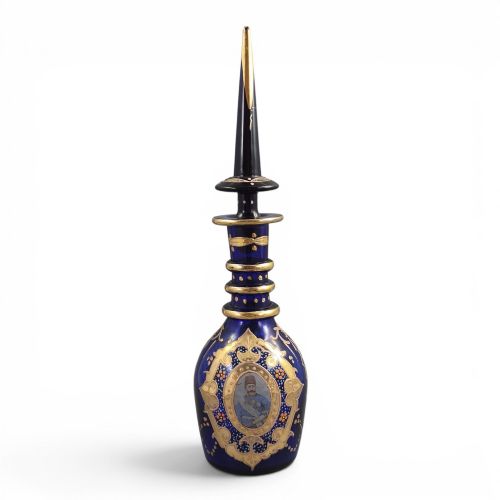
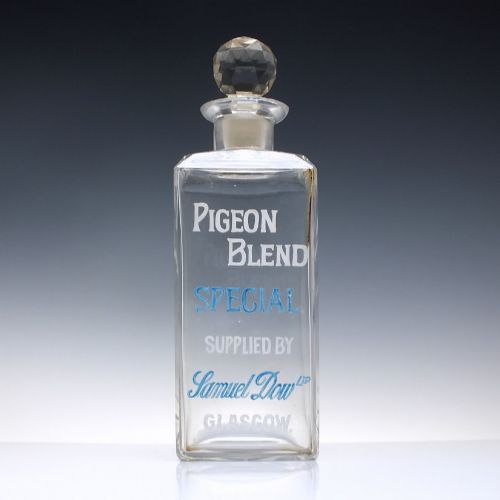
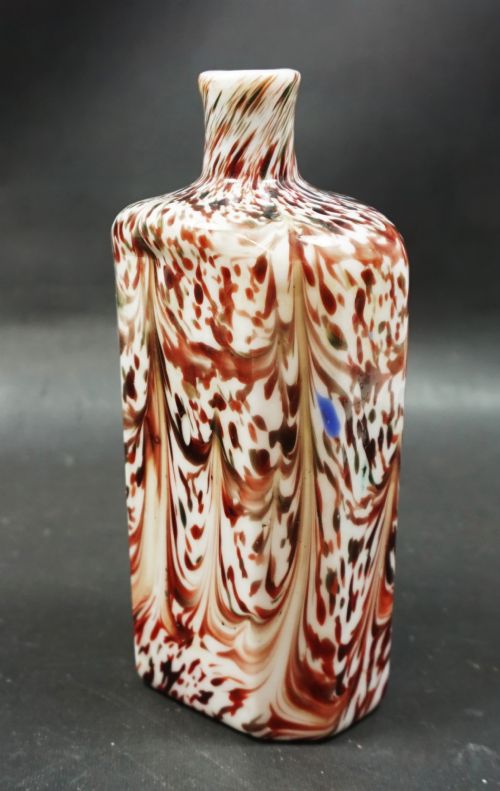
When you search for an enamelled glass flask, you encounter a variety of small containers including scent bottles, perfume bottles, decanters, and schnapps flasks. These objects serve practical and decorative roles, shaped to hold liquids from French perfumes to German spirits.
The pieces on this page span several periods, reaching from eighteenth-century European examples to Victorian designs and Art Deco creations. You will frequently meet nineteenth-century French chatelaine scent bottles and twentieth-century silver-topped perfume bottles.
Origins stretch across Europe, taking in German clear glass, Swiss milk glass, Bohemian export pieces, and Scottish whisky decanters. Each regional workshop brings distinct forms and handling to the painted surface.
How they were made
Makers combined clear, milk, satin, and cut glass with applied enamel pigments, sometimes adding sterling silver mounts, pewter, or gilded metal collars. Artisans painted motifs directly onto the glass body before firing the pigments to fuse the colour permanently.
Techniques varied from simple polychrome brushwork on eighteenth-century German schnapps flasks to intricate guilloche enamel beneath silver caps on Art Deco pieces. Makers also utilised gold leaf and ormolu mounts to frame the decorated glass panels.
Materials recorded across the inventory include enamel, glass, sterling silver, gold leaf, cut glass, clear glass, pewter, and gilded metal.
What varies in quality
The refinement of the enamel painting dictates the visual success of the piece, separating standard production from skilled artistic output. Precision in the brushwork and the preservation of the pigment define the better examples.
The integration of metal mounts, such as sterling silver or ormolu collars, affects the overall standard. Quality shows in the secure fit of the mounts and the clarity of the underlying glass, whether cut, satin, or coloured.
Karl Palda·Henry Perkins·René Lalique
The Enamelled Glass Flask Glossary
- Chatelaine
- A decorative belt hook worn with chains to suspend small items like scent bottles. This Victorian accessory kept personal fragrance close at hand.
- Guilloche
- A mechanical engraving technique that produces precise, intricate patterns beneath a translucent enamel layer. It appears frequently on twentieth-century silver bottle caps.
- Mary Gregory
- A style of glass decoration featuring white enamel silhouettes of children or figures, typically set against green or blue glass. The attribution often spans late Victorian production.
- Schnapps
- A strong spirit housed in traditional pocket flasks during the eighteenth century. These German and Continental bottles often carried brightly coloured polychrome enamelling.
- Ormolu
- Gilded bronze used for decorative mounts and collars on nineteenth-century glass. It provides a heavy, golden contrast to satin and coloured glass bodies.
Enamelled Glass Flask: Frequently Asked Questions
How do I clean an old glass flask?
Dust the exterior gently with a dry microfiber cloth to protect fragile enamel work from moisture and abrasion. Avoid submerging mounted pieces in water, as moisture can damage internal corks and metal adhesives.
For the interior, use warm water without harsh detergents if rinsing is essential. Allow the vessel to air dry completely before replacing any stopper.
Are these bottles safe for daily use?
Most antique bottles function best as decorative objects rather than active containers for modern liquids. Historical seals and stoppers often degrade over time, leading to potential leaks.
Display them on stable surfaces away from direct sunlight to preserve the vibrancy of the enamel colours.
How do I date an enamelled glass flask?
Examine the overall form, the manufacturing style of the glass, and any associated metal silver hallmarks. Art Deco pieces from the 1930s present geometric lines, whereas eighteenth-century German flasks display hand-blown irregularities.
Matching stylistic cues like guilloche work or Mary Gregory figures helps narrow the period of production.
What is the difference between a scent bottle and a decanter?
Scent and perfume bottles are small handheld vessels designed to hold concentrated fragrances, often fitted with chatelaine chains or intricate silver screw caps. Decanters are larger pouring vessels intended for table service of spirits and liquors.
Both categories utilise enamel painting, but their scale and stoppers reflect their distinct domestic functions.