


Enameled Glass Bottles
These enameled glass bottles bring together vibrant painted surfaces and varied vessel forms from the eighteenth century through to the art deco period.
Enameled Glass Bottles
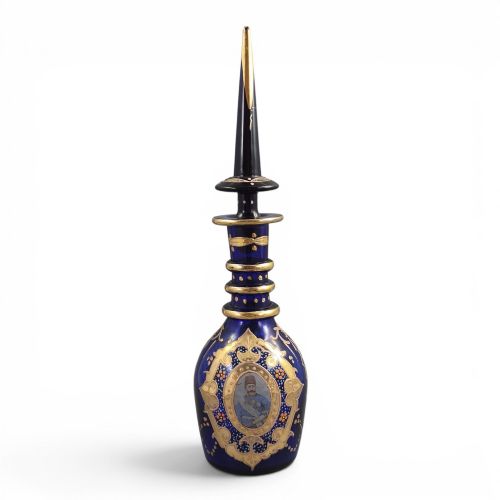
When you search for enameled glass bottles, you encounter a diverse array of vessels designed for perfumes, spirits, and personal dressers. These containers range from eighteenth-century continental flasks and bohemian decanters to nineteen-thirties geometric scent bottles and atomizers.
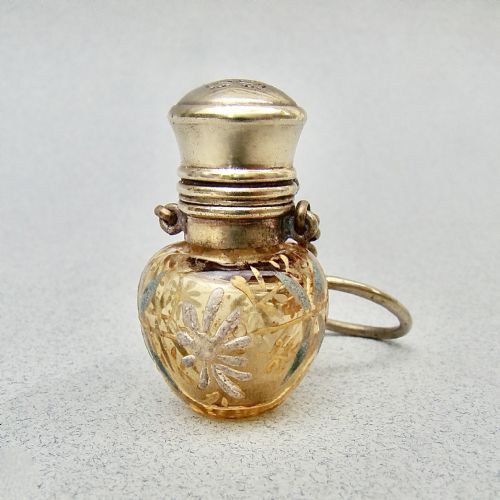
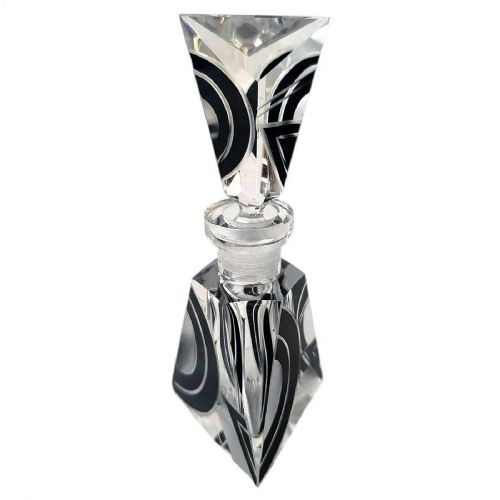
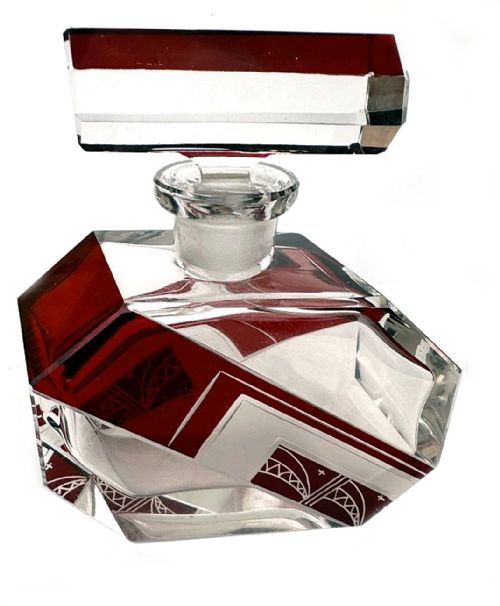
The most common examples on this page are nineteenth-century chatelaine scent bottles and twentieth-century art deco dressing table pieces. Makers across Britain, France, Bohemia, and the Czech Republic utilised enamel decoration on clear, milk, satin, and cut glass to achieve distinct visual patterns.
How they were made
The foundation of these objects relies on glassblowing, moulding, or cutting, utilising clear glass, crystal, milk glass, and coloured glass bases. Artisans then applied opaque or translucent enamel paints directly to the exterior surface, often fixing the pigments through low-temperature firing.
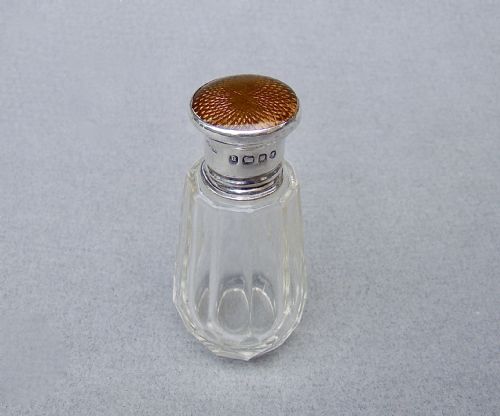
Many examples integrate metal elements into their construction, pairing sterling silver mounts, chrome collars, or ormolu hardware with the glass bodies. Guilloche enamel panels and gold leaf details frequently complement the painted glass surfaces on twentieth-century scent bottles and atomizers.
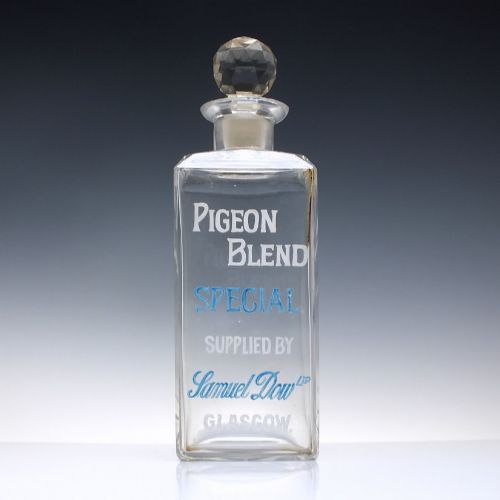
Scottish spirit decanters labeled for regional whisky blends show that Victorians enjoyed taking personalized liquor flasks along on their travels.
What varies in quality
The distinction between standard vessels and exceptional pieces rests upon the precision of the enamel work and the integration of the metal mounts. Finer nineteenth and twentieth-century items display meticulously hand-painted botanical, figurative, or geometric motifs that adhere evenly to the glass curves.
The complexity of the glass substrate itself determines much of the distinction, as deeply cut crystal and layered satin glass require advanced glassmaking skill. Furthermore, hallmarked sterling silver collars, complex guilloche patterns, and matching original stoppers elevate the execution of the piece.
Karl Palda·Henry Perkins·Archibald Knox for Liberty·René Lalique·Mappin & Webb
The Enameled Glass Bottles Glossary
- Chatelaine
- A decorative belt hook from which ladies suspended small household items such as scent bottles and keys. These pieces were fashionable during the Victorian and Edwardian eras.
- Guilloche
- An ornamental pattern produced by a guilloche machine that engraves precise, intricate geometric waves into a metal surface. Translucent enamel is then applied over the engraving.
- Opaline glass
- An opaque or semi-translucent glass developed in France and popular during the nineteenth century. It often appears in white, blue, or green shades.
- Ormolu
- A technique of applying finely ground, high-carat gold to an object of bronze or other metals. It serves as decorative mounts on nineteenth-century glass scent bottles.
- Mary Gregory glass
- Victorian glassware decorated with silhouettes of white enamel figures, usually children playing in woodland settings. The style gained popularity during the mid-nineteenth century.
Enameled Glass Bottles: Frequently Asked Questions
What were enameled glass bottles used for?
These vessels served practical roles as portable scent containers, dressing table atomizers, and spirit decanters for personal gin or whisky.
Wealthier households utilised them within bedrooms and drawing rooms to hold perfumes, while smaller chatelaine bottles were carried during social outings.
How do I date an enameled glass bottle?
Dating relies on stylistic indicators such as nineteenth-century floral motifs versus nineteen-thirties art deco geometric cuts. Metal mounts often bear silver hallmarks with date letters that pinpoint the exact year of manufacture.
Specific regional characteristics, like bohemian export styles or czech art deco forms, also anchor pieces to particular decades.
How should I display antique glass bottles?
Displaying these items involves placing them on stable mirrored trays or inside glass-fronted cabinets where light can pass through the coloured glass. Ensuring they stay away from direct, harsh sunlight preserves the vibrancy of the painted enamel.
Keeping stoppers securely fitted prevents dust accumulation inside the narrow necks of the decanters and scent bottles.
What is the difference between a scent bottle and an atomizer?
A scent bottle utilises a simple stopper or screw cap to seal the fragrance inside a small glass chamber. An atomizer incorporates a mechanical spray pump mechanism with a bulb and metal collar to disperse the liquid in a fine mist.