
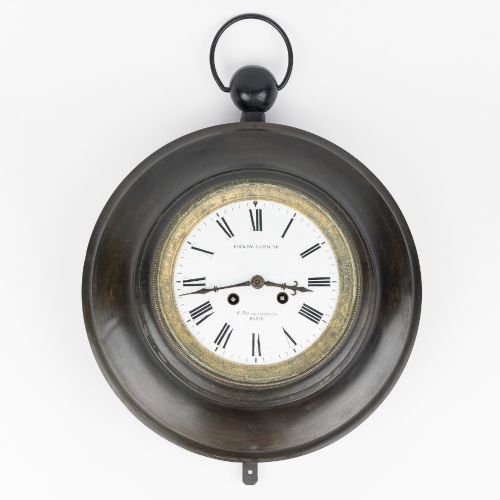
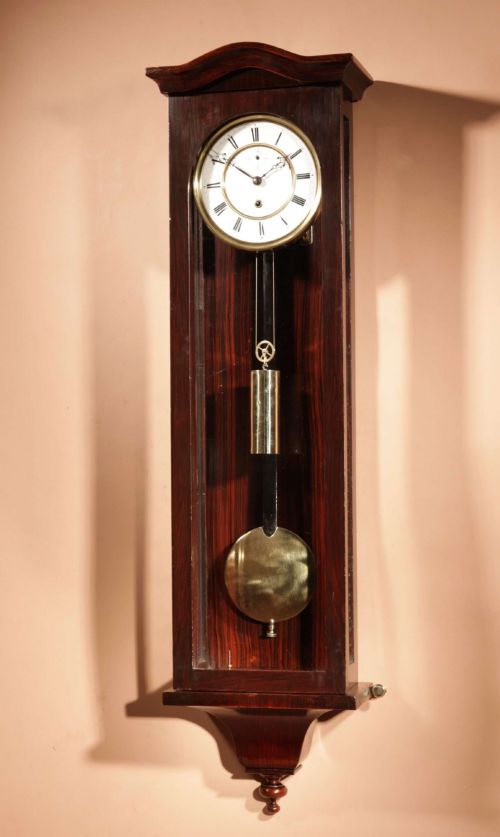


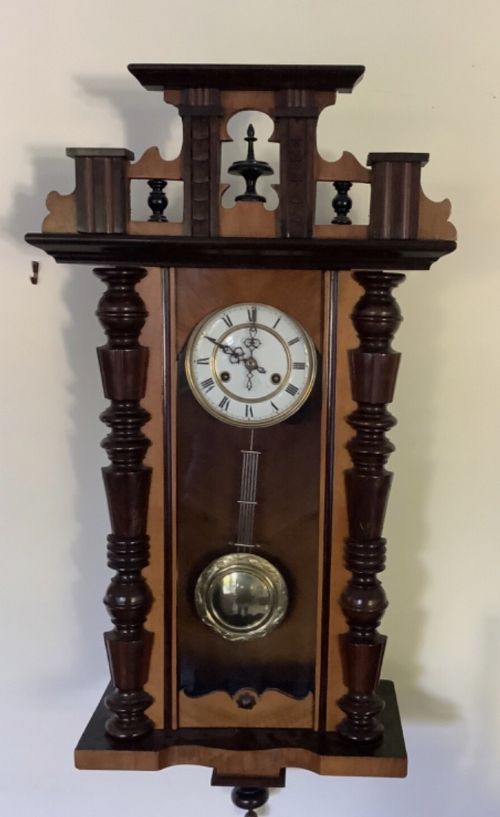


Enameled Dial Wall Clock
An enameled dial wall clock brings together practical timekeeping and striking visual contrast, offering the timeless appeal of a crisp, legible face mounted securely on a wall.
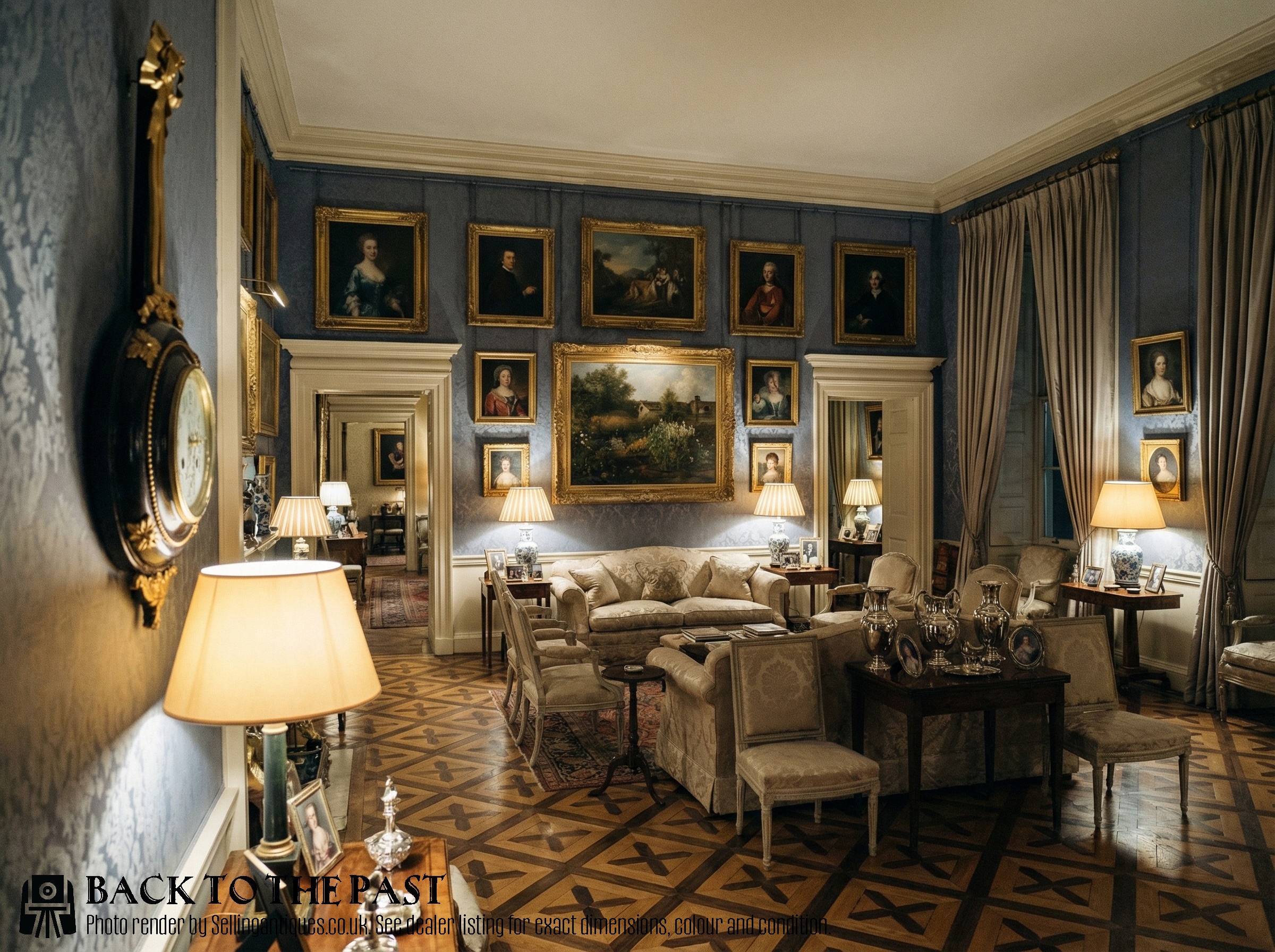
Enameled Dial Wall Clock
An enameled dial wall clock spans domestic and institutional forms, appearing in regional styles from Black Forest regulators to French picture frame clocks and robust ship bulkhead pieces.
The selection ranges from miniature two-train Vienna regulators and ornate ormolu cartel clocks to large outdoor turret clock faces, demonstrating the wide scope of the phrase enameled dial wall clock.
Originating predominantly from the nineteenth century alongside Georgian and mid-twentieth-century examples, these pieces reflect diverse European workshop traditions including French, German, Austrian, and Swiss craftsmanship.
How they were made
The defining white or dark enamel faces are fused to metal bases through high-temperature firing, creating durable surfaces that resist fading and hold crisp painted numerals.
Enclosed housings combine sturdy structural woods like mahogany and ebonised timber with cast brass bezels, glass covers, and occasionally gilt bronze or ormolu mounts.
Intricate mechanical movements utilise steel and brass components, featuring specialised escapements such as the pinwheel arrangement to govern accurate weight-driven or spring-driven timekeeping.
Materials recorded in current inventory include brass, glass, mahogany, iron, ebonised wood, gilt bronze, and steel.
What varies in quality
The refinement of the enamel dial sets the visual standard, with finer pieces maintaining unblemished surfaces and delicate hand-painted numerals.
Complexity of the internal movement dictates grade, distinguishing simpler timepieces from quarter-striking regulators or specialised mechanisms like pinwheel escapements.
Cabinetry and metalwork execution distinguish standard production from exceptional pieces, seen in heavy cast brass bezels and finely carved or ormolu-mounted housings.
JOYCE WHITCHURCH·Valiant Paris
The Enameled Dial Wall Clock Glossary
- Enamel
- A glassy substance fused to metal through firing to provide a smooth, durable surface for clock numerals. It offers a bright, clean background that remains legible across decades.
- Regulator
- A precision pendulum clock designed for high accuracy. They often feature elongated cases and clear dial layouts.
- Escapement
- The internal mechanism that translates rotational force from the gear train into controlled impulses. The pinwheel escapement is a notable example found in better movements.
- Bulkhead clock
- A robust timepiece designed for marine environments, often secured inside a heavy brass case with a protective glass door.
Enameled Dial Wall Clock: Frequently Asked Questions
What periods do these clocks cover?
The available pieces primarily span the nineteenth century, with specific examples reaching back into the Georgian era and extending forward to mid-twentieth-century military and maritime designs.
Craftsmanship traditions from France, Germany, Austria, and Switzerland dominate the selection, each bringing distinct regional aesthetics to the housing and movement construction.
How do I care for an enamel dial?
Enamel is essentially glass fused to metal, making the surface durable but vulnerable to sharp impacts or sudden thermal shock. Clean the face gently with a soft, dry cloth.
Avoid abrasive cleaners or harsh solvents that might damage painted numerals or fine hairline fractures within the glazed surface.
Where were these clocks originally used?
Domestic spaces utilised refined cartel clocks and Vienna regulators in parlours and halls, while maritime vessels and ministry offices relied on robust bulkhead clocks.
Larger turret clock dials served public buildings and outdoor installations, requiring substantial sizing and weather-resistant enamel construction for readability from a distance.