

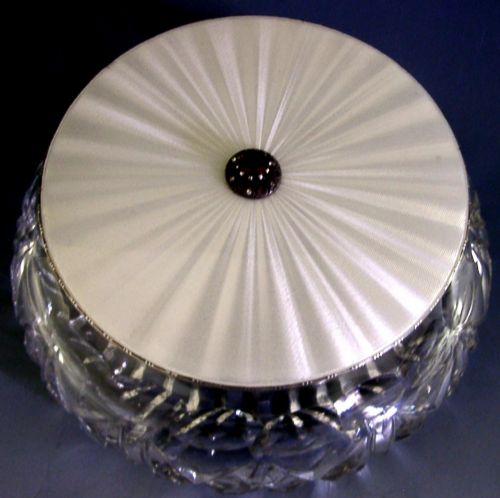


Enamel Trinket Pot
An enamel trinket pot is a small lidded container designed for dressing tables and vanity surfaces, prized for bright colour and metalwork.
Enamel Trinket Pot
When you search for an enamel trinket pot, you encounter small lidded vessels created to hold pins, pills, patches, or cosmetics on a dressing table. The selection includes dressing table jars, vanity jars, patch boxes, and lidded bowls originating from diverse periods.
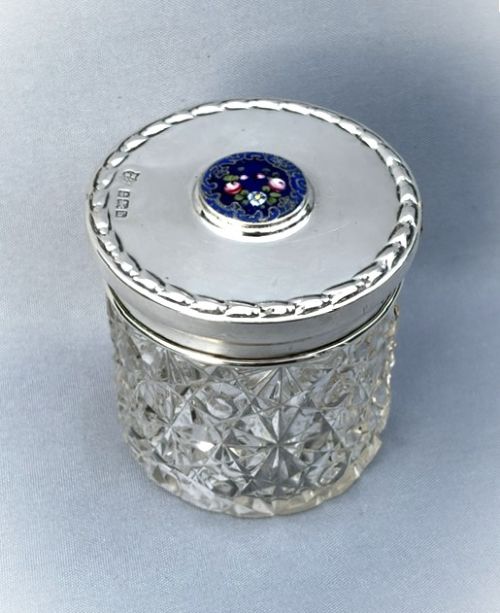
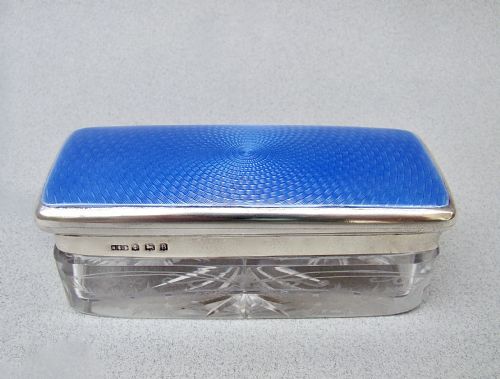
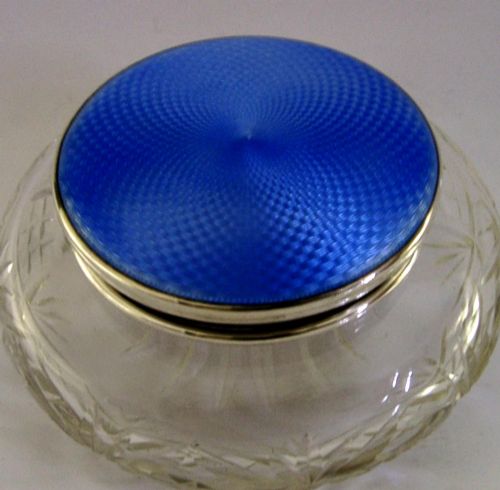
The versions most commonly met on this page combine sterling silver mounts with glass or cut glass bodies topped by patterned enamel lids. Pieces range from small pill boxes to larger vanity jars designed for daily use in bedrooms.
Origins stretch from eighteenth-century English workshops to twentieth-century production centres in Britain, France, and Japan. You find styles spanning Georgian and Victorian eras through Art Deco and Mid-Century Modern designs.
Materials and construction
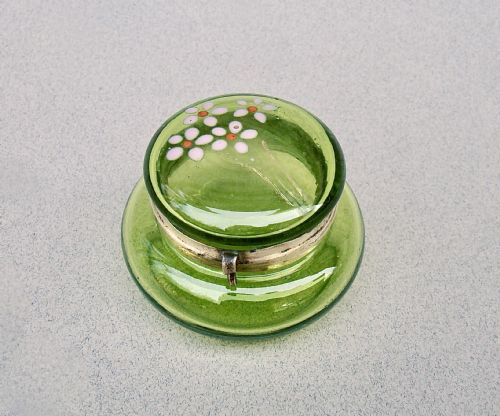
Craftsmen built these pots using combinations of sterling silver, brass, porcelain, pottery, and glass, often pairing cut glass or coloured glass bodies with precious metal rims and lids. Silver components frequently bear hallmarks indicating assay offices such as Birmingham and London alongside specific production years.
Enamelwork was applied to metal surfaces using techniques including guilloche, where geometric patterns are engine-turned beneath translucent coloured enamel, and cloisonné, where wires form compartments for the paste. Painted enamel decoration also appears directly on glass, porcelain, and copper patch boxes.
Design styles represented across the inventory include Georgian, Victorian, Edwardian, Art Deco, and Mid-Century Modern periods.
Assessing quality and craftsmanship
Superior examples show crisp engine-turning beneath the enamel layer and heavy sterling silver mounts with clear, legible hallmarks. The clarity of cut glass bodies and the fineness of hand-painted details on porcelain or copper distinguish finer studio output from standard production.
Condition of the vitreous enamel surface remains central, as chips or heavy scratches alter the visual impact of translucent colours like blue, pink, and purple. The precise fit between lid and collar also indicates the original precision of manufacture.
Henry Clifford Davis
The Enamel Trinket Pot Glossary
- Guilloche enamel
- A decorative technique where a metal surface is mechanically engraved with repetitive geometric patterns before transparent enamel is applied over the top, allowing the design to show through.
- Patch box
- A small eighteenth-century container originally used to hold small silk or velvet aesthetic patches worn on the face during the Georgian period.
- Sterling silver
- An alloy of silver containing ninety-two point five percent silver by mass and seven point five percent other metals, predominantly copper, used extensively for pot mounts and lids.
- Cloisonne
- An ancient technique for decorating metalwork objects with coloured glass paste placed within compartments defined by bent wire soldered to the base.
Enamel Trinket Pot: Frequently Asked Questions
What were enamel trinket pots used for?
These vessels served practical functions on dressing tables, holding small personal items such as hairpins, cosmetics, pills, and beauty patches.
Ladies utilised them daily within private dressing rooms, keeping delicate items organised and protected from dust.
How do I date a silver and enamel jar?
Dating relies heavily on the hallmarks stamped into the sterling silver mounts, which indicate the assay office, standard mark, and date letter for the specific year of creation.
Stylistic indicators such as Art Deco geometry or Edwardian proportions also help place the piece within a broad historical decade.
What is guilloche enamel?
Guilloche is a decorative process involving a mechanical lathe that etches precise geometric patterns into metal before a translucent enamel coating is fused by heat.
This method creates a shimmering depth where light reflects off the engraved pattern beneath the coloured glass surface.
Are these pots made of glass or metal?
The listings show a mixture of materials, with many examples featuring cut glass or coloured glass bodies fitted with sterling silver and enamel lids.
Other variations consist entirely of metal and enamel, porcelain, or pottery construction without glass elements.