


Empire Style Wall Sconces
Empire style wall sconces bring classical dignity to a room, offering disciplined form and warm candlelit reflection.
Empire Style Wall Sconces
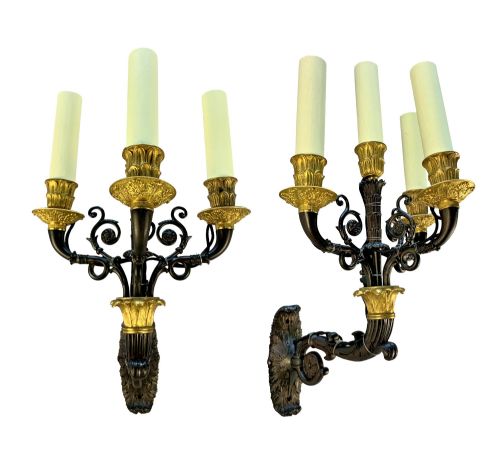
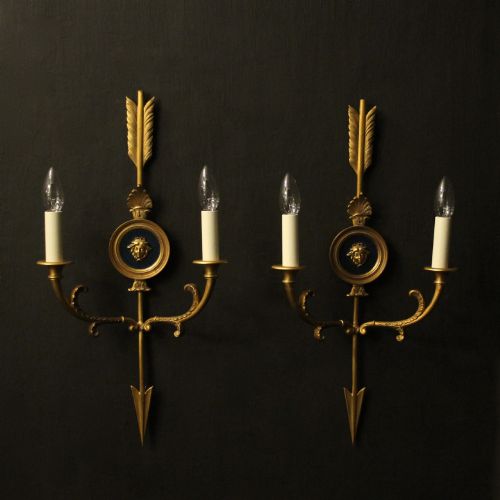
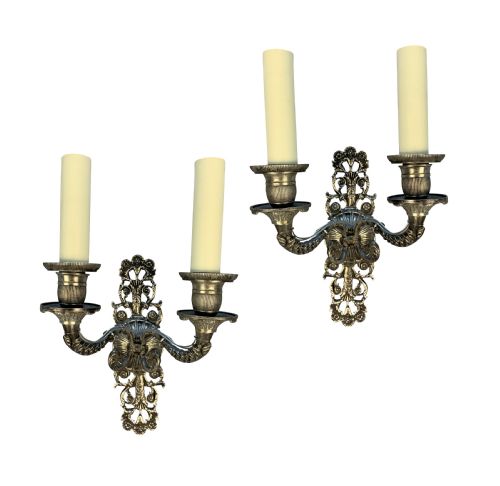
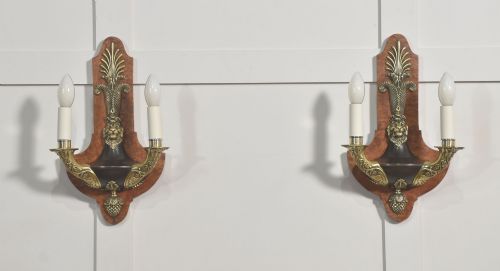
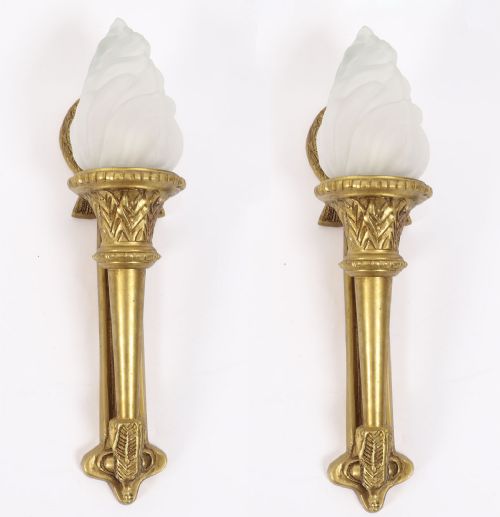
Empire style wall sconces take their design cues from classical antiquity, often featuring architectural symmetry, torches, and disciplined proportions. When searching for empire style wall sconces, buyers encounter lighting fixtures designed to mount directly onto vertical surfaces, providing both illumination and formal decoration. These pieces reflect neoclassical motifs that gained popularity across European interiors during the nineteenth and early twentieth centuries.
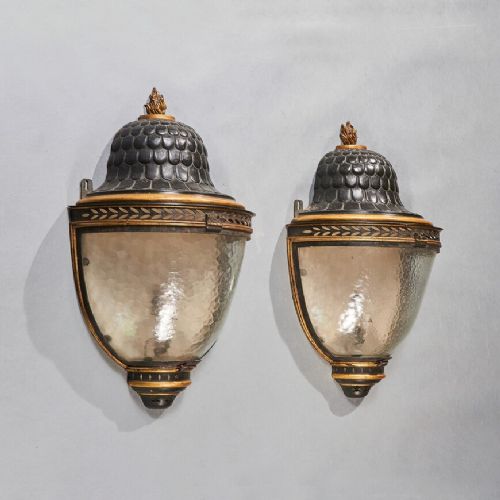
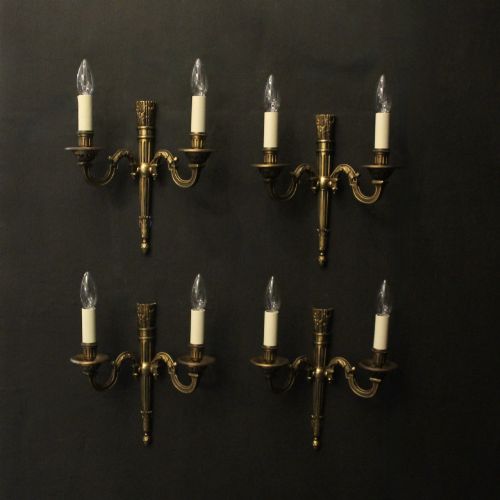
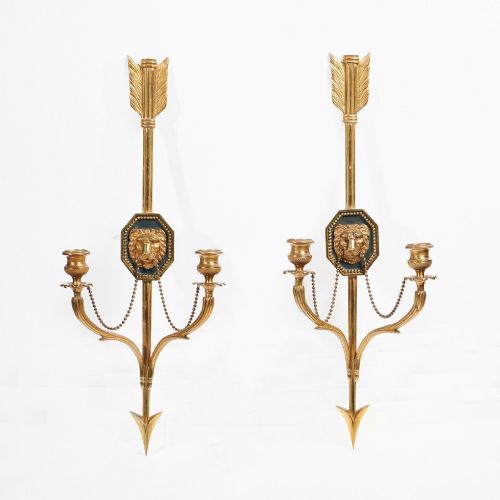
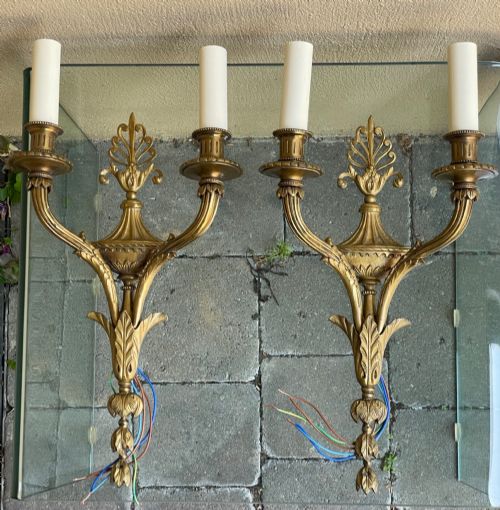
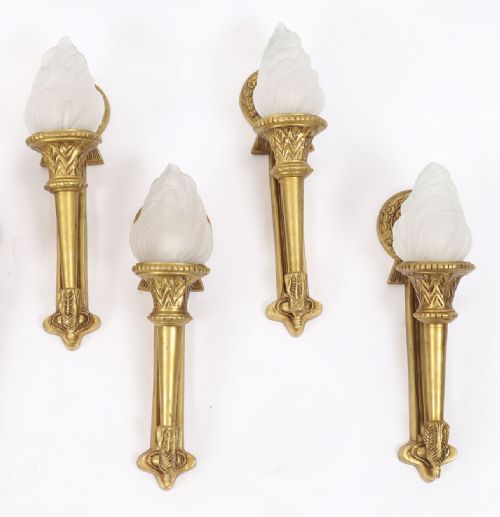
The selections available here showcase a predominance of French and Italian origins, spanning the nineteenth century through the 1930s. Brass, gilded bronze, and ormolu form the primary structural vocabulary, frequently paired with glass elements or tole peinte finishes. Forms range from simple twin-arm configurations to grander torch-shaped brackets and carriage lights.
Buyers most commonly meet pairs and sets rather than single pieces, making these fixtures well-suited for flanking mirrors, fireplaces, or architectural doorways. The historical span of the listings includes Regency interpretations and Edwardian adaptations alongside strict nineteenth-century French examples. This variety allows collectors to match specific period interiors or introduce formal focal points into contemporary spaces.
How they were made
The manufacture of these wall lights relies heavily on cast metals such as brass and bronze, shaped to achieve crisp neoclassical relief. Ormolu and gilded bronze finishes require meticulous application of gold leaf or mercury gilding over base metals to produce a durable, luminous surface. Iron and steel components occasionally underpin larger structural elements, particularly in lanterns and heavy brackets.
Glass components, including frosted panels and hanging decorative drops, are hand-blown or pressed to catch and refract light from the bulbs or candles. Tole peinte fixtures incorporate painted sheet metal, utilising dark green or varied hues to simulate aged patinas. Burr walnut and giltwood appear in specific regional variants, adding organic grain or carved wooden detail to the metal framework.
Some carriage lights moonlighted from coaches to interior walls, proving that a good bracket has no trouble switching careers.
What varies in quality
The finesse of the metal casting largely determines the quality of an empire style wall sconce, separating sharp, deeply chased surface details from soft or blurred ornamentation. Superior examples display clean articulation in classical motifs such as acanthus leaves, laurel wreaths, and flaming torches, whereas lesser pieces show shallow or generalized casting. The weight and thickness of the bronze or brass framework also indicate the maker's commitment to durability and structural integrity.
Gilding technique and preservation dictate the visual richness of the object, with fire-gilded ormolu retaining a deep, warm lustre that survives centuries better than thin electroplate. Original glass components, unblemished surface patinas, and intact mechanical fixings further elevate a piece above standard production items. Subtle differences in assembly, such as concealed wiring channels and tight joints, separate standard commercial output from workshop creations designed for high-status interiors.
The Empire Style Wall Sconces Glossary
- Ormolu
- A golden-coloured alloy of copper, zinc, and sometimes tin, used to simulate gold on decorative metalwork. It provides a rich, non-tarnishing surface finish on nineteenth-century mounts.
- Appliques
- A traditional term for wall-mounted light fixtures or sconces. The word often appears in descriptions of continental European decorative hardware.
- Torch
- A classical lighting motif shaped like a burning brand, frequently rendered in metal and glass. This design element sits at the core of many neoclassical wall lights.
Empire Style Wall Sconces: Frequently Asked Questions
How do I wire old wall sconces?
Most antique wall lights require rewiring by a professional electrician to meet modern safety standards. Historic fixtures often feature hollow backplates or arms that accommodate modern flexible wiring without altering the external metalwork.
It is advisable to consult a specialist who understands how to handle delicate brass or gilded bronze components during the rewiring process. They can ensure the fixture mounts securely to standard wall junction boxes.
How do I clean gilded bronze?
Dust gilded bronze gently with a soft, dry brush to prevent the accumulation of particles in recessed cast details. Avoid harsh chemical cleaners or abrasive cloths that can strip away historic surface patinas or gilding.
If deeper cleaning is necessary, use a damp cloth with mild soap followed by immediate drying. Professional conservation advice is recommended for pieces showing signs of active corrosion or failing finishes.
What defines the empire style?
The empire style draws heavily from the art and architecture of imperial Rome, Greece, and ancient Egypt. It emphasises symmetry, military motifs, and classical symbols such as wreaths, sphinxes, and torches.
This aesthetic spread across Europe during the early nineteenth century, replacing lighter rococo forms with heavier, more monumental designs. In lighting, this translated to robust bronze and brass fixtures dominated by architectural dignity.