
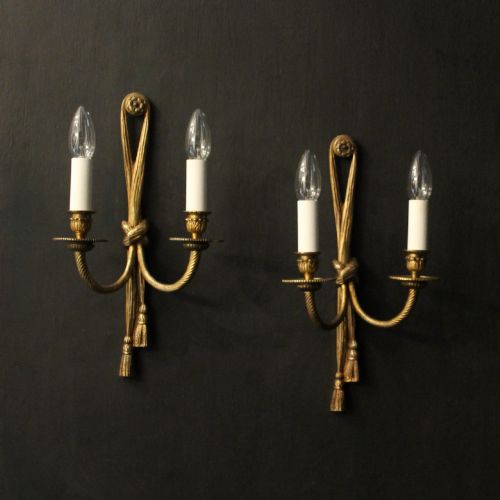
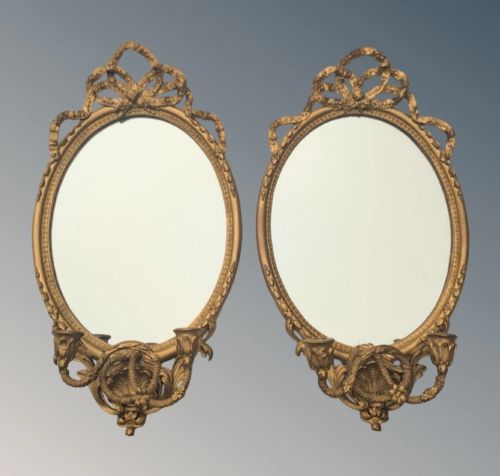
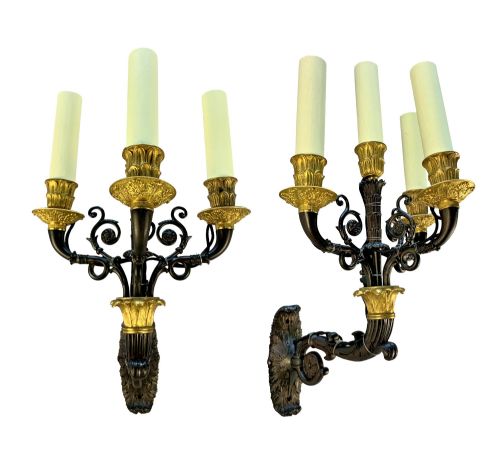
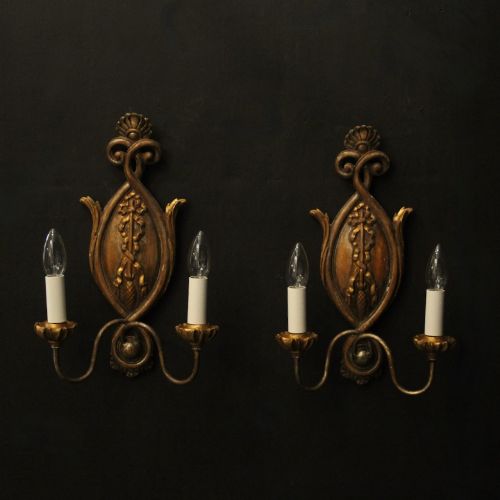
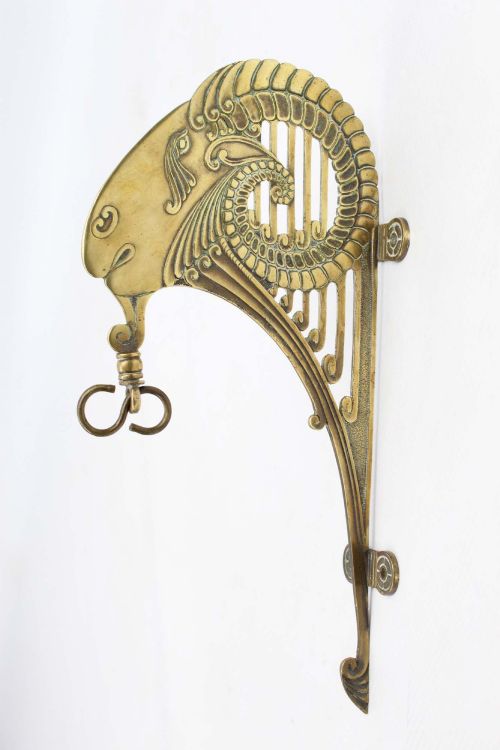
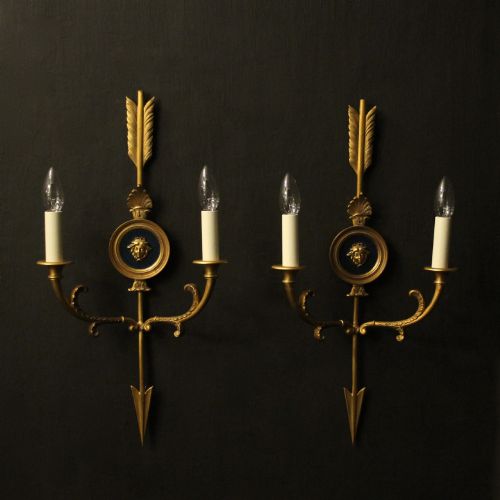
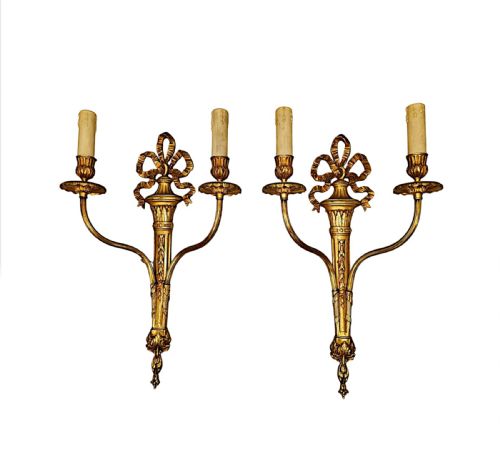
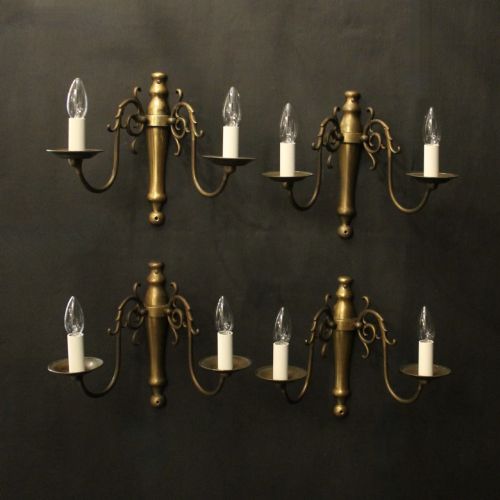


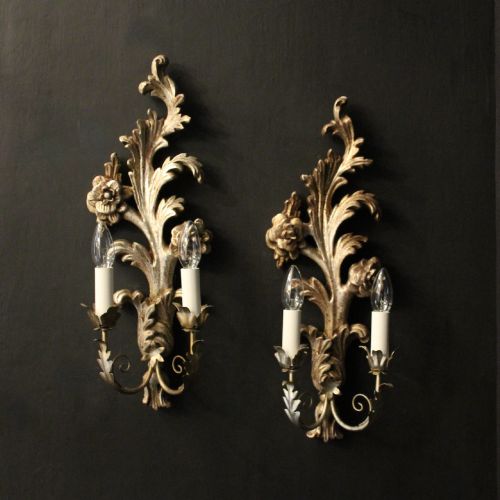
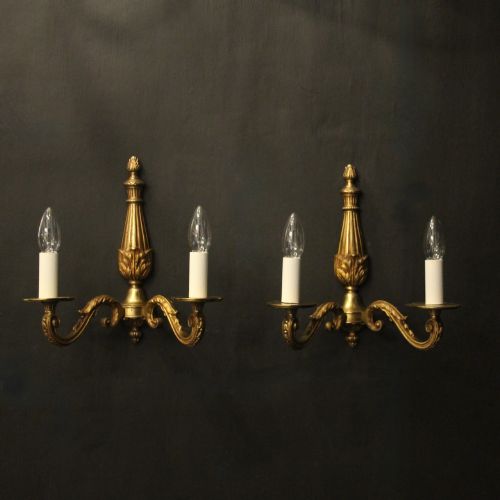
Antique Sconce Wall Lights
These antique sconce wall lights illuminate interiors with period character, offering historic metalwork and sculptural design suited to traditional and eclectic rooms.
Antique Sconce Wall Lights
When searching for antique sconce wall lights, buyers encounter wall-mounted lighting fixtures designed to hold candles or electric bulbs, spanning periods from the eighteenth century through the early twentieth century.
Forms range from simple single-arm brackets to large multi-branch candelabra, girandoles, and glass-enclosed wall lanterns that originally served halls, boudoirs, and grand reception rooms.
How They Were Made
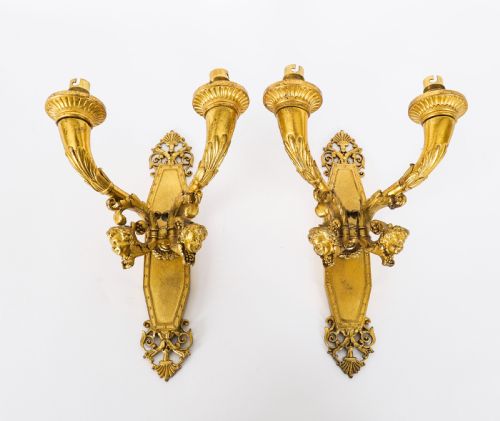
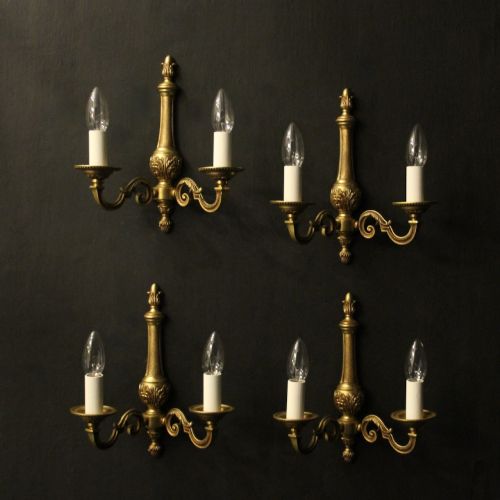
Foundry-cast metals form the foundation of many pieces, utilising brass, bronze, and ormolu that are frequently gilded or silver-plated to achieve a lustrous metallic finish.
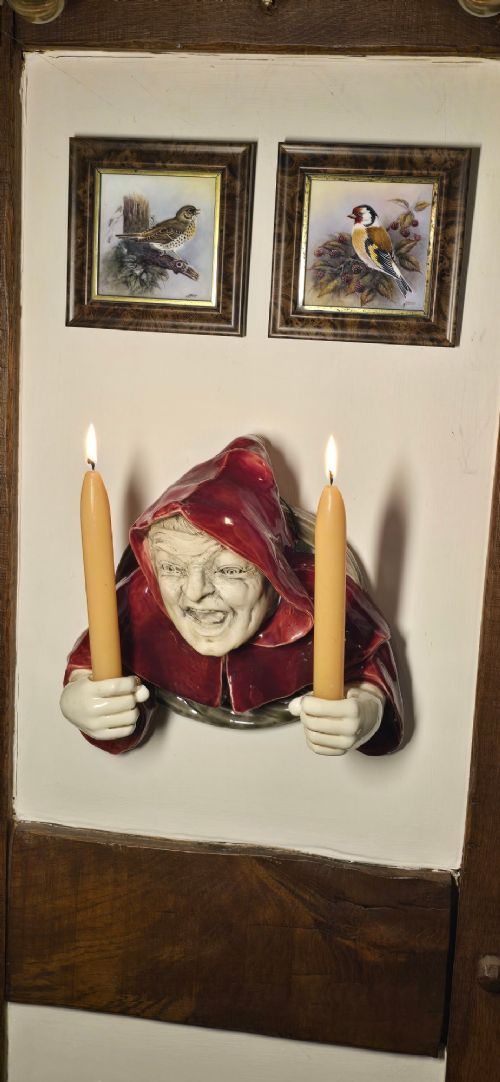
Carved wooden elements appear in Florentine giltwood and gesso pieces, whilst specialised lighting incorporates hand-cut crystal drops, tole peinte metalwork, and applied ceramics like Sevres porcelain.
Construction methods combine cast components with hand-chased detailing, secure pinning, and later electrical adaptations fitted inside historic candle tubes.
The listings span the nineteenth century through the 1930s, featuring brass, giltwood, crystal, and bronze across French Rococo and Arts and Crafts styles.
What Varies in Quality
The depth and crispness of the chasing in cast bronze or ormolu separate mass-produced fittings from masterworks, where intricate acanthus leaves and sculptural figures retain sharp definition.
Materials and secondary elements dictate overall sophistication, distinguishing simple pressed brass frames from heavy hand-carved giltwood, fire-gilded bronzes, and heavy lead crystal dressings.
Proportion and architectural balance govern the success of a pair, ensuring that arms project harmoniously from the backplate and decorative motifs align symmetrically.
W.A.S. Benson·Faraday and Sons·Maison Baguès·Villeroy and Boch·Bruce Talbert·REVO Leicester
The Antique Sconce Wall Lights Glossary
- Ormolu
- A gilded brass or bronze finish applied through a mercury amalgamation process on earlier pieces or electroplating on later examples. This technique imparts a rich golden sheen to metal mounts.
- Girandole
- An ornamental wall light featuring reflective glass, giltwood, or polished brass backplates designed to multiply candlelight. These fixtures were placed opposite windows or fireplaces to enhance illumination.
- Tole Peinte
- Painted sheet metal utilised for decorative shades, lanterns, and backplates. The technique allows for vibrant hand-painted botanical or scenic motifs.
- Applique
- A French term for a wall-mounted light fixture or sconce. It is frequently applied in historical descriptions of gilt bronze and crystal lighting.
- Backplate
- The flat or shaped metal or wooden section that mounts directly against the wall surface. It supports the weight of the extending candle branches.
Antique Sconce Wall Lights: Frequently Asked Questions
How were antique sconces originally used?
These fixtures were mounted on walls in pairs or sets to hold beeswax candles or oil lamps, illuminating dark hallways and reception rooms before the advent of electricity.
Reflective backplates and polished brass surfaces helped bounce candlelight around the room to maximise brightness during evening hours.
Are these wall lights wired for electricity?
Many examples have been adapted for modern electrical wiring while retaining their historic metalwork, candle tubes, and structural components.
Buyers should inspect the internal wiring and consult an electrician to ensure compatibility with current safety standards upon installation.
How do I clean gilded bronze sconces?
Dusting gently with a dry, soft brush is the safest method to remove particulate buildup without disturbing aged patination or fragile gilding.
Harsh chemical polishes must be avoided entirely, as they strip away historical finishes from brass, bronze, and ormolu surfaces.
How do I date a pair of wall lights?
Dating relies on examining the casting techniques, mounting screws, material composition, and stylistic markers corresponding to periods like the Regency, Victorian, or Edwardian eras.
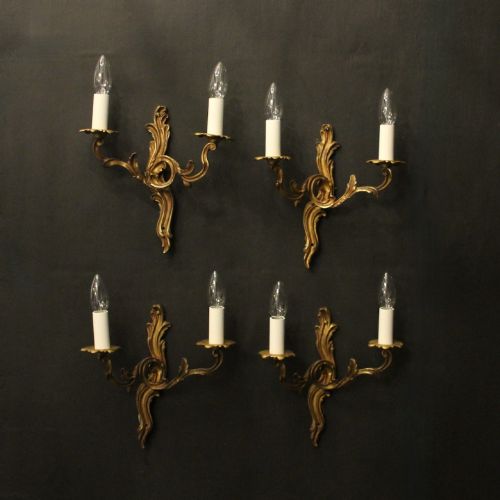
Comparing the decorative vocabulary, such as Louis XV rocaille scrolls or Arts and Crafts hand-beaten copper, provides clear chronological indicators.