


Empire Style Table Clock
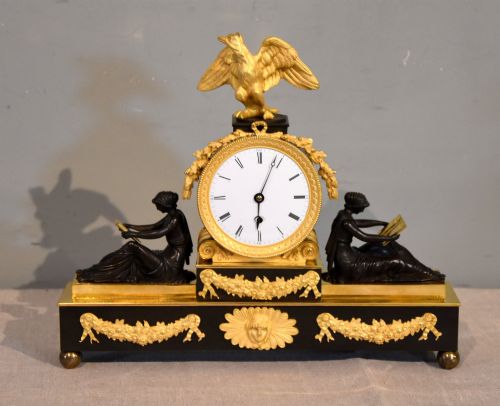
An empire style table clock brings monumental neoclassical presence to a mantelpiece, combining rich ormolu metalwork with classical architectural forms.
Empire Style Table Clock
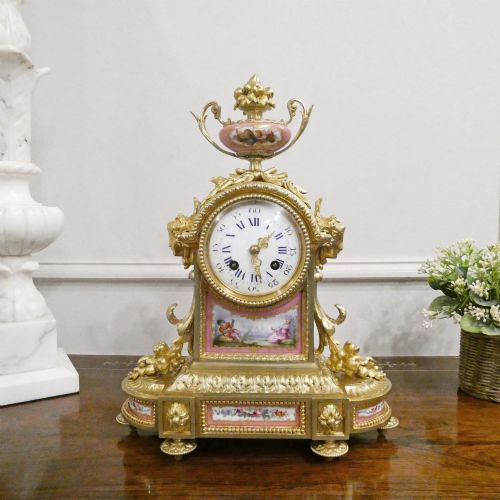
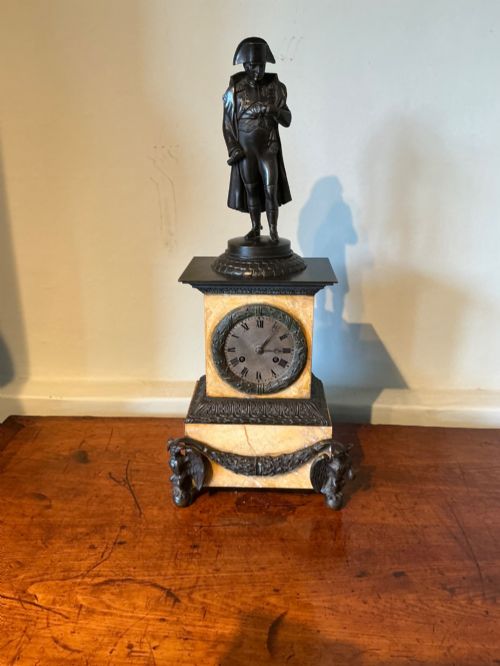
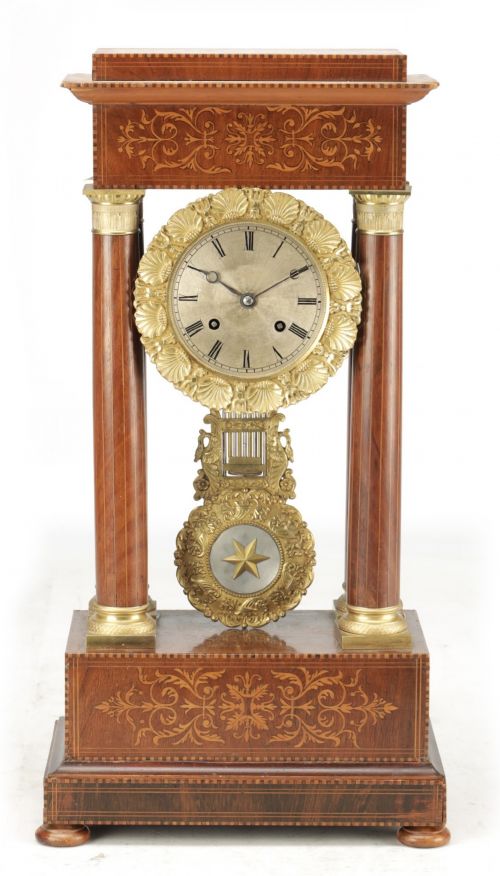
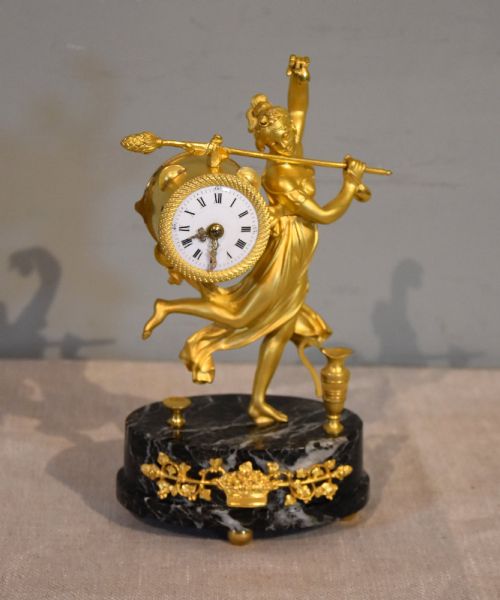
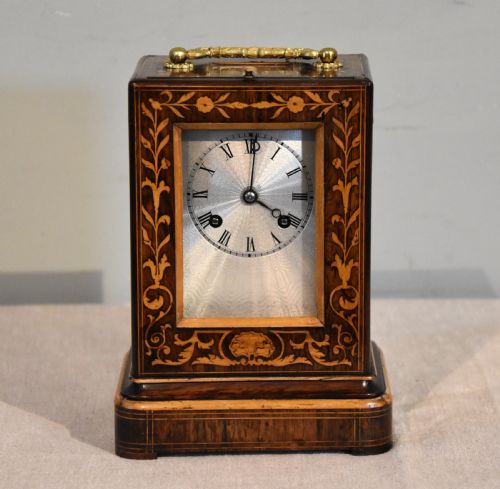
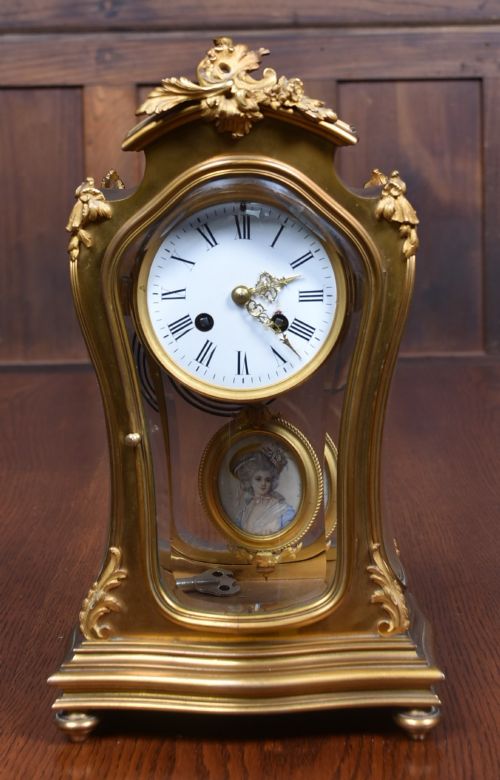
When you search for an empire style table clock, you encounter monumental horology originating predominantly from nineteenth-century France and Regency England. These timepieces take the form of mantel clocks, portico clocks, and clock garnitures featuring figural subjects and architectural cases.
The most common versions met on this page are French mantel clocks cast in gilt bronze and ormolu, alongside English Regency bracket and mantel timepieces. Makers house eight-day striking movements inside housings constructed from marble, alabaster, and patinated bronze.
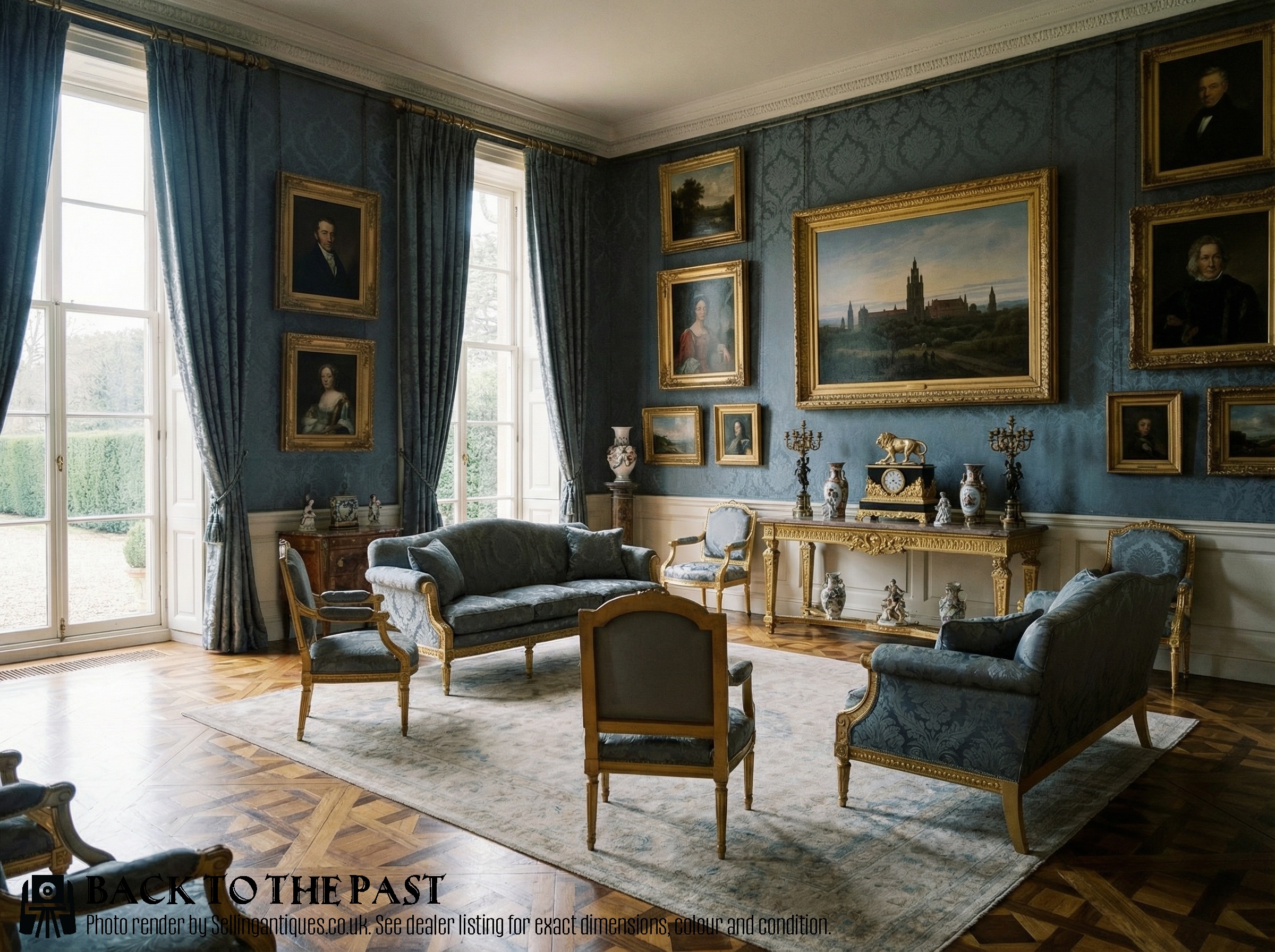
Materials and Construction
Craftsmen built these clocks using cast ormolu and gilt bronze, often mounted upon contrasting green or rouge marble bases. Portico models incorporate cut crystal columns, while carriage and desk clocks utilise delicate enamel dials paired with brass framing.
Movements rely on precision engineering, utilising chain fusee mechanisms in English examples and robust brass plate systems by makers such as Japy Frères for French striking clocks.
Empire Style Table Clock Retail Price Guide 2026
Typical asking prices for empire style table clock among the pieces listed under this phrase on Sellingantiques today, from the lower quarter to the upper quarter. They describe what is for sale here now, not the wider market.
Napoleon Bonaparte personally inspired the creation of the portable military officer clock known as the pendule d'officier.
Craftsmanship and Execution
Quality separates through the crispness of the bronze chasing and the depth of the mercury gilding applied to the cast metal surfaces. Superior examples display sharply defined figural modeling, such as lions, cherubs, and classical deities, rather than soft or blurry casting details.
The refinement of the dial execution and the complexity of the internal movement, such as a single chain fusee, distinguish master workshops from standard commercial production.
Japy Freres·Baetens London·Bellenot Paris·Henry Berkeley Square London·FB Adams London·Bently & Beck London
The Empire Style Table Clock Glossary
- Ormolu
- Gilded bronze produced by applying a mercury and gold amalgam to a bronze base and heating it until the mercury vaporised. This technique creates a distinctive, durable golden lustre found on nineteenth-century clock cases.
- Portico clock
- A mantel clock featuring a symmetrical architectural case supported by four columns or pillars. The dial typically hangs suspended within the central arch.
- Fusee
- A conical pulley used in spring-driven clocks to maintain equal force throughout the running of the movement as the mainspring unwinds. This mechanism improves timekeeping accuracy in English Regency pieces.
- Garniture
- A set consisting of a central clock flanked by matching decorative objects, such as candelabra or urns, designed to display together on a mantelpiece.
- Enamel dial
- A metal dial face coated in powdered glass melted under high heat to create a smooth, white surface. Numerals are hand-painted onto this vitrified layer.
Empire Style Table Clock: Frequently Asked Questions
How do I wind an empire style table clock?
Most models require a specialised winding key inserted into the dial holes to tension the springs every eight days. Care must be taken not to overwind the mechanism.
Striking clocks should be allowed to complete their chime cycle fully before adjusting the hands to the correct time.
Where should I place a heavy marble mantel clock?
Select a sturdy, level surface capable of supporting considerable weight, such as a slate mantelpiece or a reinforced console table. Heavy bronze and marble cases require a stable platform to prevent tipping.
Ensure the placement avoids direct sunlight and damp environments to protect the delicate gilt surfaces and internal brass gears.
How do I distinguish French and English movements?
French movements typically utilise rack-and-snail striking mechanisms mounted on circular or rectangular brass plates stamped with maker stamps. English pieces frequently employ chain fusee movements housed in robust rectangular brass frames.
English dials often bear the signature and location of the London watchmaker directly on the painted enamel face.
What is a clock garniture set?
A clock garniture is a matched decorative ensemble where the central mantel clock is accompanied by two side ornaments, such as urns or candelabra. These matched pieces share identical materials like gilt bronze and marble.
They create a balanced decorative arrangement when displayed together across a wide mantelpiece or sideboard.