


Empire Period Pendule Clock
An empire period pendule clock brings sculptural neoclassical presence to a room, driven by French horology and bronze casting.
Empire Period Pendule Clock
When you search for an empire period pendule clock, you encounter mantel clocks shaped by French Empire, French Restauration, and Regency aesthetics. These timepieces function as both decorative bronze sculptures and functional clocks from the nineteenth century.
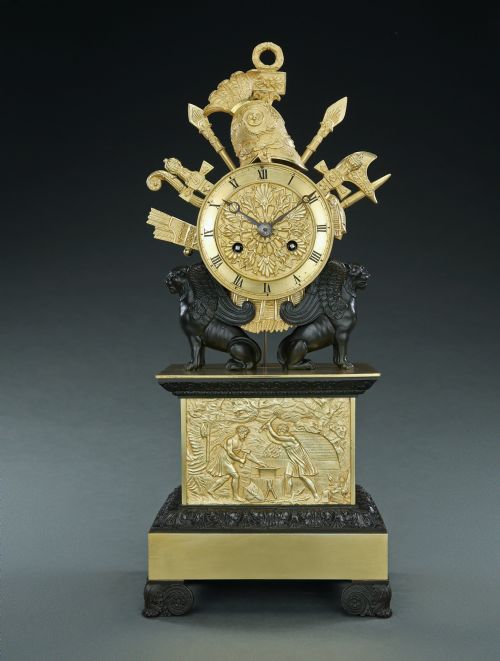
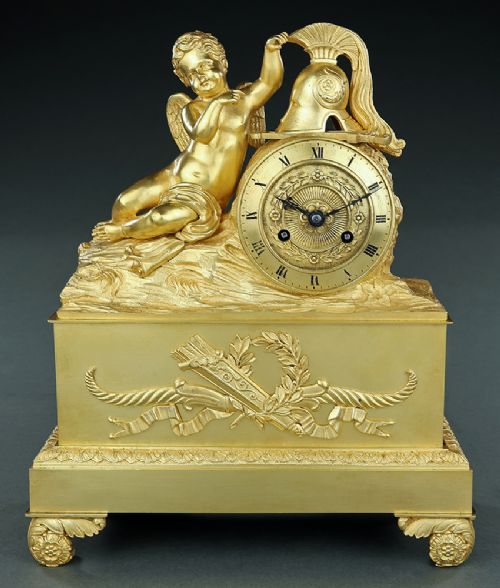
You are most likely to meet pieces produced around 1800 to 1850, often featuring figural motifs like trophies of war, love themes, and lions. The form centres on classical architectural and mythological subjects cast in metal.
How they were made
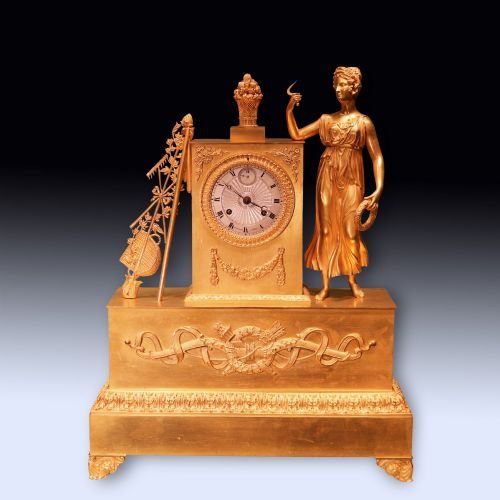
These clocks rely on combinations of gilt bronze, ormolu, and patinated bronze, frequently paired with brass and enamel dials. Foundries cast the metal components in distinct sections before finishing the surfaces by hand.
Movements are typically eight-day striking mechanisms housed within bronze cases protected by glass. Makers integrated enamel chapter rings for the dial numerals, contrasting against the dark patinated and bright gilded surfaces of the metalwork.
Listings span the nineteenth century, capturing French Empire, French Restauration, and Regency styles fashioned from ormolu and patinated bronze.
What varies in quality
The sophistication of the movement and the integration of the sculptural subject into the overall architecture elevate certain pieces. Clocks bearing signed maker details on the dial or movement plates carry distinct weight.
Canaillor of Paris·Pons de Paul
The Empire Period Pendule Clock Glossary
- Ormolu
- Gilded bronze produced by applying a mercury and gold amalgam to a bronze base and firing it. This technique creates a durable, luminous golden finish characteristic of French Empire metalwork.
- Patinated bronze
- Darkened bronze surfaces achieved through chemical treatment, used to contrast against bright ormolu elements. It highlights sculptural depth on figural clock cases.
- Mantel clock
- A household clock designed to stand on a fireplace mantelpiece or shelf. These objects combine timekeeping with prominent decorative sculpture.
- Enamel dial
- A metal dial fused with powdered glass fired at high temperatures to create a smooth, white surface. Numerals are painted onto this durable ground.
Empire Period Pendule Clock: Frequently Asked Questions
What is an empire period pendule clock?
An empire period pendule clock is a nineteenth-century timepiece featuring a sculptural bronze case influenced by French Empire and Regency styles. They frequently depict classical, mythological, or allegorical themes.
These objects were designed primarily for prominent display on mantelpieces in formal rooms, combining mechanical timekeeping with high-status interior decoration.
How do I wind the clock?
Most of these clocks utilise an eight-day movement driven by springs or weights, requiring a key to wind the striking and time trains through the dial holes.
Care must be taken not to over-wind the mechanism, and keeping the clock level ensures the pendulum beats evenly.
How do I distinguish French Empire from Regency clocks?
French Empire clocks lean heavily into Napoleonic classical iconography, military trophies, and distinctively rich ormolu finishes. Regency clocks share similar neoclassical roots but reflect British taste and cabinet-making influences of the same era.
Examining the casting style and movement signatures often clarifies the origin of the piece.
Where should I place it?
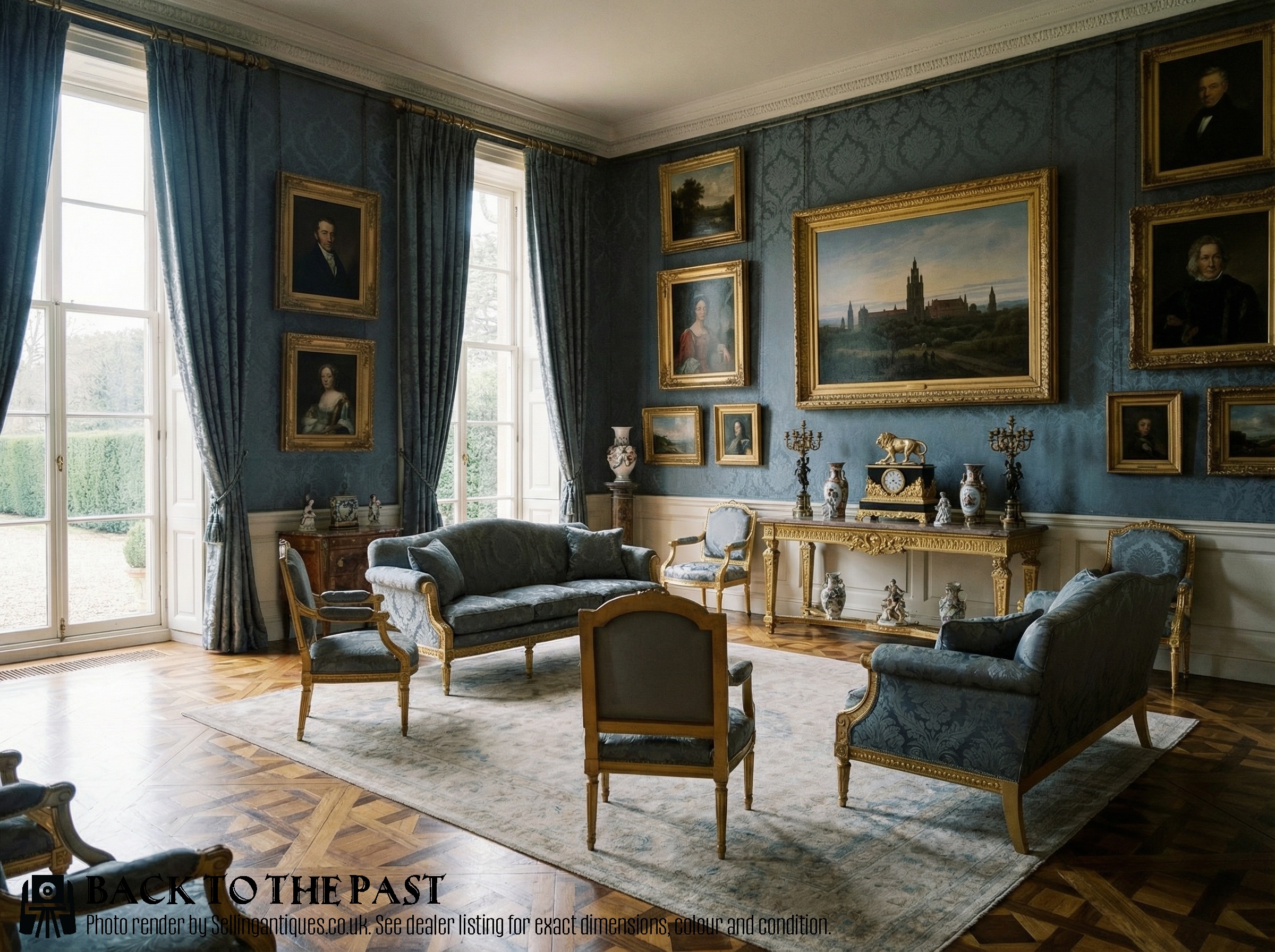
Place the clock on a stable, level surface away from direct sunlight, moisture, and extreme temperature fluctuations to protect the delicate bronze surfaces and enamel dials.
Mantelpieces, heavy sideboards, or dedicated display tables provide the structural support needed for these heavy bronze objects.