
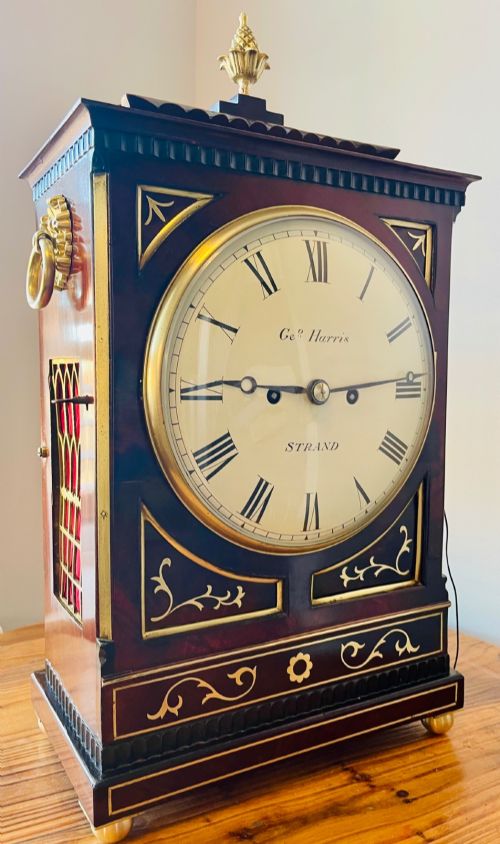
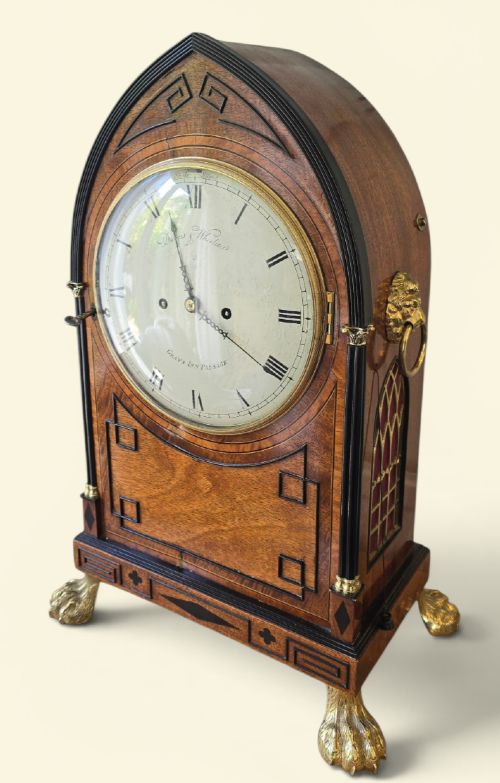


Brass Lion Clock
These brass lion clock pieces bring sculptural animal presence and precision timekeeping into a room, combining heavy cast metalwork with classic dial faces.
Brass Lion Clock
When you search for a brass lion clock, you find timepieces that incorporate the king of beasts into their design, whether through prominent animal mounts, flanking figures, or roaring mask motifs on the case. The selection spans compact mantel designs, table clocks, and tall case formats.
You are most likely to meet French ormolu or gilt brass examples from the nineteenth century alongside British bracket and longcase clocks housed in rich mahogany. These pieces range from Neoclassical French Empire models to robust Georgian and Regency bracket clocks.
The architectural forms vary from drum head shapes and lancet tops to grand pedestal cases with visible pendulums or automata details. Each variation reflects the specific taste of its period, uniting mechanical utility with striking sculptural metalwork.
How they were made
Maker workshops utilised heavy brass, ormolu, and gilt bronze to cast the detailed lion figures, mounts, and masks that define the sculptural appearance of these timepieces. These metallic elements were often hand-chased and fire-gilded to achieve a lasting golden sheen.
The clock housings frequently relied on dense timbers such as mahogany and ebony, constructed to support intricate twin-fusee or single movements. Dial faces combined white enamel with fine hand-cut hands and protective glass panels.
Listings feature periods spanning Georgian and Regency eras through the nineteenth century, utilising mahogany, glass, enamel, and gilt bronze.
What varies in quality
Movement complexity and case timber selection also set pieces apart, moving from standard timepieces to twin-fusee striking mechanisms housed in select figured mahogany. The integration of specialty functions, such as automata or visible pendulums, indicates higher workshop ambition.
Desbois and Wheeler·Vurley of Wisbech·Mitchell and Russell·Japy Freres
The Brass Lion Clock Glossary
- Ormolu
- A technique of applying finely ground high-carat gold to a bronze or brass object using a mercury amalgam. This historic process creates a rich, matte yellow finish that resists tarnishing over centuries.
- Fusee
- A conical pulley used in better-quality antique clocks to maintain even power from the mainspring as it winds down. It ensures consistent timekeeping across the duration of the wind.
- Bracket clock
- A portable table clock originally designed to sit on a wall bracket or a tabletop. Many feature wooden carrying handles on top for moving between rooms.
- Automata
- Mechanical figures or moving parts integrated into a clock face or case. In these pieces, elements like the eyes move in tandem with the internal gear train.
- Gilt bronze
- Copper alloy treated with a gold surface layer to simulate solid gold. The metal provides a durable base for intricate sculptural casting.
Brass Lion Clock: Frequently Asked Questions
Where did these clocks sit?
These timepieces typically occupied prominent positions on mantelpieces, entrance tables, or dedicated wall brackets within formal rooms. Their substantial weight and decorative metalwork made them central visual points in domestic interiors.
Larger longcase variations stood directly on the floor in hallways or main living spaces, serving both as family timekeepers and architectural furniture statements.
How do French and British models differ?
French versions from the nineteenth century generally lean towards decorative ormolu and gilt brass casting, often placing the lion figure directly atop or beside the dial in an Empire style.
British examples, by contrast, tend to house their movements within architectural mahogany bracket or longcase frames, utilising lions as subtle mask mounts or carrying handles.
What is a twin-fusee movement?
A twin-fusee movement employs two separate cone-shaped pulleys and chains to power the timekeeping train and the striking train independently. This mechanical setup delivers equal force to the gears throughout the entire winding cycle.
Clocks featuring this mechanism generally indicate a higher grade of workshop production and more reliable daily accuracy.
How do I care for the metalwork?
The gilt brass and ormolu surfaces require only gentle dusting with a soft, dry cloth to prevent the accumulation of grit. Avoid all chemical polishes, as abrasive cleaning strips away the historic gold layer permanently.
Keeping the clock away from direct sunlight and damp environments protects both the delicate metal finish and the internal wooden case.