
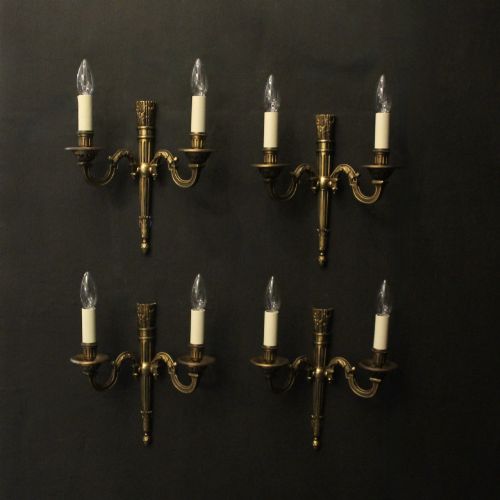
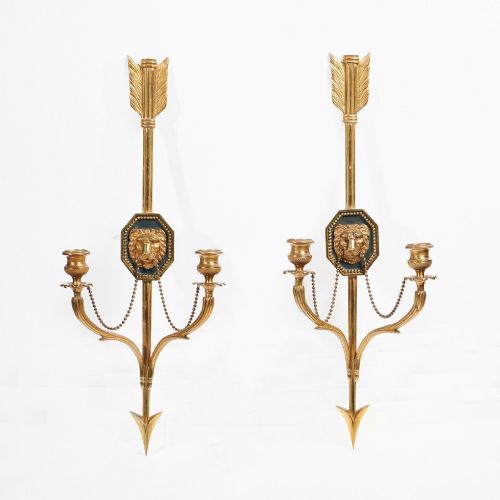
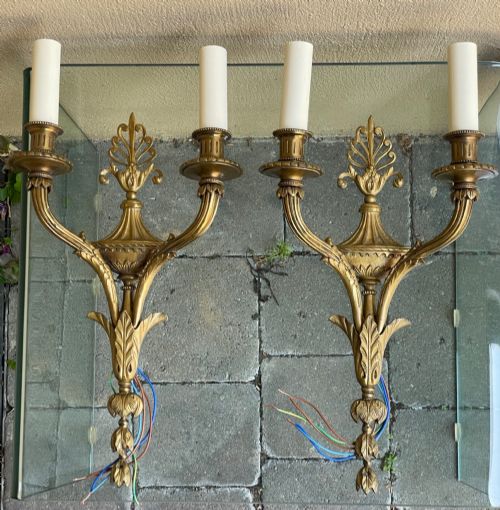
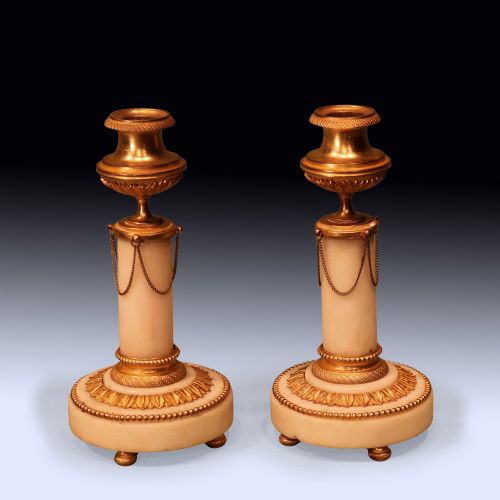
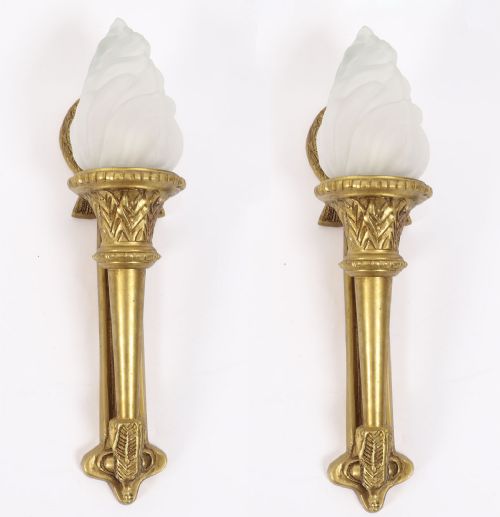
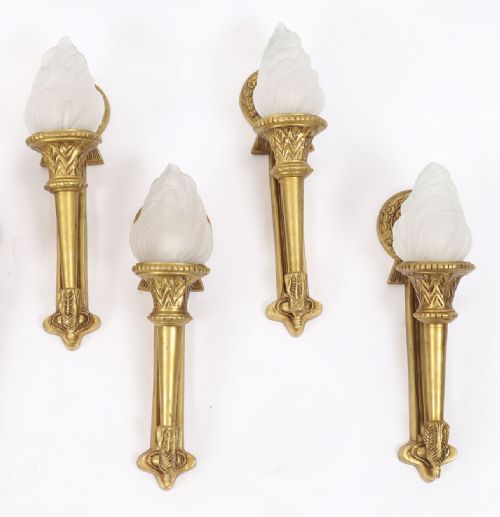


Empire Style Sconces
Empire style sconces bring neoclassical grandeur and striking symmetry to interiors, defined by gilt bronze, classical motifs and bold architectural form.
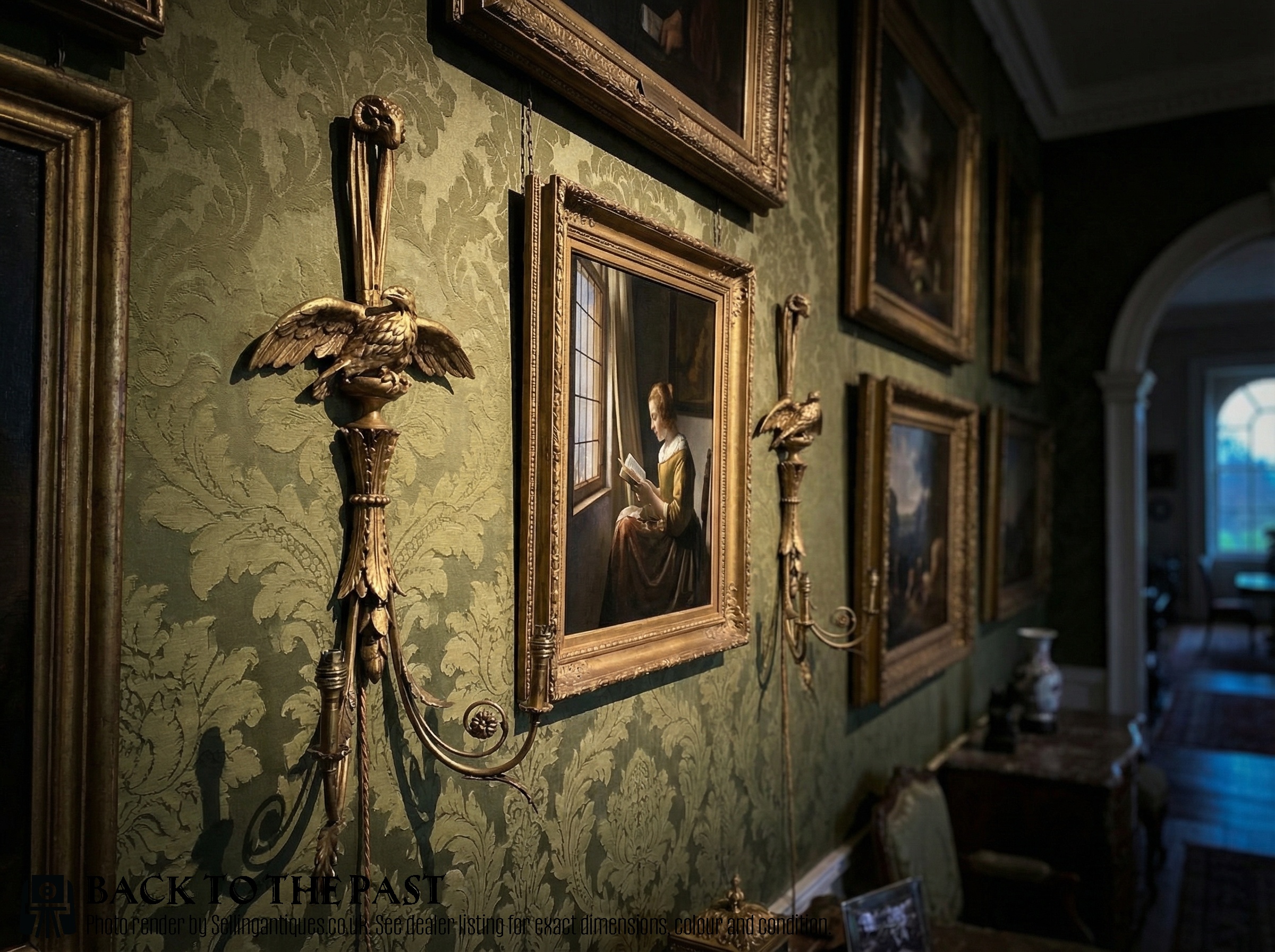
How they were made
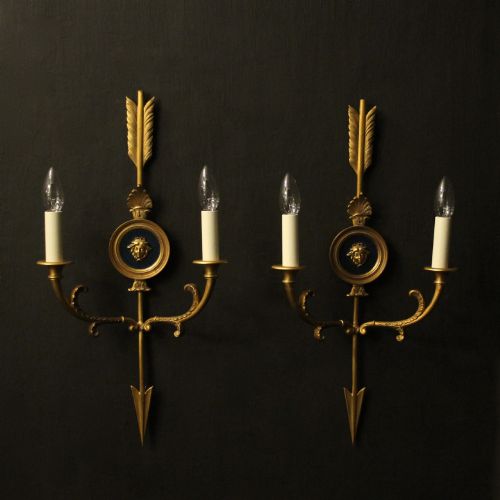
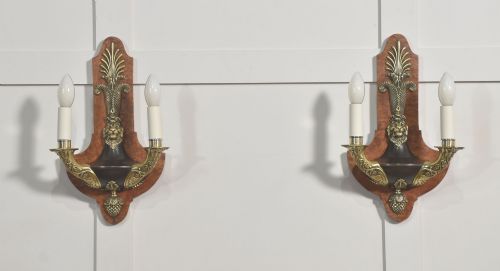
Metalwork forms the structural foundation of these pieces, utilising cast brass, bronze and silver plating shaped through traditional foundry techniques. Guilders applied fire gilt or ormolu finishes to bronze surfaces, producing the rich golden lustre characteristic of the style. Other pieces incorporate painted tole peinte, ebonised wood or burr walnut alongside patinated bronze.
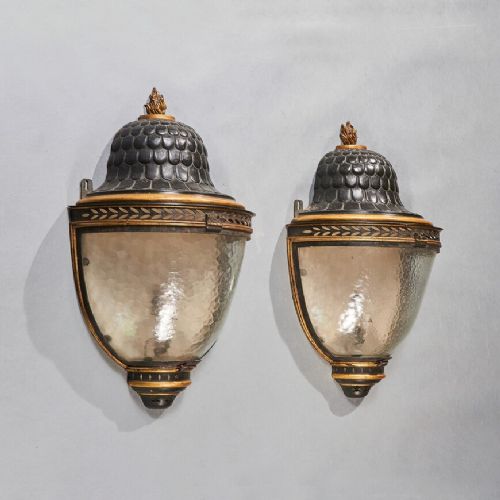
Decorative elements often include moulded glass components, such as flaming torch shades or bag wall light attachments. Makers integrated carved marble shafts, caryatid figures and parcel gilt wood into select brackets and candlesticks adapted for wall mounting. Assembly relied on threaded bronze rods, pins and screws to secure arms and backplates together.
What varies in quality
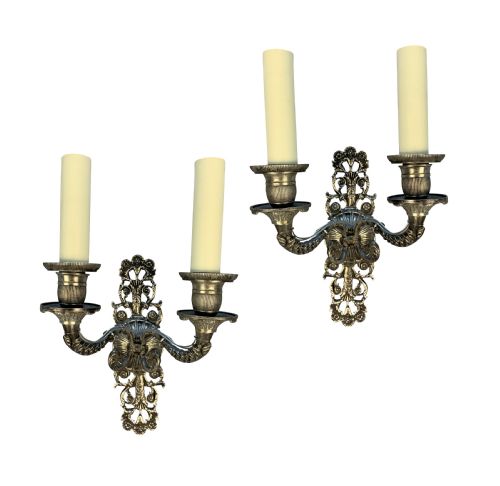
The crispness of the cast ornamentation separates standard production from superior examples, particularly in the rendering of acanthus leaves, classical figures and floral mounts. Finer pieces display hand-chased detailing across the ormolu and gilt bronze, enhancing depth and definition after casting. Weight and thickness of the metal components also indicate the standard of manufacture.
Preservation of the original surface finish dictates the visual impact of an antique wall light. Retained fire gilding with minimal rubbing commands greater regard than later re-plating efforts or worn surfaces. The integration of high-grade materials, such as heavy white marble bases or intact frosted glass torches, elevates the piece.
Listings feature 19th-century, Edwardian, Regency, Georgian and 1930s periods, utilising materials such as brass, gilt bronze, ormolu, glass, marble and tole peinte.
The Empire Style Sconces Glossary
- Ormolu
- Gilded bronze produced by applying a mercury and gold amalgam to a bronze base and heating it until the mercury vapourised. This technique created a durable, rich golden surface typical of fine nineteenth-century French lighting.
- Tole Peinte
- Painted sheet metal, frequently utilised in green or dark hues for wall lanterns and bouillotte lights. It provided a contrasting colourful element against polished brass and bronze mounts.
- Caryatid
- A sculpted female figure serving as an architectural support or shaft, frequently appearing on Grand Tour candlesticks and classical wall fixtures. These figures echo ancient Greek structural designs.
- Applique
- A French term for a wall-mounted light fixture or sconce designed to hold candles or lamps. The word is frequently used interchangeably with wall lights in continental European pieces.
- Patinated Bronze
- Bronze treated with chemical solutions to darken or colour the surface deliberately. This finish offered contrast against bright ormolu highlights.
Empire Style Sconces: Frequently Asked Questions
How do I wire antique sconces?
Most antique wall lights arrive configured for historical candle use or previous electrical setups. A qualified electrician can adapt the backplate and internal channels to accept modern wiring safely.
Careful positioning of modern candle tubes ensures the historical aesthetic remains undisturbed while meeting current electrical standards.
How do I clean gilt bronze sconces?
Dusting gently with a dry, soft brush prevents particle accumulation within the intricate cast details. Avoid harsh chemical cleaners or abrasive polishes that strip away original gilding.
Professional conservation advice is recommended if tarnish obscures the underlying metal finish.
Are pairs always identical?
Handcrafted nineteenth-century pairs often display subtle variations in casting or chasing due to manual production methods. These minor individual traits confirm their period manufacture rather than modern machine reproduction.
Matching sets of four require careful examination to ensure consistent sizing and decorative motifs across all pieces.