



Empire Style Circular Table
An empire style circular table brings architectural gravity and classic proportions to a room, anchored by a central pedestal and rich timber.
Empire Style Circular Table
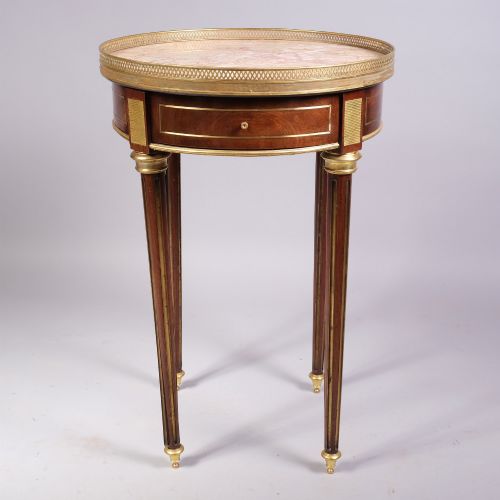
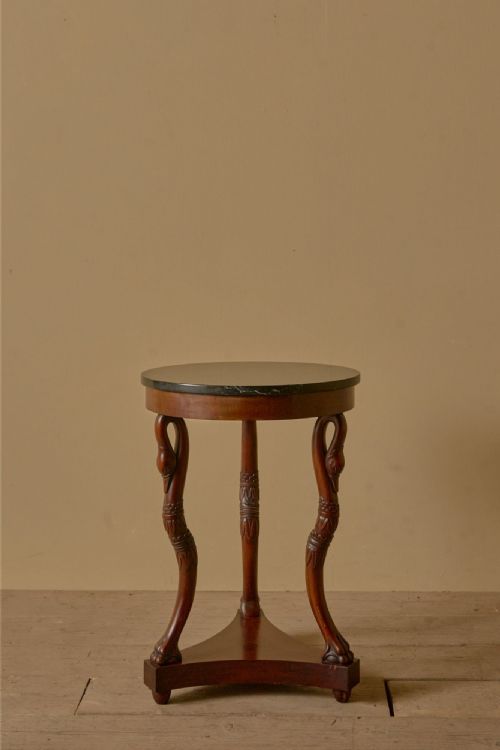
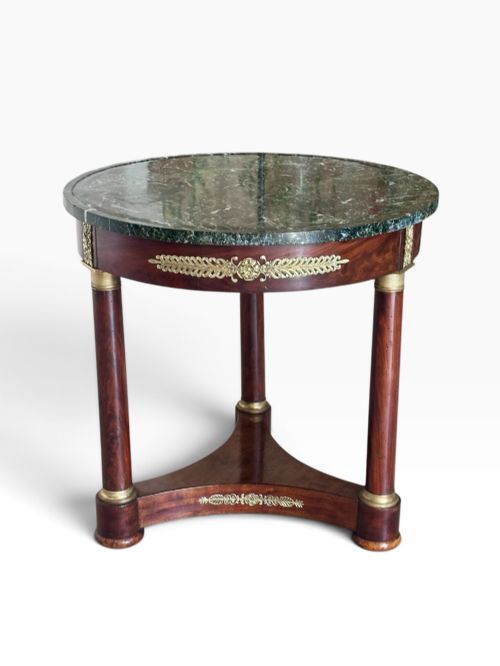
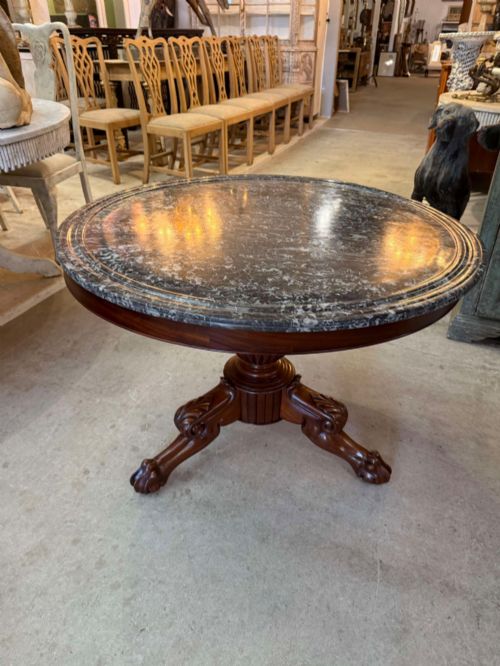
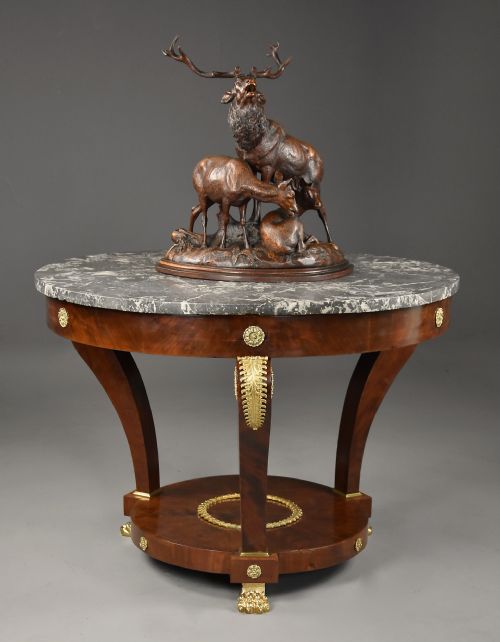
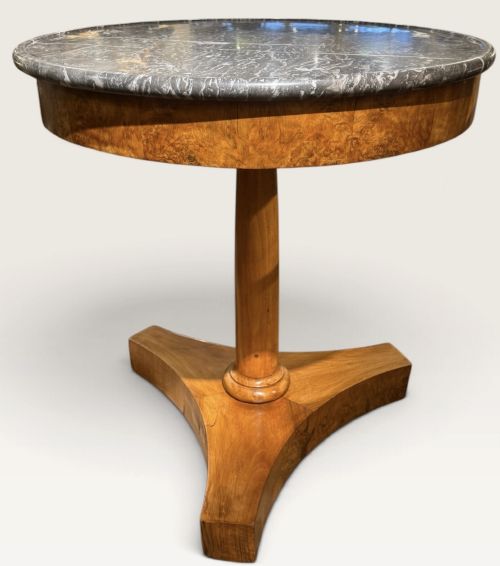
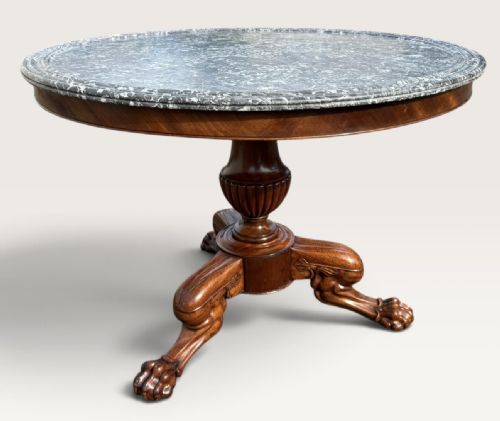
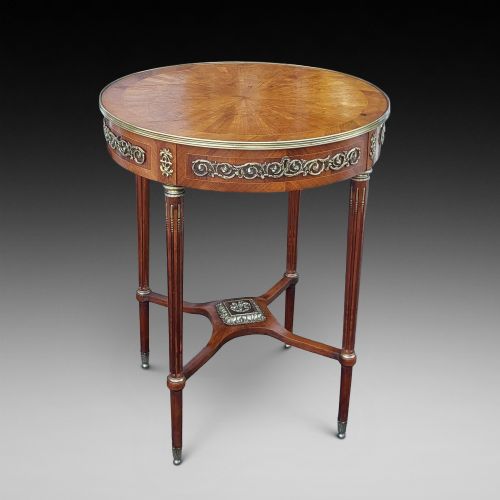
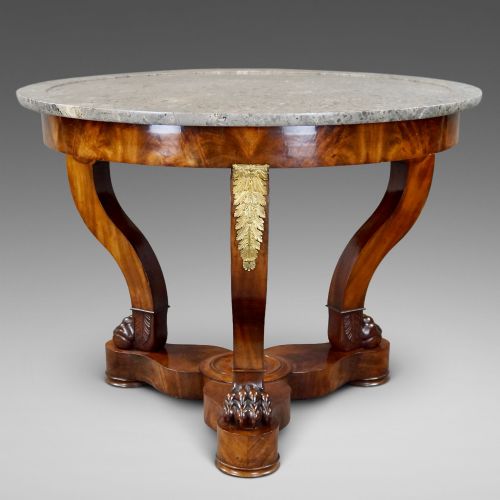
When searching for an empire style circular table, you encounter striking round tables designed to stand free in the middle of a room or serve as an occasional table. The selection spans centre tables, side tables, and pedestal tables originating primarily from the nineteenth century, with French influence dominating the aesthetic.
The form adapts easily to various interior scales, appearing as large centre tables with substantial marble surfaces or more compact bedside tables and occasional pieces. Makers utilised distinct regional variations, drawing upon Scandinavian neo-classical and Swedish Biedermeier traditions alongside French cabinet-making.
Materials and construction methods
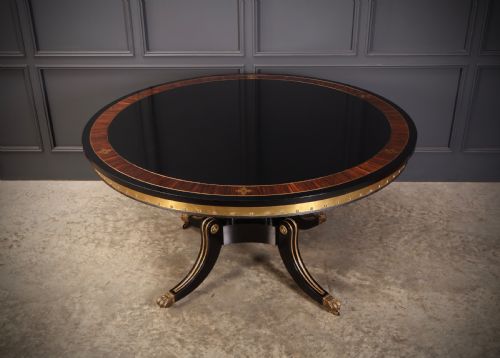
Makers constructed these circular tables using dense timbers such as mahogany, walnut, kingwood, and coromandel, often framing rich wood grains around central pedestals. Ebonised finishes and painted wood also appear, providing a dark contrast to metal mounts.
Surfaces frequently incorporate heavy marble slabs, while decorative details rely heavily on cast or chased ormolu, gilt bronze, and brass inlays. These metallic elements accentuate the architectural lines of the pedestal and apron.
Cabinet-makers integrated structural support through sturdy central pillars and plinth bases, ensuring the heavy stone or timber tops remained balanced without wobbling.
Empire Style Circular Table Retail Price Guide 2026
Typical asking prices for empire style circular table among the pieces listed under this phrase on Sellingantiques today, from the lower quarter to the upper quarter. They describe what is for sale here now, not the wider market.
Some nineteenth-century tables greet you with watchful brass rams heads peering from beneath the top.
Qualities that distinguish finer examples
The sophistication of the metalwork separates superior pieces from standard production, as finely cast ormolu and crisp brass inlays require considerable skill. Finer tables display sharp detailing in mounts like rams heads rather than soft, commercial casting.
The selection of timber veneer dictates visual depth, with burr root maple or highly figured mahogany creating an engaging surface pattern. Superior examples match wood grains carefully across the circular top and pedestal base.
The integration of heavy marble tops requires precise carpentry to sit flush and secure within the wooden frame, ensuring the weight distributes evenly through the central column.
The Empire Style Circular Table Glossary
- Guéridon
- A small round table or stand, often supported by a single central pillar, originating in seventeenth-century France and remaining popular through the nineteenth century.
- Ormolu
- Gilded bronze used for decorative furniture mounts and ornaments, providing a bright gold-coloured metallic contrast to dark woods.
- Biedermeier
- A Central European style of furniture design from the nineteenth century focusing on utilitarian comfort and clean lines rather than heavy ornamentation.
- Kingwood
- A dense, richly figured tropical timber with dark violet-brown markings, utilised extensively in fine cabinet-making for decorative veneers.
- Parcel-gilt
- Partially gilded with gold leaf or powder, highlighting specific carved details or mouldings against a painted or natural wood background.
Empire Style Circular Table: Frequently Asked Questions
What is a guéridon table?
A guéridon is a traditional French round table supported by a single central pedestal rather than four legs. These versatile pieces were originally designed for holding light objects or serving drinks.
Today, they function primarily as centre tables or occasional tables in living spaces and halls.
How do I identify Empire style furniture?
Empire style furniture typically displays classical architectural motifs, heavy symmetrical proportions, and dark woods like mahogany. You will often spot metal mounts in brass or ormolu depicting classical figures or animals.
The overall aesthetic aims for monumental dignity, drawing inspiration from ancient Roman and Greek design.
Are these tables solid mahogany?
Most nineteenth-century examples utilise timber veneers applied over a stable secondary wood core. This technique allowed cabinet-makers to display striking grain patterns across large circular surfaces without risking severe warping.
Solid mahogany appears more frequently in structural elements like pedestals and table rims.
Can these tables support heavy objects?
The sturdy central column and heavy plinth base provide robust support for standard items, particularly on models fitted with thick marble tops. Their low centre of gravity keeps them stable despite their compact footprint.
However, placing excessive weight on the outer edges of tilt-top variations requires caution.