





Empire Pendule Cheminee
These empire pendule cheminee are substantial mantel clocks that bring sculptural presence and classical French design to a room.
Empire Pendule Cheminee
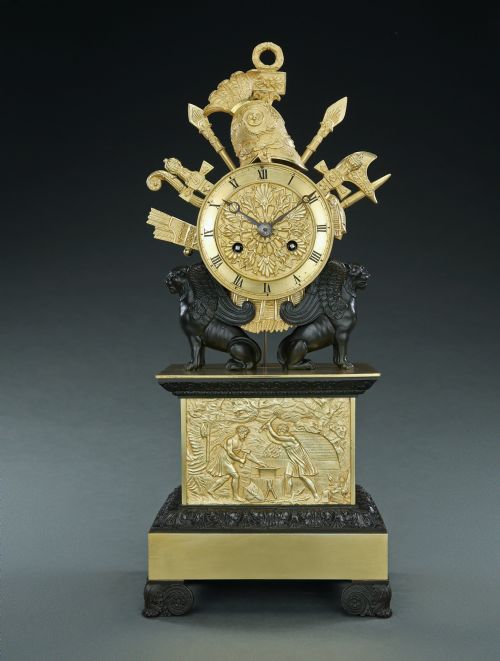
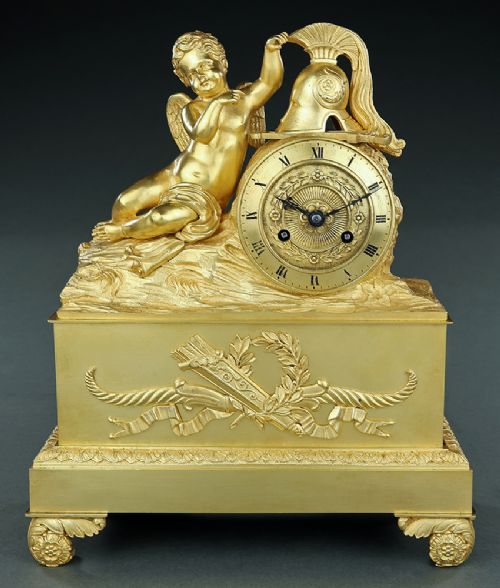
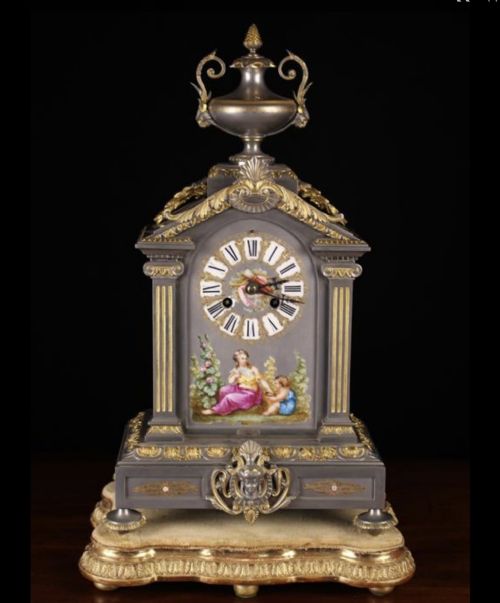
An empire pendule cheminee is a mantel clock typically combining architectural marble bases with patinated bronze and gilt ormolu figures. You will frequently encounter nineteenth century French examples drawing on Empire, Regency, and Louis XVI revival styles.
The sculptural subjects range from classical figures such as Diana the Hunter to allegorical themes like Trophies of War and Love Conquers All. These pieces function simultaneously as timepieces and as decorative bronze ornaments designed for the chimneypiece.
How They Were Made
The construction of an empire pendule cheminee relies heavily on the combination of cast bronze, ormolu, and shaped marble. Metal components are cast, chased, and gilded, while patinated bronze provides contrast for figurative elements.
Movements within these mantel clocks utilise traditional mechanisms, including eight-day strikes and silk suspension systems. Dial faces are frequently constructed from white enamel with delicate numbering, housed beneath glass bezels.
Listings feature materials including gilt bronze, ormolu, patinated bronze, glass, brass, and marble across Victorian and Regency periods.
What Varies in Quality
Quality in an empire pendule cheminee is determined by the crispness of the bronze chasing and the depth of the gilding. Superior examples exhibit intricate detail in figurative work and careful selection of specimen marble bases.
The reputation of the horological maker also distinguishes the piece, alongside the integration of the sculptural elements with the movement housing. Finer specimens show exceptional harmony between the bronze work and the architectural marble casing.
Japy Freres·Samuel Marti·Charpentier Paris
The Empire Pendule Cheminee Glossary
- Ormolu
- Gilt bronze produced by applying a mercury and gold amalgam to cast bronze. This technique creates a distinctive warm metallic finish found on many nineteenth-century French clock mounts.
- Patinated bronze
- Bronze treated with chemical solutions to produce a darkened surface finish. It provides contrast against the brighter gilded elements of the clock.
- Silk suspension
- A method of hanging the pendulum from a fine silk thread inside the movement. This delicate mechanism is characteristic of earlier nineteenth-century French clocks.
- Specimen marble
- Multi-coloured decorative stone used for the architectural bases of the clocks. It adds geological variety and weight to the mantel piece.
Empire Pendule Cheminee: Frequently Asked Questions
How do I wind the clock?
Winding involves using a matching key inserted into the dial face to tension the mainspring within the mechanical movement. Most examples utilise an eight-day movement requiring weekly attention to maintain accurate timekeeping.
Care must be taken not to over-wind the spring, and handling should be restricted to the winding arbors to protect the delicate enamel dial and surrounding bronze mountings.
How should I clean the bronze?
Cleaning requires only gentle dusting with a soft, dry brush to prevent the accumulation of dirt within the crevices of the chased bronze and ormolu. Moisture and chemical polishes should be avoided entirely to protect the historic surface finishes.
Overzealous cleaning can strip the original mercury gilding or alter the patinated bronze surfaces, diminishing the historic character and visual depth of the sculptural elements.
Where should I place it?
These clocks are traditionally placed upon a mantelpiece, shelf, or console table where their architectural marble and bronze figures can be viewed from multiple angles. A stable, level surface is essential to ensure the pendulum swings truly and the mechanical movement operates correctly.
Exposure to direct sunlight, damp environments, or extreme temperature fluctuations should be avoided to protect the delicate enamel dials, marble bases, and internal suspension threads.