




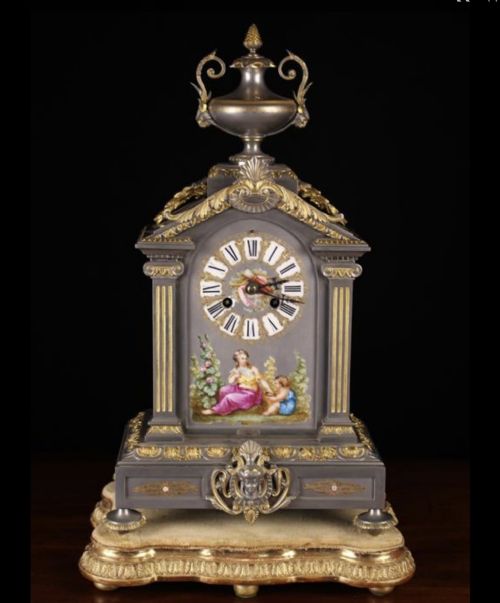


Nineteenth Century Pendule
A nineteenth century pendule brings French mantel clock craftsmanship into the room, offering heavy gilt bronze and porcelain dial work for the collector.
Nineteenth Century Pendule
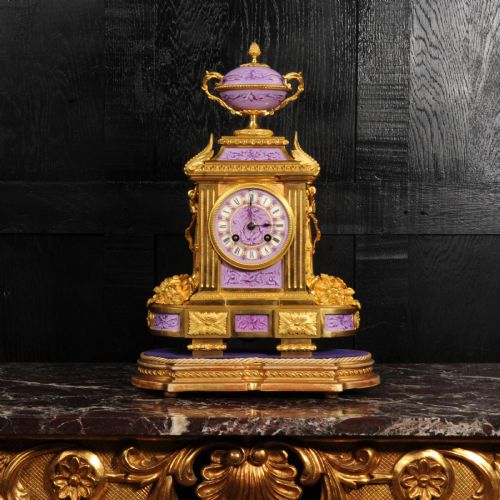
A nineteenth century pendule stands as a heavy mantel clock, originating largely from French workshops across the 19th Century and Victorian periods. Buyers search for these pieces to acquire traditional timekeepers finished in ornate styles such as French Empire, Napoleon III, and Rococo Revival.
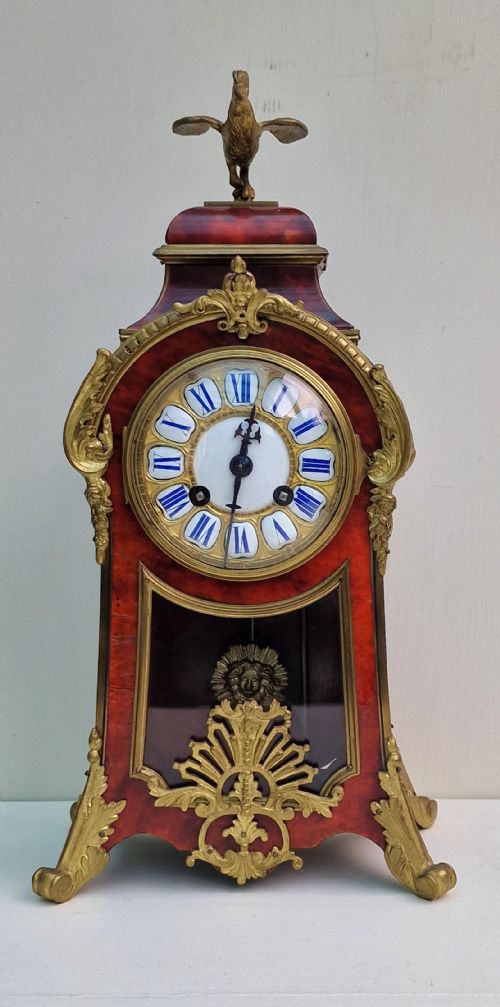
Origins trace back to French makers working in Paris, with forms ranging from architectural marble and bronze combinations to delicate tortoiseshell cases. These clocks reflect the distinct decorative shifts from the early 1800s through to the 1900s.
How They Were Made
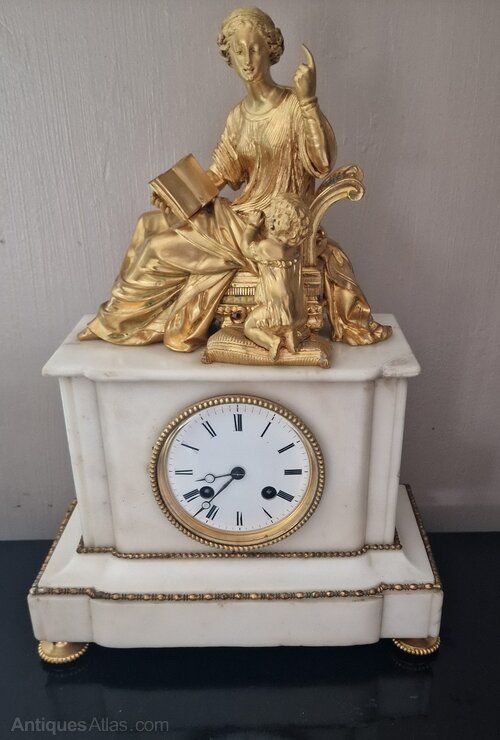
Makers constructed these clocks using cast ormolu and gilt bronze, often pairing patinated bronze with Sienna marble for substantial weight and contrast. Porcelain elements, particularly from Sèvres, were integrated into dials and panels to add painted detail.
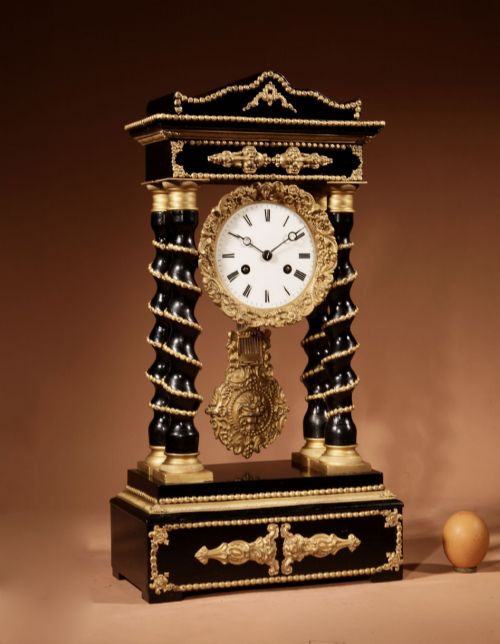
Cabinetmakers and bronze-workers utilised ebonised wood and tortoiseshell for casing details, applying fire-gilding techniques to achieve deep metallic lustres. Movements were engineered to run for eight days, housed within architectural housings or portico structures.
Listings feature French mantel clocks spanning from the early 1800s through the Victorian era, utilising ormolu, marble, porcelain, and tortoiseshell.
What Varies in Quality
The fineness of the bronze casting and the crispness of the chasing separate standard production from superior examples. Master workshops invested heavily in detailed hand-chiselling after casting, whereas lesser pieces display softened surface ornament.
The integration of signed movements by known Parisian makers elevates a piece considerably above unsigned alternatives. Quality also rests in the preservation of the original fire-gilt finish rather than later re-plating.
Achille Brocot·Henry Dasson·Berger Paris·Charpentier Paris·Miroy Frères
The Nineteenth Century Pendule Glossary
- Ormolu
- Gilt bronze produced by applying a mercury and gold amalgam to a bronze base and heating it to drive off the mercury. This technique creates a durable, deep golden surface characteristic of French decorative metalwork.
- Portico clock
- A mantel clock featuring an architectural case supported by four columns, resembling a classical temple facade. This form gained popularity during the French Empire and Restauration periods.
- Sèvres
- Porcelain produced by the royal French manufactory, known for hand-painted panels and rich coloured grounds set into clock cases. These plaques often feature pastoral scenes or floral motifs.
- Pendule d'Officier
- A portable military-style mantel clock designed for officers on campaign, typically featuring a striking mechanism and a carrying handle. They represent a specialised subset of French horology.
Nineteenth Century Pendule: Frequently Asked Questions
How do I wind a French mantel clock?
Most of these clocks use an eight-day movement requiring a key to turn the arbors located on the dial face. Care must be taken not to over-wind the mainspring.
Moving the hands should be done slowly and strictly in a clockwise direction to avoid damaging the striking train.
What is the difference between Empire and Napoleon III styles?
Empire style draws heavily on classical Greek and Roman motifs, favouring strict symmetry, dark patinated bronze, and military symbols. It reflects the aesthetic of the early nineteenth century.
Napoleon III style embraces a lavish revival of Rococo and Renaissance forms, using abundant ormolu, porcelain panels, and exuberant ornamentation typical of the later 1800s.
Where should I place a heavy marble clock?
Due to the substantial weight of marble and bronze components, these clocks require a deep, sturdy mantelpiece or firm piece of furniture. Ensuring the surface is completely level is essential for the pendulum to beat evenly.
Avoid placing them in areas subject to direct sunlight or dampness, which can affect the gilt surfaces and delicate porcelain.
How do I identify the period of a pendule?
Dating relies on examining the combination of materials, the style of the case, and any signatures on the movement backplate. Early nineteenth century pieces lean toward architectural severity, while later Victorian examples showcase ornate revivalism.
Maker marks and census records stamped on the brass movement often narrow down the production decade precisely.